Every time a historical film or book comes out, history snobs suddenly overrun Goodreads and IMDb, all armed to pick apart each inaccuracy, large or small. I would know; I happen to be one of them.
But since I began writing my own historical fiction, I’ve found myself thinking more critically about how to strike the right balance between historical accuracy and creative freedom — and why it matters.
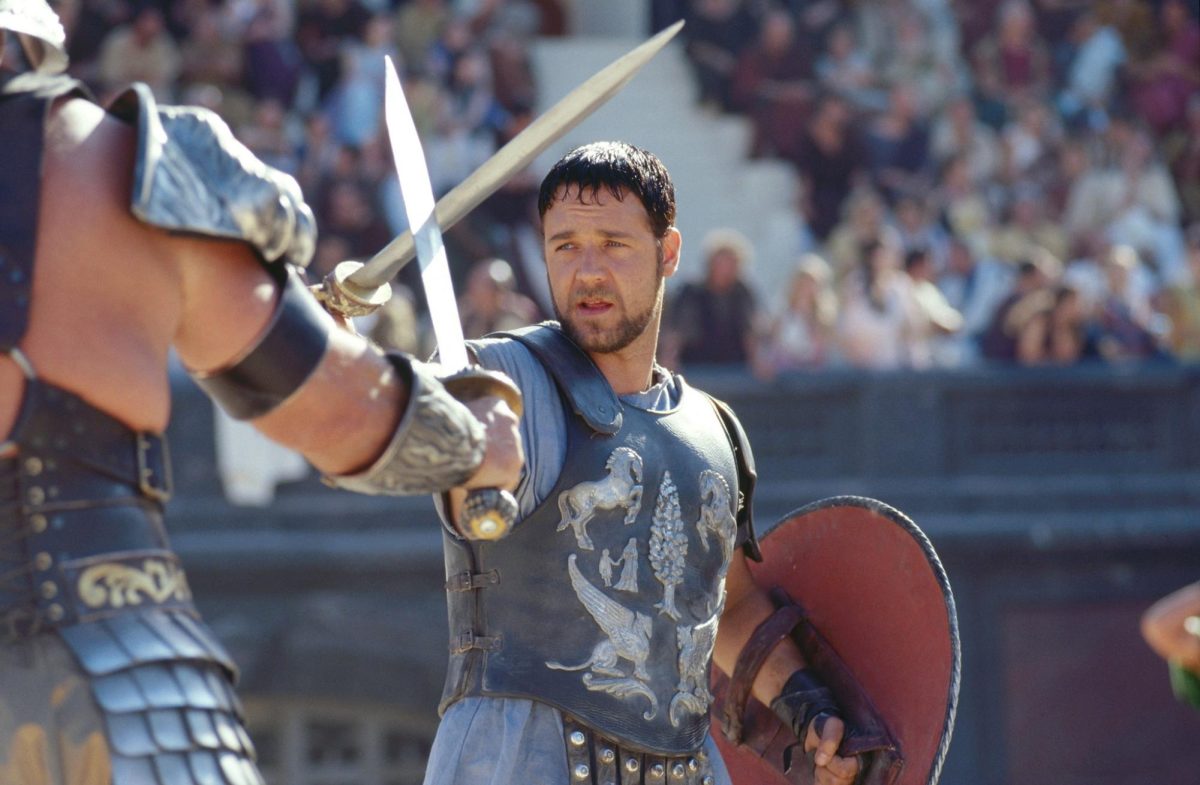
In my freshman year, when I took HIST 241: History of Ancient Rome, my professor brought up the movie “Gladiator.” He pointed out that a viewer would never guess that Commodus, the film’s villainous Roman emperor, actually fought in gladiatorial contests himself.
Judging by our class’s collective surprise, it was clear that pop culture doesn’t just reflect our understanding of history — it actively shapes it. Artists hold significant power over the public’s memory and opinions.
Edward Rutherfurd, an English writer known for his epic historical novels, has spoken about the ethical responsibility of storytellers who deal with history.
Get The Daily Illini in your inbox!
“Those of us in the business of storytelling, in books, plays or movies, have an ethical obligation not to mislead our audiences over the historical record, especially when subjects may be emotive and affect our attitudes to others,” Rutherfurd said.
Rutherfurd refuses to “cheat on history” and points out that a good deal of bad feeling is based on falsification of history.
When works depict real suffering or violence, falsifying history can be disrespectful or even potentially dangerous. “Green Book,” for instance, prompted anger from Donald Shirley’s family for his portrayal in the film. Author Peter Traquair criticized Mel Gibson’s “Braveheart” for depicting William Wallace, a Scottish knight of noble birth, as “a wild and hairy highlander.”
More extreme examples include “The Birth of a Nation” and Nazi propaganda films like “Triumph of the Will.” Both demonstrate how art can cause tangible harm to a community when its creators misrepresent reality.
World War II and racial injustice are particularly sensitive subjects; the former is still within living memory, while the latter persists in contemporary life. With works set in more distant history, the stakes are lower, and criticisms can sometimes feel like nitpicks.
When historians and history lovers found fault with Ridley Scott’s “Napoleon,” regarding everything from inaccurate military formations and age gaps to Marie Antoinette’s hairstyle, Scott told them to “get a life.”
One could argue that it is indeed unfair that the onus is on filmmakers and writers to sacrifice creative freedom for historical accuracy. Creativity is part of the craft; not every single historically accurate detail translates well onto the page or the big screen.
Some might further contend that the responsibility lies with readers and audiences to understand that historical fiction isn’t real history. It’s up to us to verify the facts; all it really takes is a quick Google search.
What ultimately settles the debate between historical accuracy and creative freedom is the creator’s intent. If the goal is to reimagine or reinterpret history, then bending facts becomes an artistic choice.
Alternative history works like Quentin Tarantino’s “Inglourious Basterds,” Philip K. Dick’s novel “The Man in the High Castle” and Kingsley Amis’ novel “The Alteration” twist historical facts on purpose to provide social commentary. Another genre, magic realism, takes creative liberties by adding magical elements to capture how history feels rather than just what happened.
On the other hand, when artists fabricate history simply due to their prejudices or lack of research, it veers toward disinformation rather than artistic expression — especially when creators market their works as a “true story” or an “accurate retelling.”
There’s little reason to get history wrong, least of all when facts are well known and easily verified. Historical events and figures are fascinating in their own right, and as Mark Twain famously said, “Truth is stranger than fiction.” Why settle for inaccuracy?
Readers cherish some of the most respected historical fiction writers, like Bernard Cornwell and Sharon Kay Penman, precisely for their diligent research and accuracy.
Works like Steven Spielberg’s “Saving Private Ryan” and “Schindler’s List” and the HBO show “Chernobyl” demonstrate that it’s entirely possible to make beloved historical works while being historically accurate. In fact, historical accuracy is part of the reason why they are so well regarded and have positively shaped pop culture.
Accurate portrayals don’t just please nitpicky historians and history enthusiasts — they honor the lives and struggles of real people. Next time you watch a historical film or read a historical novel, imagine if it were your life, your family, your community being depicted. Wouldn’t you want your story to be told truthfully?
Ayushi is a senior in Engineering.