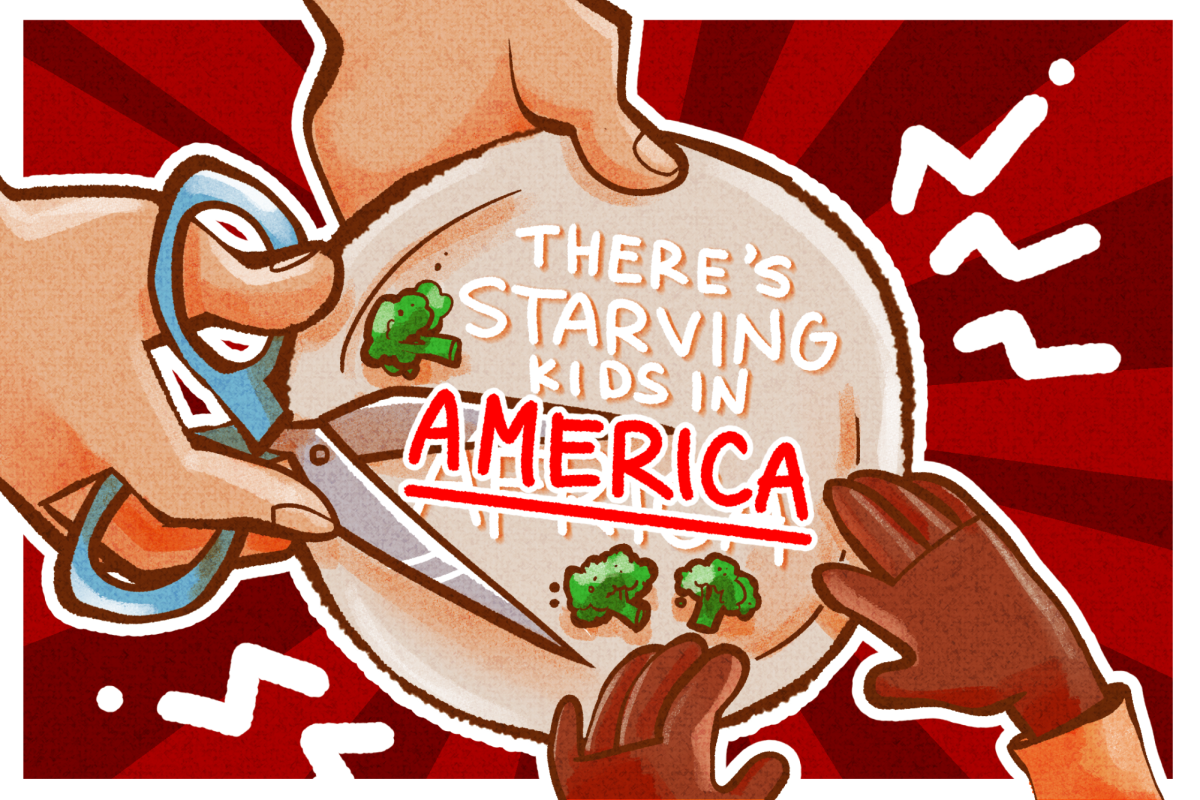
“Finish your food. There are starving kids in Africa,” is a phrase generations of Americans have heard and said to produce gratitude and pity. But this phrase suggests hunger is a problem that only exists elsewhere.
We have been conditioned, through this phrase and many other ways — like charity commercials and media that only focus on famine — to view Africa as a place solely of poverty and hunger.
Last week, I was scrolling through TikTok and came across a viral video of a Black mother with her kids. To her children with full dinner plates, she said, “You must eat all of your food, children … There are hungry children starving in America.” The on-screen caption was, “Mothers In Africa right now.” The irony is both hilarious and sobering.
For decades, Americans have pitied Africa’s starving children but haven’t acknowledged the hunger epidemic right in their backyards. As Congress cuts billions of dollars from the Supplemental Nutrition Assistance Program, families struggle to keep food on the table, pantries are overwhelmed and children aren’t sure when or where their next meal will come.
Here’s an uncomfortable truth: There are starving kids in America. We’ve just spent years believing hunger and helplessness are only problems that exist somewhere else.
Get The Daily Illini in your inbox!
The United States’ tendency to focus on foreign suffering has become a part of our national pride. But while focusing on foreign suffering, we often neglect domestic suffering.
We have been accustomed to believing hunger is an African problem, but not so much an American problem. Now, while hunger is in fact more widespread in Africa and affects more of its population, America should not use that fact as a shield to ignore its hunger crisis at home.
So why does America advocate for foreign aid but uphold cutting domestic aid? Because it’s easier to feel like a savior than acknowledge internal struggle and suffering.
We often glorify foreign aid and look at it as humanitarian, yet some people believe welfare programs are handouts and cutting SNAP is a fiscal responsibility.
I’m in no way anti-foreign aid, especially when it comes to supporting African nations. But it’s contradictory when the nation giving aid takes aid from its own people.
Why is it that when Black people experience poverty abroad, it’s tragic, yet it’s suspicious when Black Americans experience poverty?
I believe it’s because when Black people abroad go hungry, America doesn’t have to confront any uncomfortable truths concerning domestic inequality and failure. Domestic hunger implies some type of moral, social, resource and policy failure.
An argument might be, “It’s acceptable to aid Africa because there’s less economic stability, jobs and resources.” Why only acknowledge barriers abroad and ignore barriers here, like supermarket redlining, racist hiring, food deserts and underfunded neighborhoods?
More than 9 million Black people do not have access to enough food to live healthy, active lives. In 2023, 1 in 4 Black children lived without reliable access to food. These numbers reveal some truths about America, so we ignore them.
Hunger exists in these communities due to years of racialized policies and a lack of support. Acknowledging this would uncomfortably force America to face its failures.
It’s impossible not to include race in this conversation about how America views and addresses hunger. For decades, society and political leaders have seen Black poverty as a result of laziness, and when these communities do use governmental assistance, it’s sometimes deemed fraudulent. This mindset was taught.
In the 1980s, the term “welfare queen” emerged. Former President Ronald Reagan popularized the welfare queen stereotype, which illustrated an African American woman who abuses the welfare system of America.
This emerged out of a singular, rare case of welfare fraud and the media turned it into an exaggerated racial caricature. Reagan’s very absurd and inaccurate narrative of the case largely influenced public perception of welfare programs, especially regarding Black people’s use of them.
Reagan upheld his radical anti-welfare stance, cutting over $22 billion from social welfare programs, all while initiating the African hunger relief initiative that provided $1 billion to aid Africa during the 1980s famine.
There’s an ugly contradiction in our national compassion. America is comfortable with being generous but not holding itself accountable. It will spend billions to aid hunger across the world but strip millions in domestic aid, making hunger worse here.
The land of plenty tells its children, “There are starving kids in Africa,” but it is full of hungry kids of its own that it refuses to help. The wealthiest country in the world would rather play hero to others than feed its own children.
Feed your people. There are starving kids in America.
Prayse is a senior in Media.