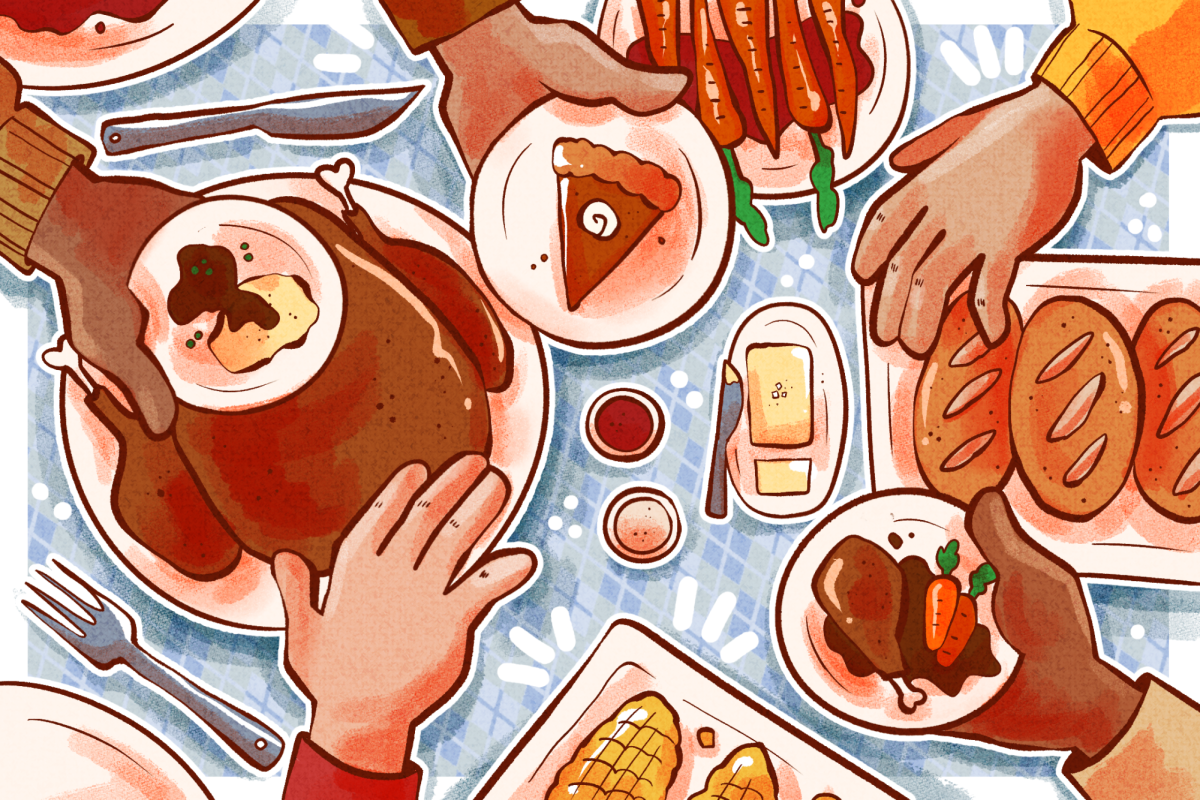
The act of breaking bread is a constant that is threaded throughout many cultures. During Shabbat, Jewish families take turns tearing challah at the dinner table. In Iceland, rugbraud — also known as thunder bread — is baked underground with the geothermal energy from hot springs. Fry bread is a Navajo dish that can be found at many Native American gatherings — reclamation of a food born from violent colonization.
The hope that sharing a meal with loved ones might offer comfort, despite all the horrors our world has to offer, is one that I cling to in times of uncertainty. It was my main motivation for hosting a Friendsgiving this year, not in celebration of a holiday that veils empty promises of peace, but rather a rare opportunity to enjoy good food with people I care about.
In times when life weighs too heavy, the solace that accompanies sharing a meal with loved ones should not be underestimated.
It’s easy to mistake the dinner party for a fussy, and admittedly elitist at times, function in which small talk and a mediocre meal cannot outweigh the trouble of planning or the expenses of groceries. In truth, it often can be, depending on execution.
Martha Stewart’s first cookbook, “Entertaining,” is often credited with creating the image that many of us associate with dinner parties today. A picture of pastel tablecloths, elaborate flower arrangements and a whole roast chicken comes to mind. Stewart’s flair for unabashed displays of wealth and traditionalism spurred reactions of both praise and criticism but also redefined hosting as an art form rather than a mindless domestic hobby.
Get The Daily Illini in your inbox!
Needless to say, the concept of the dinner party has since expanded to fit today’s standards.
While indulgence and grandiose ruled the era of Stewart, simplicity and comfort have replaced classism within the modern dinner party. At the heart of these gatherings is an opportunity for connection, the need to find common ground with others when we are so often forced to stand alone in our daily lives.
Setting a simple purpose for a dinner party helps center it around the people rather than the performance. Whether it’s a fun theme or food group, focusing a dinner party around intention rather than luxury will feed creativity while also taking some pressure off of the need to be picture perfect.
This year, I tried to live by the standard of unity over extravagance for my own Friendsgiving.
My apartment walls were adorned with paper leaves and cutouts of Snoopy to fit our “Charlie Brown Thanksgiving” theme. The courses consisted of food only served in the special, such as popcorn, jelly beans and buttered toast. Peanuts’ greatest hits flooded the living room, and for a few hours, my friends and I allowed ourselves to unburden our troubles and dance like cartoon characters.
The desire for connection through food also directly ties to mental health. The 2025 World Happiness Report ranked meal sharing as one of the highest predictors of well-being.
We are wired to crave human connection, and sitting down to share a meal with someone might just be the easiest remedy for this hunger.
Hailey is a senior in Business.