The car door slams shut. The blue and yellow ALDI sign looms in the distance. You and your friend remembered to bring bags this time. You smile a wide smile; life is good.
You and your friend, ALDI merchants, near the automatic doors of the notoriously cheap grocery store — home of Benton’s cookies, Crispy Rice cereal and Friendly Farms nonfat Greek yogurt. The door opens like the golden gate to heaven, St. Peter saying, “Come on in and buy chicken thighs for a buck-seventy-five per pound.”
You laugh to yourself, “What will you think of next, Germany?”
Then you hear the “kerchunk, kerchunk” of a hair-tangled shopping cart wheel on the sepia tile floor. You look at your fellow ALDI merchant, your faces beet red, eyes wide.
Son-of-a-L’oven Fresh Hawaiian Sweet Roll! You forgot to bring a quarter for a shopping cart.
Get The Daily Illini in your inbox!
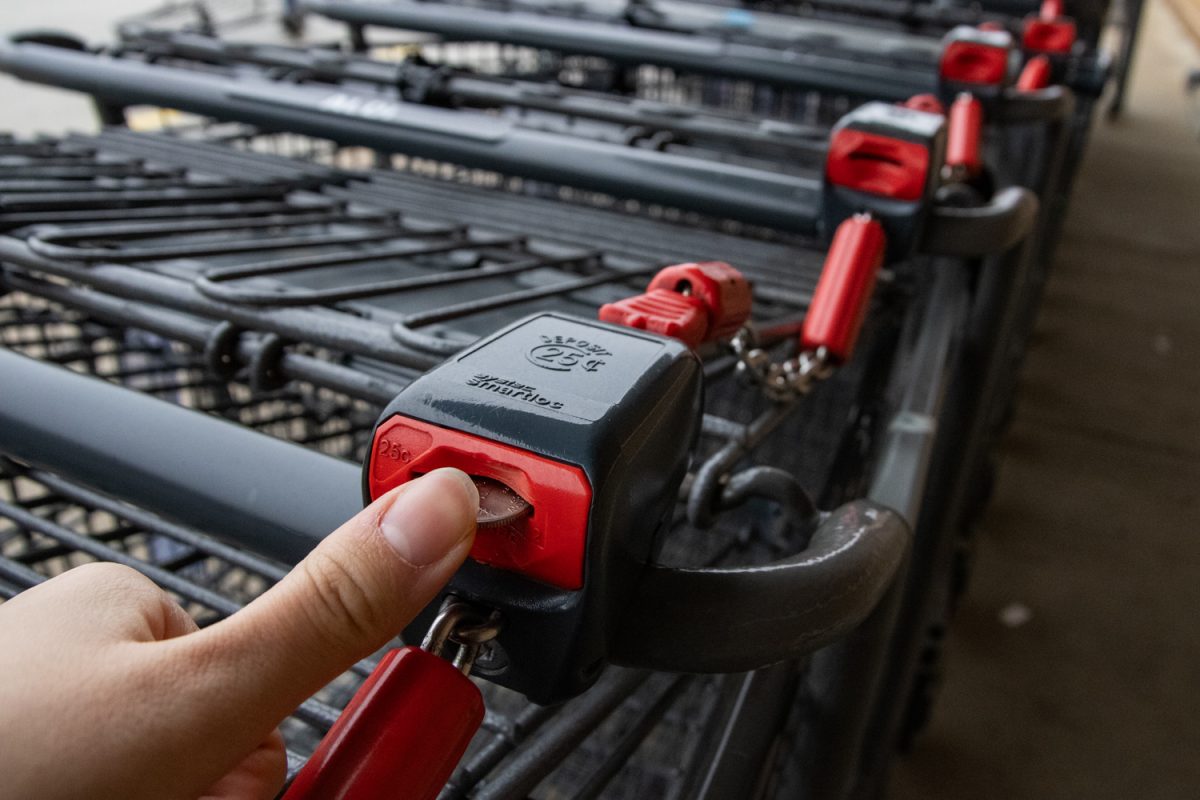
The ALDI quarter system must go.
ALDI is a store built on trust, efficiency and an employee-first environment: It doesn’t spend time hyper-organizing its aisles; it pays the average worker $23.93 an hour and cashiers sit in office chairs at the checkout.
The German-based grocery store justifies its self-bagging system on these very principles: “To help ensure our checkout process is efficient … ALDI encourages our shoppers to bring their own bags and to bag their own groceries at our bagging counters.”
It then claims the “temporary 25-cent deposit saves you money.” The logic behind this is that ALDI doesn’t have to hire employees to corral carts.
As a college student, I don’t bother to consider the complicated economics of such an affordable grocery store, nor do I think deeply about the fact that cheaper products may be lower quality. In other words, ALDI, whatever you’re doing to keep prices so low, keep it up.
However, this numismatic dilemma exposes hypocrisy: ALDI trusts its shoppers to bag their own groceries, but not to return their carts without incentive?
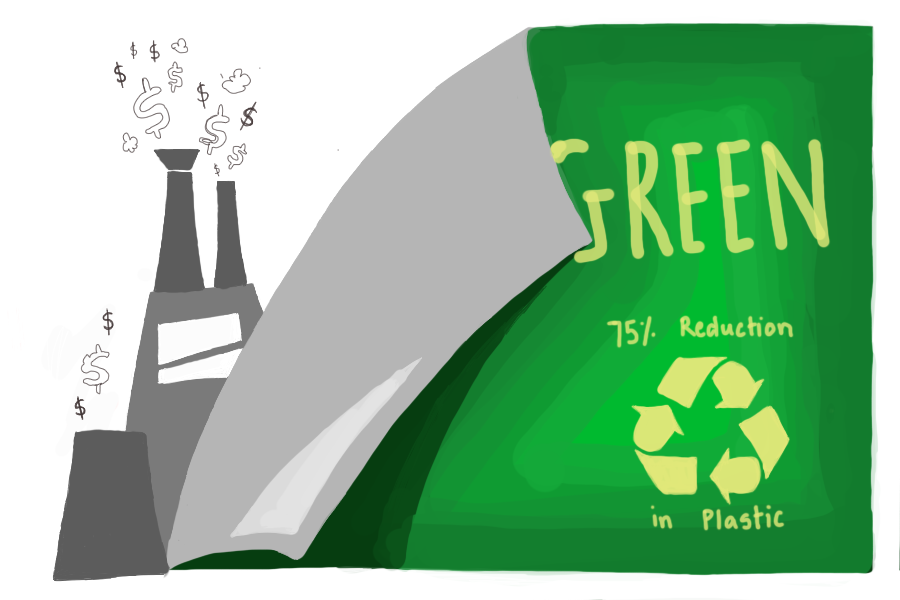
The quarter system also goes against one of ALDI’s key focus points: eco-friendliness.
Forbes ranked cash — bills and coins — fifth among its most sustainable forms of payment, while it ranked credit and debit cards third. (Cryptocurrency came in last.) The U.S. Secretary of the Treasury recently suspended the production of pennies. Your move, ALDI.
If ALDI still deems an incentivized system for returning carts necessary, they should at least consider a cashless alternative, such as an online app feature.
Shoppers may agree but then look across the street at the war zone that is the Walmart parking lot and think, “Well, I’d rather keep the quarter system than have that.”
This is true — ALDI’s quarter system is efficient and effective; its parking lot is spotless. But why must we need an incentive to be decent shoppers?
Grocery superstores like Walmart and Meijer don’t have the community charm that radiates through all 18,000 square feet of ALDI like the fizzy bubbles in a bottle of Summit Cola.
Shoppers and employees work together to keep ALDI surviving and thriving. The quarter system violates both the trust in customers and focus on sustainability established by its self-bagging policy. It must go.
ALDI, give us shoppers a chance. We don’t need the threat of losing a quarter to return our carts. Don’t see ridding of your quarter system as a reason to hire more employees. See it as an opportunity for shoppers to prove we can be trusted, while also improving the eco-friendliness of your efficient and affordable grocery store.
Alex is a sophomore in LAS.