When I was watching Alysa Liu skate to Olympic gold victory, I was sick as a dog. My roommate had introduced a terrible cold to our apartment, and it was with her that I sat curled up on the stiff, standard Smile Fairlawn Student Living couch — if you know, you know — to distract ourselves with some Olympic Games.
Commentators were discussing Liu, the comeback kid and Bay Area native. Like many of us, I didn’t know her story before the 2026 Milan Cortina Winter Olympics, but the second she entered the TV frame, her appearance and demeanor made a statement in itself.
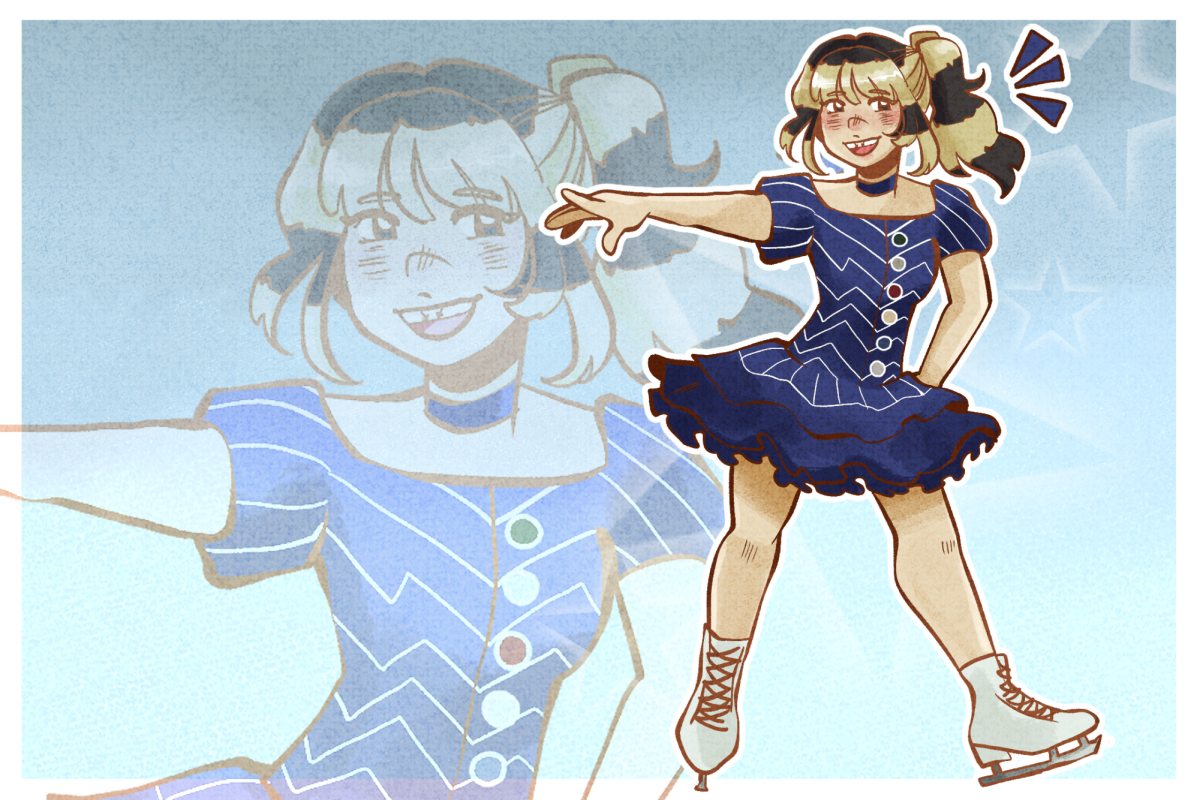
I’ve always imagined women figure skaters as similar to ballerinas in style and temperament. Their displays of elegance and self-control are admirable but sometimes lend themselves to a certain stiffness. Liu eschewed my stereotype entirely, with a prominent smiley piercing in her frenulum, quirky halo ring hair and a nonchalant triumphalism reminiscent of a rock artist.
Commentators described Liu’s skating style as “like she’s just playing on the ice” without “carrying the weight of (competing).” I felt pure elation watching her win the women’s free skate, striding across the ice joyfully and without reserve.
Seeing figure skaters attempt difficult elements can be stress-inducing, but with Liu in the driver’s seat, every completed jump felt relaxed and even inevitable. I was even more thrilled by her response when reporters asked what it all meant to her.
Get The Daily Illini in your inbox!
“This medal isn’t what is important to me,” Liu said of winning the gold. “What’s important is how I got here, my journey here and I never want the journey to end.”
The core of Liu’s appeal radiates from her personal philosophy in sports and life. But her passion and perspective only developed once she took a step back. After an intense childhood of professional figure skating, she retired in 2022 at 16 to live a regular teenage life.
Two years later, on a ski trip in Tahoe, California, she realized that she missed the racing feeling of doing an extreme sport. When she decided to come back to figure skating, her mentality and purpose were completely changed.
“I get to help with the creative process of the program,” Liu said of getting back on the ice. “If I feel like I’m skating too much, I’ll back down. If I feel like I’m not skating enough, I’ll ramp it up. No one’s going to starve me, tell me what I can and can’t eat.”
For every burned-out former gifted kid, Liu represents a beautiful kind of hope. It is a hope that one can return to their old talents and toils with a newfound meaning and enjoyment. It is a hope that our mindset really can change everything about our experience of the world.
“I have my own determination,” Liu said on “60 Minutes.” “I love struggling, actually. It makes me feel alive.”
Lying sick in my bed with used tissues piling on my nightstand, I watched video after video about Liu: her hair, her teammates, her favorite anime, her life in Oakland. I was struck by how someone so young has cracked the code on personal fulfillment.
Struggling can weigh us down, but isn’t it also what makes life meaningful? If we can only find what we feel is worth struggling for, won’t we have also found what fulfills us?
Seeing someone take on Olympic-level challenges cheerfully and on her own terms brings our own pursuits into perspective. It encourages us to seek out our own joyful struggle.
When I spoke with a fellow The Daily Illini columnist about Liu’s impressive mindset, he asked me if the ice skater had read the 1974 book “The Inner Game of Tennis.” In it, author W. Timothy Gallwey teaches readers that doubt and nervousness are key elements of failure in sports and life. People who can achieve a “relaxed concentration” perform better, but that requires lifting the burden of needing to win and focusing on living in the present moment.
I don’t know if Liu happened to pick up the book — although she has said that she loves studying psychology — but she sure acts as an avatar of Gallwey’s theories. Her emphasis on personal autonomy, artistic expression and chasing the feeling of aliveness is a bulwark against self-defeating fears.
“There’s not many things in life that you do where you have to give 100% of you, you know what I mean?” Liu said on the “Sports In America with David Greene” podcast. “And I kind of love feeling like I’m on my last breath or I physically cannot do more. I love pushing myself to that boundary.”
Once my plague-like cold subsided, I walked to my classes playing PinkPantheress’s “Stateside” in my AirPods, Liu’s choice of song for her Olympics Exhibition Gala performance. It makes me think of Liu, and the memory of her dashing across the ice makes me feel alive.
Grace is a graduate student studying urban planning.