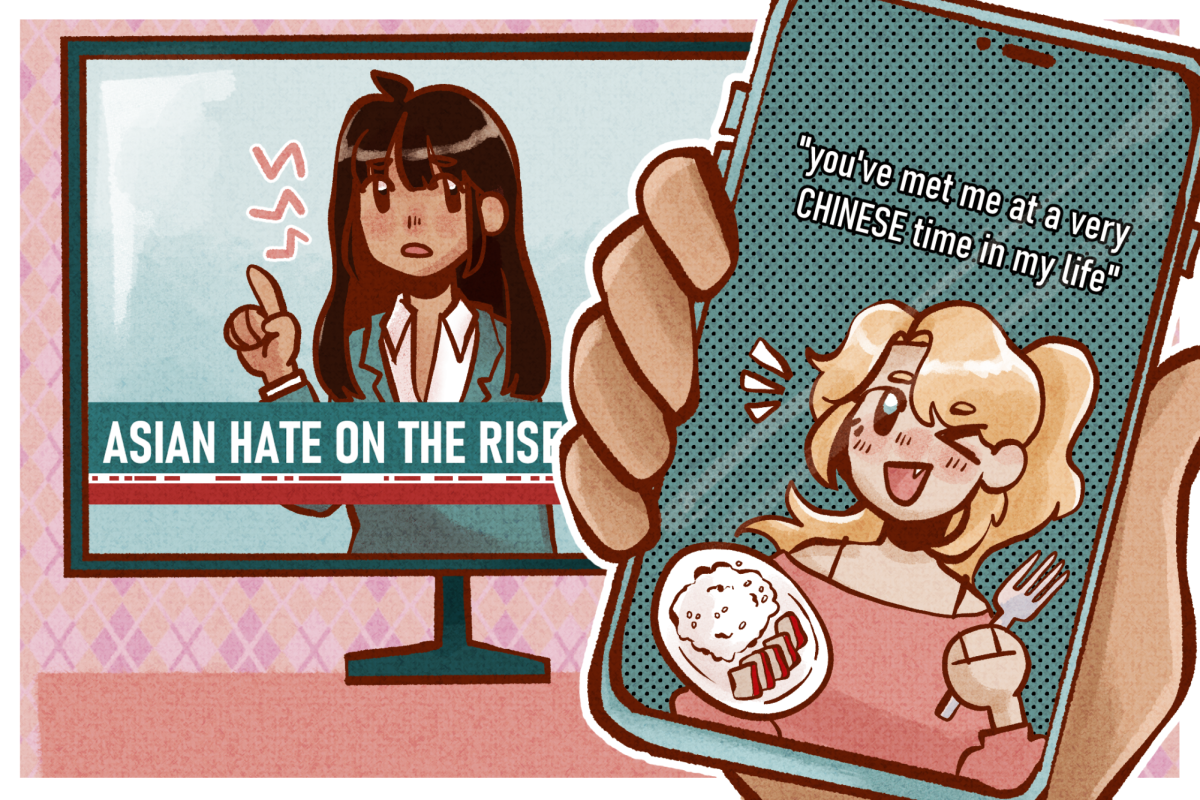
“You’ve met me at a very Chinese time in my life.”
If you’ve been on the internet at all in the last few months, it’s likely you’ve heard this phrase paired alongside a video of a white person drinking hot water, enjoying Chinese music, or trying traditional Chinese medicine.
On the surface, this trend seems harmless. But beneath lies something far more American than we’d like to admit: the imperialist reflex to consume, reinterpret and ultimately absorb other cultures.
When the United States moved to ban TikTok, millions of users migrated to Xiaohongshu, also known as RedNote. For the short time that Americans populated the site, they were able to encounter Chinese daily life without a filtered American lens.
Americans have been told that China is a cautionary tale, a “threat to the world,” according to our politicians. Yet when Americans fled to Xiaohongshu, they encountered everyday people.
Get The Daily Illini in your inbox!
For some Americans, especially younger ones already disillusioned by inflation, housing costs and political gridlock at home, China began to look less like the cautionary tale we’d been told about, and more like an alternative to American capitalism.
The TikTok ban scare briefly forced us to look outside our information bubble. What we found challenged assumptions about China. But instead of allowing that realization to spark a deeper reckoning with American decline, polarization and inequality, we turned it into a trend.
The “you met me at a very Chinese time of my life” meme encapsulates this. China shifts from rival superpower to a TikTok trend. Congee becomes a gut-health hack, and Lunar New Year becomes an Instagram backdrop.
Soon enough, everything gets stripped of context, renamed and repackaged. Congee becomes “savory rice porridge” and traditional medicine morphs into “Eastern wellness hacks.”
We’ve seen this before: yoga divorced from South Asian religion and marketed as fitness or cornrows on white celebrities. Cultural practices are sanded down until they fit neatly into Western consumer culture and are optimized for money-making and engagement.
That sanding down is a form of Americanization. It translates culture into something palatable for white American audiences, smoothing away until nothing of meaning is left.
Cultural exchange is not the problem. America has always been enriched by the traditions of immigrants. But what’s happening online feels less like exchange and more like rebranding.
Imperialism is not appreciation. Imperialism is about stealing: resources, labor, identity — and no one does imperialism better than the United States.
I am not saying this TikTok trend is the same as imperialism, but I am saying that imperialism leads to it.
America has a problem. We keep fetishizing foreign cultures while vilifying the people those cultures belong to.
We can’t forget about America’s xenophobia and racism towards China, only a few months before the “trend” started. We can’t forget about Trump’s “China Virus” remarks and the rise of Asian hate.
The same internet that now romanticizes Chinese habits spent years amplifying Asian hate, particularly during the pandemic. And while East Asian aesthetics may be briefly fashionable, other Asian communities continue to face hostility. A 2025 report from the Center for the Study of Organized Hate documented spikes in anti-Indian rhetoric online.
These opposing treatments of Asian cultures are impacted heavily by America’s colorism and classism as compared to the majority white United States population. Indian citizens have darker skin and lower household incomes. Yet we neglect to notice that poverty in India is a direct result of the colonialism and imperialism that we are promoting.
If we’re serious about cultural exchange, it requires more than aesthetic adoption. It requires resisting the urge to dominate the narrative and letting another culture exist on its own terms without turning it into our next trend.
Otherwise, even our admiration becomes just another form of American imperialism.
Fay is a freshman in Social Work.