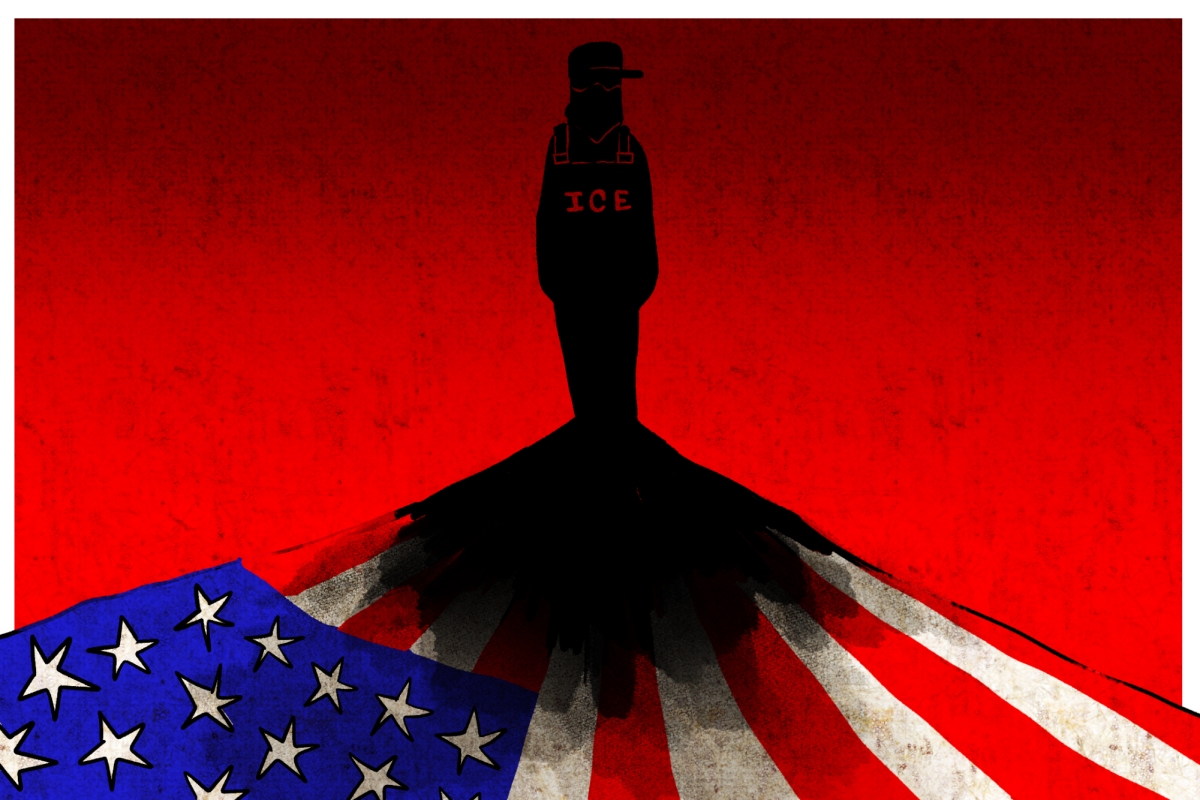
On an early September 2025 morning, Silverio Villegas González had just dropped off his children when Immigration and Customs Enforcement agents attempted to stop his car in Franklin Park, Illinois, a quiet suburb outside Chicago. What began as a routine drive quickly escalated into chaos.
Agents surrounded the vehicle to carry out a targeted arrest, according to officials. However, when Villegas González allegedly tried to flee, an officer fired his weapon, claiming the car was being used as a weapon and that he feared for his life. The bullet entered the back of Villegas González’s neck and lodged in his chest, killing him at the scene.
Witness accounts and video footage painted a more complicated picture, with some residents saying they saw agents break the car window and pull Villegas González out after the shooting. Demands for a thorough investigation into what really happened ensued.
News that he had been killed moments after leaving his children shook the community, sparking vigils, protests and renewed fear among immigrant families. The incident was proof of how quickly an ordinary morning could turn deadly.
Narratives like these have come to dominate the national conversation surrounding ICE throughout the past year. A steady stream of alarming stories, like agents placing teenagers in chokeholds and forcing entry into homes while armed and without judicial warrants, has made it increasingly difficult to regard such incidents as isolated.
Get The Daily Illini in your inbox!
What once might have been dismissed as random events has turned into evidence of a broader hardening in enforcement tactics, characterized by violence and inhumanity. As these accounts accumulate, public confidence has eroded, replaced by a growing unease about the scope of power being exercised and the apparent absence of meaningful restraint.
Many on social media describe the violence as “unprecedented” in American history. So unprecedented, in fact, that when people search for analogies, they rarely turn inward to examples rooted in the United States itself. Instead, the comparisons most frequently invoked are parallels to authoritarian regimes, fascism and, most often, the Holocaust.
These associations note that the Holocaust began with rhetoric that framed a minority group as outsiders and criminals. Laws that stripped people of protections. Expansion of detention facilities. Militarized policing to target particular groups of people.
Beginning to see the similarities?
Such comparisons, well-intentioned to communicate the severity of this state violence, carry their own danger. They risk suggesting that this kind of violence is foreign to American life — a subtle but profound implication.
ICE raids feel shocking in part because they shatter a basic assumption we make: Our ordinary life cannot be upended without warning. Simply standing in public or sleeping in one’s home does not make us a target.
However, for some, that assumption has never fully existed. In fact, the way ICE has been operating mirrors how Black communities have been policed for decades in the U.S., and these comparisons can oftentimes be more apt, more localized and more recent.
The U.S. has its own lengthy record of state force deployed against marginalized populations, particularly Black Americans.
Take stop-and-frisk practices, legalized in 1968 in the Terry v. Ohio U.S. Supreme Court case. It is a police practice in which officers temporarily detain and question civilians based on “reasonable suspicion” of criminal activity rather than “probable cause.”
In New York, the stop-and-frisk program was consistently responsible for over 100,000 stops made per year between 2003 and 2013, with the peak being at 685,724 stops in 2011. These practices became the subject of conversations regarding racial profiling, as 90% of those stopped between 2003 and 2024 were Black or Latino. However, both groups only made up 23% and 29% of the population, respectively.
Racial profiling and discrimination within the policing system have forced many Black Americans to have “the talk.” Not about the birds and the bees, but instead to teach their children about navigating systemic racism and interacting with law enforcement.
For generations, Black Americans have been preparing their children for the realities of racism in the U.S. As ICE expands its reach, more immigrant parents are beginning to have their own version of “the talk.”
The American Civil Liberties Union describes how the militarization of police led to generations of Black Americans internalizing the possibility that a walk to school or the corner store could end in a search, a detention or worse.
The organization elaborates on how, in early morning hours, heavily armed police units executed tens of thousands of no-knock raids each year nationwide, often for low-level drug warrants. Sometimes, these raids would result in the splintering of doors, exploding flashbang grenades and being given commands at gunpoint.
This style of policing did not arise spontaneously. It evolved from decades of policy decisions, from the expansion of SWAT teams during the war on drugs to legal doctrines that granted wide leeway for aggressive entry tactics in communities labeled high-crime.
Family separation, now widely condemned in the immigration context, has also long been a defining feature of the American criminal justice system. Black Americans are incarcerated at more than five times the rate of white Americans, a disparity produced by sentencing laws, drug enforcement patterns and structural inequality rather than differences in criminal behavior alone.
As such, nearly one in four Black children born in 1990 experienced a parent’s incarceration by age 14. The consequences cascade, seen in lost income, housing instability, psychological trauma, disrupted education and more.
These patterns are not accidental. They trace back through a long history of policies designed to control Black movement and labor.
Starting from slave patrols that monitored plantations and roads to Black Codes that criminalized ordinary behavior after emancipation, and even to Jim Crow policing that enforced racial boundaries through intimidation and violence, each era produced new legal justifications for old practices of containment, surveillance and removal. We are bypassing that history by reaching for the Holocaust as the closest analogy.
Seen in this context, the tactics now associated with ICE enforcement, like racial profiling, raids, militarized presence, mass detention and the rupture of family life, are not a new presence in the U.S. These are recognizably American methods, refined over generations and redeployed against a different group.
What feels unprecedented to some has long been familiar to others. The shock society feels comes from having a new visibility — not because of a sudden existence of such force, but because of its visibility to those who have not historically borne its weight.
It seems like violence is only understood and comprehended when it is presented as something foreign rather than being foundational to the U.S. It implies that this brutality becomes truly alarming only when it begins to resemble something that happened elsewhere, under regimes we have already agreed to condemn elsewhere.
If we want to understand what is happening in our current day, we have to stop looking only outward and start looking inward at our own history in full.
We don’t need to borrow horror from other countries to recognize injustice here. We don’t need comparisons to genocides abroad to tell us something is wrong.
Our own history should have been enough. If it wasn’t, we have to ask ourselves why.
Gurneer is a sophomore in LAS.