“Heated Rivalry” became a global phenomenon during a drought of queer media.
The Crave TV show, based on the books by Rachel Reid and distributed in the United States by HBO, had over 10 million U.S. viewers, one of the highest-rated episodes of television ever and everyone from your average stan X user to New York City Mayor Zohran Mamdani is talking about it.
Queer and straight people alike have become invested in the hockey rivalry turned situationship turned love story of Russia’s Ilya Rosanov (Connor Storrie) and Canada’s Shane Hollander (Hudson Williams).
The show’s unprecedented success felt like a new chapter for queer television and film, especially since queer representation in TV has been decreasing. But responses to other queer storylines in popular television suggest the world’s love for queer characters is exclusive to gay men.
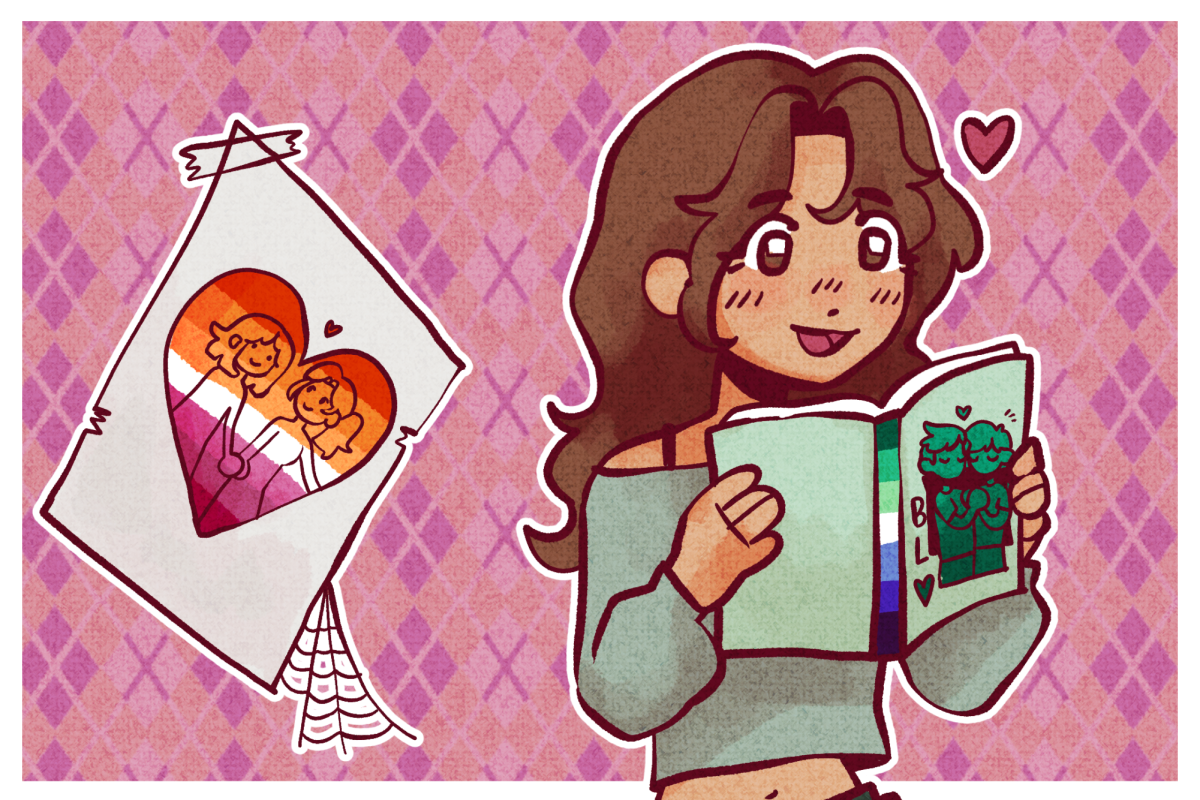
Lesbian shows have been repeatedly cancelled, struggled with viewership or had their lesbian characters sidelined, where shows that centered on male gay characters like “Heartstopper,” “Young Royals” and movies like “Red, White & Royal Blue” have had immense success and multi-season renewals or sequels in the works.
Get The Daily Illini in your inbox!
The second half of “Bridgerton” Season 4, based on the book series by Julia Quinn, came out on Netflix Feb. 26. After the release of part one on Jan. 29, it sat at the top of the charts on Netflix the way “Heated Rivalry” did on HBO a few months ago.
While Season 4’s primary couple is Benedict Bridgerton (Luke Thompson) and Sophie Baek (Yerin Ha), the season has also been further developing the plotline of another Bridgerton sibling, Francesca (Hannah Dodd).
Fans have known that Francesca’s story would take a different path since the end of Season 3, when Michaela Stirling (Masali Baduza) was briefly introduced as the gender-swapped version of Michael Stirling — the cousin of Francesca’s first husband, John, whom she marries years after John’s passing in the sixth book of the “Bridgerton” series. While backlash against this decision began back in 2024, it has only intensified since Season 4 has further explored Francesca’s struggles in the sexual side of her relationship with her husband and Season 5 was announced to follow Francesca and Michaela’s love story.
Francesca isn’t “Bridgerton’s” first queer major character, but she is the first queer woman. Benedict explored his bisexuality in Season 3, and a subplot of the spinoff show “Queen Charlotte: A Bridgerton Story” included the romance between two male characters.
Part of the reason why fans are having such a negative response to Francesca’s story change in particular is because it’s exactly that — a change. Benedict wasn’t queer in the books, but his main romance with Sophie is true to the original story, and the king and queen’s queer right-hand men didn’t exist in Julia Quinn’s “Bridgerton” universe before Shonda Rhimes created the characters in “Queen Charlotte.”
Some fans are upset that Francesca’s story, which included fertility struggles, will have to make some changes now that she’ll no longer be ending up with a man.
Francesca’s story wasn’t all about her fertility struggles, though. It was a subplot that was mostly explored in her miscarriage in the first chapter and her years of trying in the epilogue before she and Michael successfully have a child. The overall story focused much more on Francesca and Michael’s dilemma of having feelings for each other while still mourning the loss of John — a storyline that does not depend on her being straight and Michael being a man.
The idea that Francesca’s queerness would take away from her infertility story is an easy way for viewers to justify their dislike of Francesca being portrayed as queer in the show and of her and Michaela being the first main “Bridgerton” couple to be queer. The show has strayed from the books in various ways. The main issue people have with Francesca and Michaela isn’t that it’s a change; it’s that they’re gay women.
The success of male queer stories and the struggles of female queer stories are both fueled in part by objectification of gay people, with straight women being the main perpetrators in this context, as a large audience of these romance shows and films and the primary group criticizing “Bridgerton’s” sapphic romance.
When it comes to objectification of queer people by straight women specifically, gay men are seen as objects for entertainment, leading to gay relationships being sexualized or gay men being viewed almost like accessories.
Gay women’s relationships, on the other hand, aren’t as enjoyable to watch for straight women, based on lesbian media’s repeated failures in viewership. This could be because of factors like internalized misogyny and male-centrism making romance stories without men less appealing, or because women watch many romance shows and films to see men portrayed in a romantic, caring way that women feel they are missing in reality.
Fetishization is also a contributing factor, since many queer male relationships are sexualized by women, whereas lesbian relationships, while also often hypersexualized, tend to be portrayed in a way that is targeted toward the male gaze. Fetishization helps drive the success of shows and movies about gay men and gay women, although the effects aren’t as strong when it comes to lesbian media simply because men tend to make up a smaller audience of romance.
With all queer people, regardless of gender, their identities are largely seen before their personhood, leading to queer representation in shows blocking them into strict stereotypes and sidelining their characters. Alternatively, when shows center on deep, developed queer characters, much of the straight audience doesn’t care to watch, or the characters suffer tragic endings so that the emotions within their stories extend beyond homophobia and identity struggles and can therefore be appreciated by straight audiences.
Straight women have historically struggled with sexualization and objectification, so it’s hard for some to accept that they can be perpetrators of this behavior too. But the way queer media is being received by its non-LGBTQ+ consumers has continued to demonstrate a severe problem in how straight people, including women, internally devalue queer people.
Romance shows, movies and books are often targeted towards women as the primary audience, so it’s understandable that straight women have this idea that drama-romance series are for them. But at the end of the day, queer shows are not.
Straight women can enjoy them, and it’s a great thing when they do, but there’s a difference between appreciating queer culture and stealing it. With appreciation comes educating oneself on LGBTQ+ struggles and uplifting queer communities.
Queer stories are for the queer viewers first and foremost, who can hopefully become more comfortable with their identities because of positive representation, such as male athletes who have come out following “Heated Rivalry’s” success.
Straight viewers of queer shows should reflect on their viewership and question whether they perceive stories of gay men more positively than gay women, and the implicit objectification behind that.
If “Heated Rivalry’s” appeal truly was that it was about two men in a predominantly straight, masculine space overcoming the challenges of heteronormativity in hockey — why is “Bridgerton’s” story of two women in a predominantly straight, feminine space overcoming the challenges of heteronormativity in the Regency era not equally appealing?
Makenna is a junior in LAS.