Dating back to World War II, recycling represented the strength, innovation and stability of American democracy. It was a time when households, still recovering from the great depression, relied on and repurposed every good, package and scrap they owned.
Following WWII, landfills once again became the dominant form of waste disposal. As America was no longer in need of materials essential to the war effort, the idea of reducing, reusing and recycling seemed pointless.
Recycling programs as we know them today emerged in the latter half of the 20th century, with municipal recycling programs rising alongside environmental regulations and legislation signed by former President Lyndon B. Johnson.
As anthropogenic climate change continues to threaten the sustainability and livability of communities, homes and societies across the globe, changes must be made to our consumption patterns, the recycling industry and the compassion of our society to advance equality for all.
Today, compared to the 342 million people who make up the United States of America, the 3,000 tons of plastic we recycled in 2018 is embarrassing. As recycling continues to expand, it sheds light on the fight for sustainability across global landscapes — both environmental and economic.
Get The Daily Illini in your inbox!
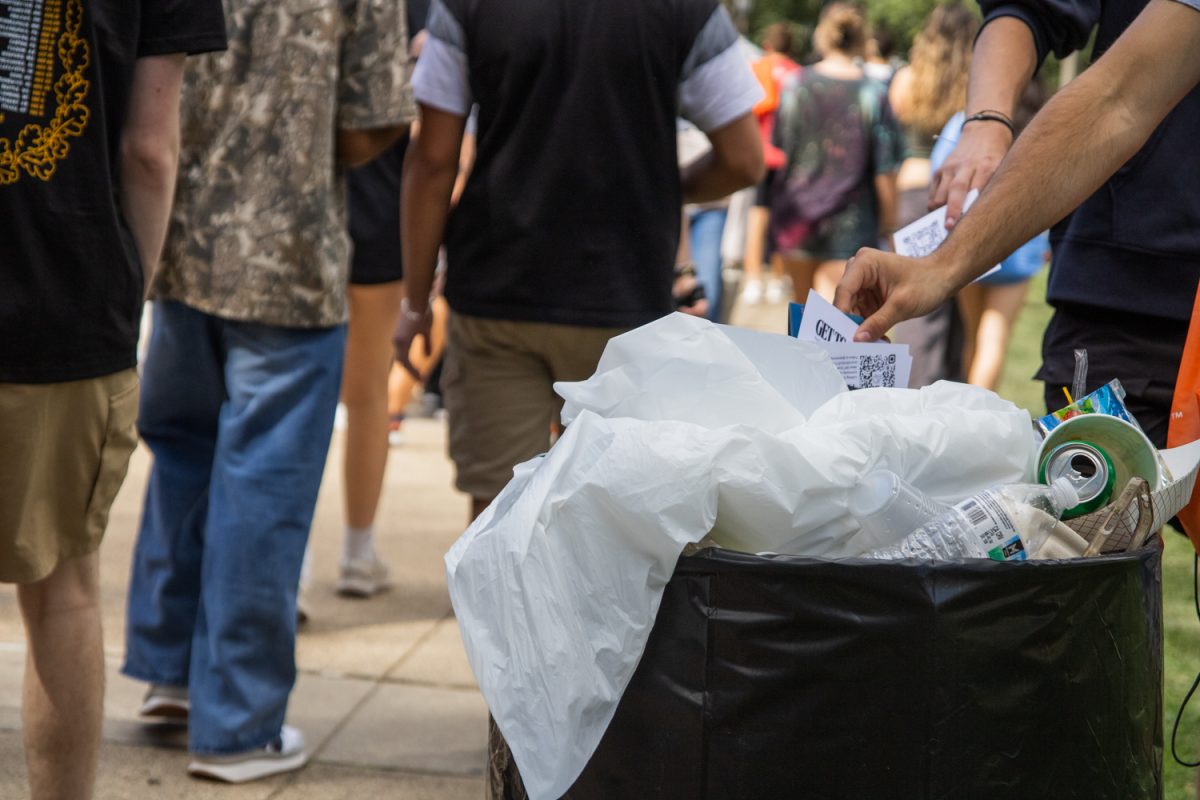
The sheer failure of American recycling plants, politicians and consumers boils down to the competition in the global market. In 2018, only 9% of the plastic consumed in the United States was recycled. Despite demands by consumers to recycle, actual rates are plagued by infrastructure and contamination issues.
Recycled materials consume less energy than the manufacturing of raw materials, creating a cost-effective and consumer-supported product. But we have only seen the start of a shift from raw manufacturing to recycled-based, hopefully seeing a reduction of energy consumption and greenhouse gases in the future.
While energy consumption is a problem both economically and environmentally, in reality, major individuals and corporations that make up the top 10% earners contribute to 40% of greenhouse gas emissions.
Consumption has long been a socioeconomic struggle, with marketing and the ideal quality of life leading the force of surges in consumer goods.
But this surge is not entirely at fault for the failure of our recycling program. As time went on, there were systematic failures due to a lack of proper incentives, unstructured guidelines and weak policy.
Our local recycling programs need to be physically updated to fit the demands of modern waste collection and streamline pollution reduction, and grants for updates are on the rise. But reallocation should not always be the answer to providing solutions to a problem that has placed a burden on the people of our country for decades.
Solutions instead need to be advanced enough to adequately and effectively eliminate the source of the problem in the first place: overconsumption, apathy and a lack of infrastructure.
The issue of plastic overproduction cannot be addressed without mentioning the leverage American industries have within plastics and the global economy. As of 2023, over 660,000 workers make up the plastics industry in the U.S.
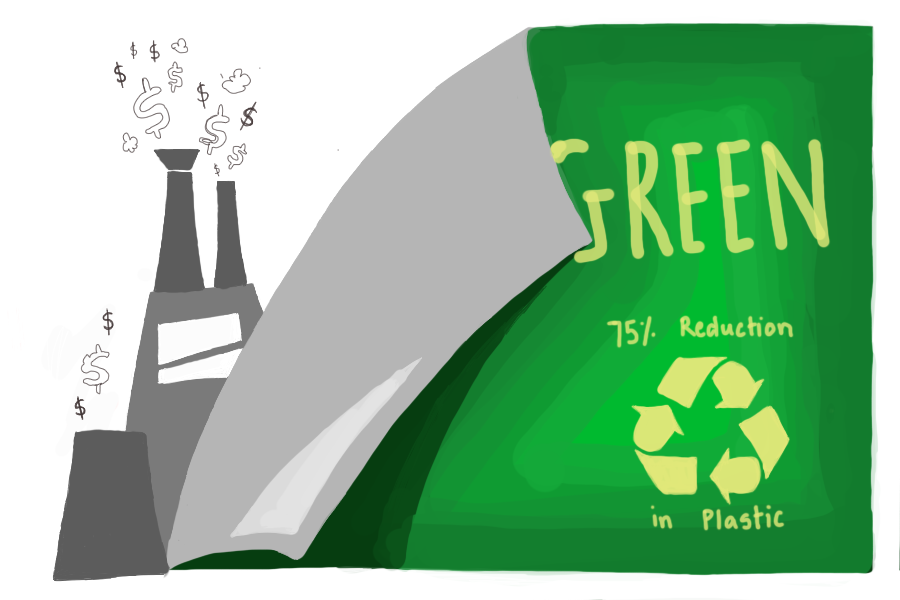
Following precedent, as regulations and consumer demands shift away from virgin plastics, corporate America’s preference of profits over people will undoubtedly result in the loss of American jobs. A harsh reality that has been consistently weighed against the looming threat of global warming.
Of course, it is difficult to suggest finding different jobs for thousands of workers to reach the overall goal of a reduction in anthropogenic climate change. Instead, we need to call for increased sustainability and reuse of plastics within existing plants and industries.
Reusing recycled plastics can be a simple process to operate, train and implement — and actually saves costs in the long term. This proposes a viable alternative and offsets immediate losses as industries shift.
However, current solutions are not adequately addressing inequalities; they relocate existing waste to the backyards and communities of the politically vulnerable and silenced across the United States.
It is rather insulting to ask the average American to reduce consumption in the name of saving the environment, while the world’s wealthiest continue to live at incredibly high standards of living.
The lack of urgency surrounding climate change action and recycling expansion continues to burden vulnerable and marginalized communities. Without sufficient incentive for consumers to recycle — or purchase products that are made with recyclable materials, the threat of climate change and the exacerbation of existing health crises expand.
But this is the reality of our current system, where the average person has to make up for the mistakes of corporate America. Compared to the rest of the globe, America consumes 25% of the world’s natural resources, with a population of 342 million.
Yet somehow we’ve made our trash others’ problems. Past solutions have been addressing the sheer volume of overconsumption by relocating it so it is no longer on American soil.
The sheer scope of this issue goes way beyond throwing a paper cup in the correct bin, but rather countless, multi-generational precedents that continue to ignore the decimation of natural environments and entire social networks until it begins to affect wealthy white Americans.
The lack of productivity and efficiency within recycling systems sheds greater light on the limited reaction by American officials and society to counteract contributions to climate change.
In the status quo, there have been attempts to reduce, eliminate or improve existing problems or infrastructure, but once again, this largely has benefitted upper-class, affluent white Americans, while marginalized and silenced communities are consistently scapegoated and ignored.
To see change, we must reduce the harms we’ve created at the expense of millions of people’s livelihoods and call for greater environmental action — at an individual and national scale. As a society, the first step in action is to acknowledge the global impacts anthropogenic climate change has had on our communities and reduce, reuse and recycle.
Samantha is a freshman in LAS.