“The simple truth is: Democrats in Congress have dragged our country into another reckless shutdown to satisfy their far-left base,” said Speaker of the United States House of Representatives Mike Johnson at a recent Republican Leadership Press Conference.
Whether you agree or not, the fact remains: On Oct. 1, the federal government officially shut down, leaving millions of people with uncertainty and frustration.
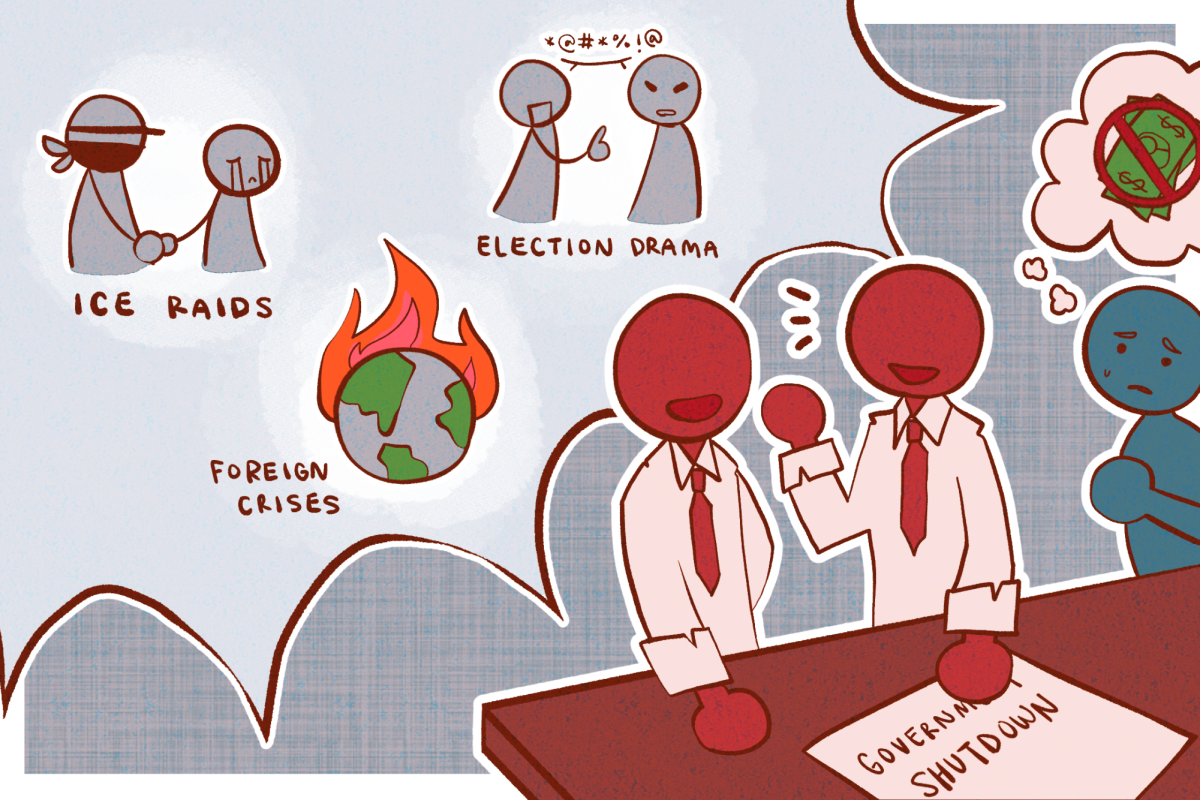
It’s easy to forget the government shutdown amid the chaos unfolding domestically and abroad, but that’s exactly the problem. Many Americans have grown so accustomed to political dysfunction that even a government shutdown now feels like another square on the political bingo card. This growing desensitization to political crisis weakens accountability and allows leaders to treat it as business as usual.
While the blame game rages between parties, politicians on both sides are using it to score points rather than focus on solutions. Ordinary people are feeling the effects of these political battles as the Trump administration, with the Republican Party controlling both the House and Senate, uses its power to push political agendas.
The shutdown left federal workers temporarily furloughed or working with paycheck delays, small business loans frozen and essential services halted. These services include the Supplemental Nutrition Assistance Program, U.S. Military Pay and the Low Income Home Energy Assistance Program, which helps Americans pay utility bills.
Get The Daily Illini in your inbox!
Congress warned that the federal government was expected to shut down if the Continuing Appropriations and Extensions Act 2026 funding bill wasn’t passed by midnight on Sept. 30. The bill missed the deadline because Republicans and Democrats could not agree on what to include in the legislation.
House Democrats declined to support the bill after identifying critical issues, including the lack of extensions for key healthcare subsidies that help millions of people afford insurance. Both parties argued that reopening the government without protecting these benefits would harm working families, yet Republicans continue to push for a “clean” continuing resolution without added policy change.
Attempts to pass smaller funding bills failed because Democrats insisted that all priorities be addressed in one comprehensive bill. As a result, the feud continued, leaving millions of people paying the price for political dysfunction.
The consequences are catching up. Federal workers have been going without pay or receiving delayed checks, small businesses have lost access to critical loans and disaster relief and food inspections programs have been held back. Unless a resolution is reached, the slowing state of the economy is likely to intensify, reducing consumer spending and billions in weekly losses as federal workers of unpaid and governmental services stall.
Meanwhile, the new cycle is plagued with crises that compete for public attention. The number of U.S. Immigration and Customs Enforcement raids is increasing in multiple states, creating anxiety for immigrant communities. Tensions have escalated following Israel’s violation of the ceasefire agreement, drawing attention and concern from U.S. policymakers. And somehow, amid all this chaos, major outlets found time to spotlight President Donald Trump’s dissatisfaction with his Time magazine cover photo.
Since 1981, there have been four major government shutdowns. Two of the four shutdowns, both under the Trump administration, lasted at least 35 days. Each time the government shuts down, the same pattern repeats: outrage, delay and then silence. When the public stops paying attention, the cost of dysfunction grows. According to the Congressional Budget Office, the 2018-2019 shutdown, which is no longer the longest in U.S. history, cost the economy about $11 billion, much of which was never recovered.
This cycle turns crisis into a new normal. This shutdown becomes another talking point, another campaign ad, a chance to rally a base instead of focusing on solutions or, in other words, a distraction. The more leaders treat serious issues as personal leverage, the less pressure there is for them to actually do their job.
But the government isn’t a game; it affects millions of lives. When paychecks stop, safety inspections pause and families lose access to critical benefits, those realities aren’t up for debate. Recognizing the seriousness of a shutdown isn’t about picking sides; it is about demanding competence from those in power. If we turn a blind eye to this shutdown, we lose the very accountability that keeps progress going.
Although the world is in a chaotic state with ICE raids and international conflicts, those tragedies shouldn’t make us ignore dysfunction in our nation. A country stuck in its gridlock can’t act when it’s needed. Maybe the real danger isn’t the shutdown itself, but how quietly we’ve accepted it. When citizens stop paying attention, leaders stop feeling the pressure to change. We lose the belief that things can get better, which is a cost no democracy can afford.
Hajera is a junior in LAS.