When President Donald Trump was hospitalized with COVID-19 in October 2020, his survival was not guaranteed. At 74, clinically obese and experiencing dangerous drops in blood oxygen, he fit the profile of a patient at serious risk of deterioration.
His recovery depended on rapid access to the most advanced medical treatments the United States could offer.
Trump was treated with an experimental monoclonal antibody, the steroid dexamethasone and remdesivir — a drug that only existed because federally-funded university researchers had spent years developing and testing it.
Trump benefited directly from a scientific infrastructure built through federal grants and university-based basic science research long before COVID-19 emerged.
It is no small irony that Trump is now gutting vast amounts of funding from the very system that protected him. And it is a mistake to assume the consequences of such cuts will be abstract. Universities like ours can already measure them.
Get The Daily Illini in your inbox!
In the past year, multiple federal agencies — including the National Institutes of Health, the Department of Energy, the National Science Foundation and the Department of Defense — have attempted to cut the indirect cost reimbursements that keep university research running.
These reimbursements pay for the basic infrastructure of research, and reducing them immediately weakens the ability of universities to carry out federally-funded work.
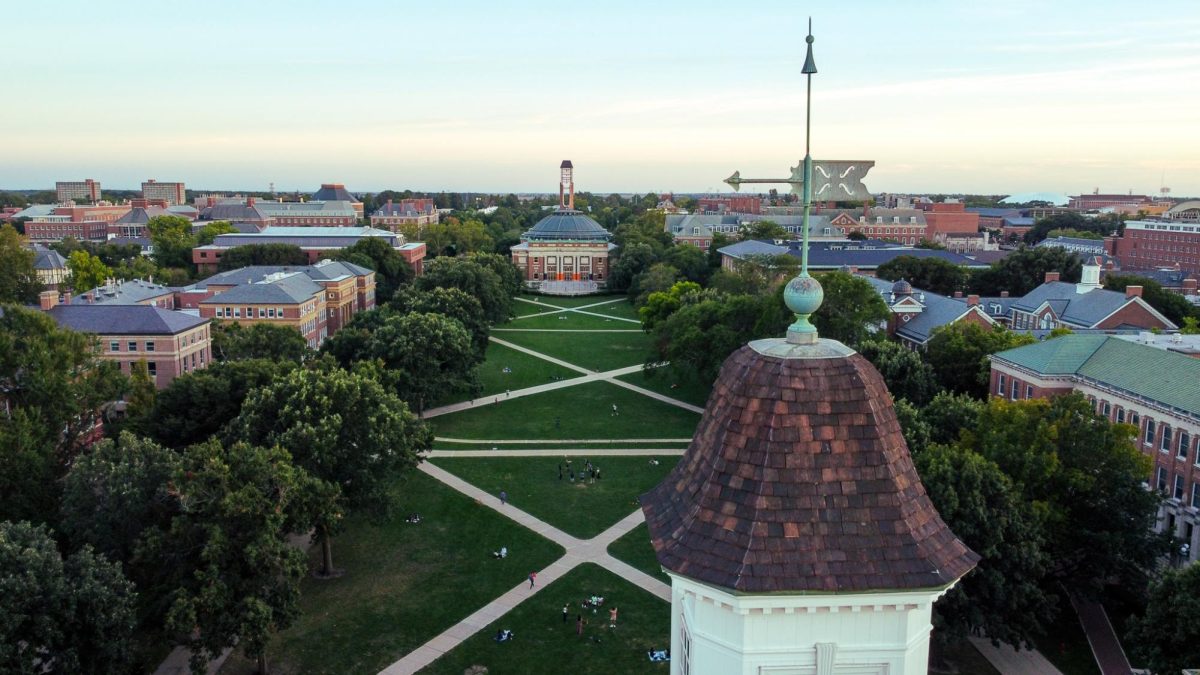
We have already seen multiple federal cuts reach nearly every corner of our campus.
The federal government stripped Soybean Innovation Lab of its funding; it halted support for Prairie Research Institute’s core environmental and energy monitoring; it cut funding for Foreign Language and Arts Studies and reduced Fulbright Fellowships; it squeezed our library budgets; and it curtailed the Supplemental Nutritional Assistance Program-Education initiative. We could go on, but we hope we do not have to.
“I think it’s a dark day on a number of levels,” said Peter Goldsmith, director of the SIL and professor in ACES, in an interview with The Daily Illini on Feb. 25, 2025. “The enterprise of an R1 university like the University of Illinois — it is about research, it is about the long term. If we don’t value the long term, we’re just a teaching college here.”
Our University’s research programs are consistently producing groundbreaking discoveries and leading in their fields. Twelve University scientists were recently celebrated and named to a list of the most widely cited researchers in the world.
They were honored for “demonstrating exceptional influence, as reflected through their publication of multiple papers frequently cited by their peers during the last decade.”
Hundreds of research groups across campus, studying everything from hard sciences to humanities to engineering and everything in between, are devoting their lives to improving our understanding of the world around us.
The Trump administration’s forceful attempt to rewrite academia in its name should teach us to never again take this pursuit of knowledge for granted. Now, more than ever, it is critical that we advocate for continued research funding for all disciplines.
“We have students who decided to leave the University because they didn’t know if they were going to have funding or not,” said Kasia Szremski, associate director of the Center for Latin American and Caribbean Studies, in an interview with The DI on Sept. 30, 2025.
We are unable to reverse the Trump administration’s cuts to university research, so we must focus our efforts locally. The Editorial Board hopes that, amid this uncertainty, readers take time to appreciate researchers innovating for the betterment of humanity.