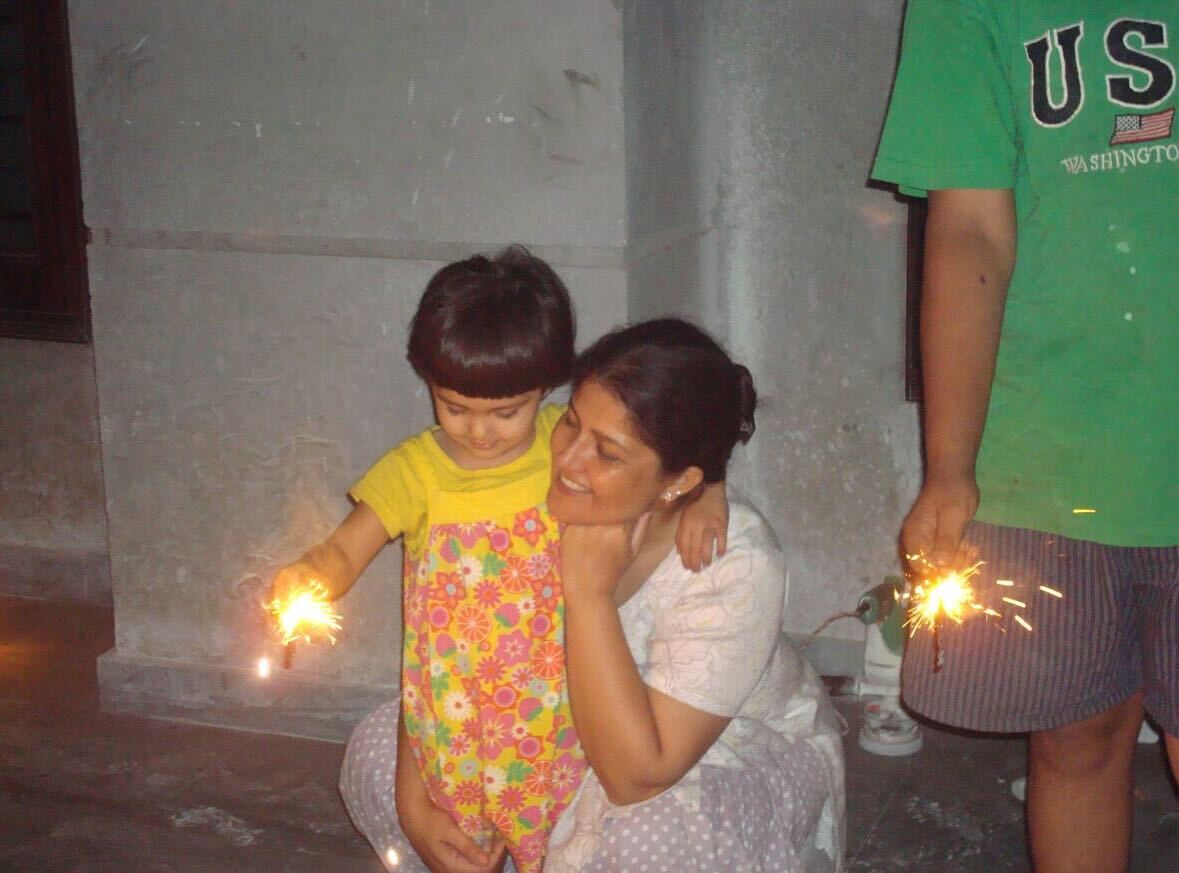
The Diwali evenings of my childhood were a tapestry of light and warmth. My family and I dressed in our best kurtas and salwar kameez, the colors rich against the soft flickers of candles lining the windowsills. The flames made our house glow with a yellow hue that seemed to breathe life into every corner.
From the living room came the sound of kirtan playing on our TV, drifting over my parents’ laughter. The scent of spices in my mother’s cooking curled around my cousins and me as we fought over who was winning a game of carrom.
This year will be my first Diwali away from the familiarity of home and family. The distance prevents me from falling back on family traditions I have blindly followed. As I navigate how my Diwali will look this year, it has forced me to pause and reflect on what this holiday truly means to me.
Across faiths, Diwali falls on the same day and shares a similar central message but originates from different stories.
For Hindus, it is the homecoming of Rama after exile, the streets of Ayodhya lit in celebration of light’s triumph over darkness.
Get The Daily Illini in your inbox!
For Jains, it marks the final liberation of Lord Mahavira, a reminder that enlightenment is possible even in a world clouded by suffering.
For Sikhs, like myself, the day is known as Bandi Chhor Divas. It is the day our sixth guru, Guru Hargobind Sahib Ji, walked free from prison only after securing freedom for 52 others, an act of justice that turned wrongful imprisonment into liberation.
The histories are different, but they converge at a single truth: Light has the power to endure and overcome darkness.
As a kid, Diwali was simple. It was all about the fireworks, the sparklers, the spreads of sweets and the displays of lights and candles. It just never occurred to me that there was anything more to it. On these nights, all I knew was a world that felt untouched by the darkness and the wonder of a holiday that wrapped everything in light.
I am, of course, much older now. After 19 years, I perceive the world around me to have grown heavier.
The innocence that once allowed me to see Diwali only as joy has given way to a sharper awareness of the struggles, conflicts and uncertainties that surround us. The light feels different now, no longer effortless but something I notice precisely because the darkness around it has become harder to ignore.
This year has forced me to confront darkness in a way I have never really had to before. The turmoil of our nation’s politics and global events has finally chipped away at a faith in humanity I no longer cling to.
Darkness means a lot of different things for a lot of different people. For me, it is in the headlines I read, unable to fathom how we live in a world where such headlines can be read.
We are in a world where governments ignore the atrocities in Gaza, where the United States Immigration and Customs Enforcement rips Black and brown families from their homes and where there are constant attacks on freedom of speech and press by the Trump administration. Limitless other injustices continue to plague our world.
In the face of all this, I cannot help but ask myself where light fits in. What does it mean to talk about light when we are confronted with some of the worst that humanity has to offer? Can the glow of a candle matter at all against the scale of such violence and cruelty?
But maybe that is exactly why Diwali matters. I don’t believe its light has ever been about overpowering the night in an instant, but rather about reminding us that even the smallest flame has meaning when darkness feels overwhelming.
So, when I place my candles on my Champaign windowsill this year, the match will flare, the wick will catch and for a moment, the flame will waver before finding its steady rhythm. Just like it always does.
The flame cannot erase the world’s problems — it cannot end wars or mend hatred — but its power exists in the fact that we are the ones who made it. Light matters because we choose to keep it alive, again and again.
Maybe that is what Diwali offers us in this tumultuous moment. It gives us a way to practice courage in miniature. It forces us to remember that one flame on its own feels small, but when joined by others, the darkness begins to bend. It is a festival that whispers: Even here, even now, you can choose.
You can still carry light.
Choosing light, even when the world feels dark, means holding onto the hope that better days are ahead. It means refusing to accept that violence, cruelty or corruption are permanent. It is believing that people can come together, that the voice for justice can be amplified.
It is about trusting, even against your better judgment, that humanity is capable of more than its worst moments and that the future can still be brighter than the present.
I will light my diya this year not as a child simply dazzled by its beauty but as someone who recognizes how heavy the night can be. I will light it because I believe in the stubbornness of hope, in the quiet strength of small flames, in the possibility that, together, they make the night less formidable.
Sometimes, choosing light is all we can do. Sometimes, it is enough.
Gurneer is a sophomore in LAS.