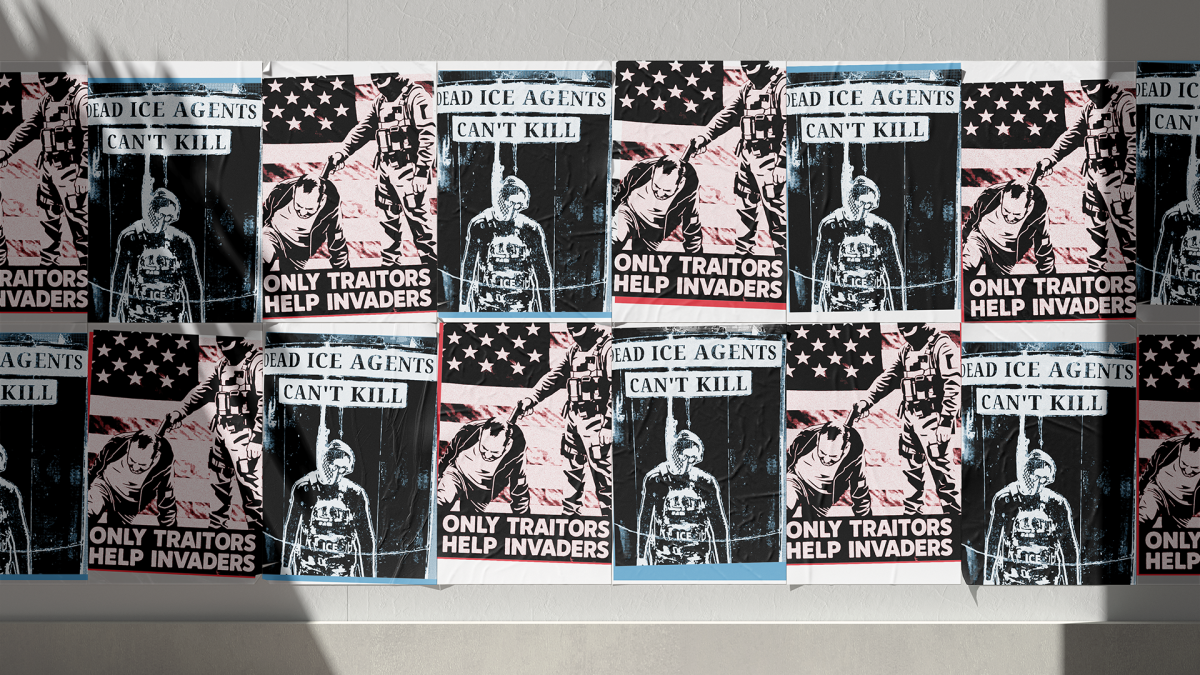
University administrators shouldn’t be in the business of “reviewing” student politics.
But that’s the direction the University of Illinois Urbana-Champaign appeared to take after the Illini Republicans, a registered student organization, posted a graphic on Instagram resembling Minneapolis protester Alex Pretti being shot by an immigration agent with the caption “Only Traitors Help Invaders.” Administrators reportedly referred the group to the University’s Title VI office for “review.”
If you oppose ICE operations under the current administration, you might think: “Good. That post felt dangerous. Why shouldn’t the University step in?”
Here’s the problem. If “offensive political advocacy” becomes grounds for official investigation, that standard won’t stay confined to speech you dislike. It will expand, and quickly.
So here’s the question for student activists: Do you want to be able to share an opinion that might anger other people without getting investigated for it?
Get The Daily Illini in your inbox!
Consider the inexhaustible variety of political expression that routinely angers people: Kneeling during the National Anthem, pro-choice and pro-life stances on abortion, animal rights versus hunting rights, Israel versus Palestine. All of those stances and more have sparked calls for punishment on university campuses. But at a public university, outrage doesn’t create an exception to the First Amendment.
That matters because the impulse to punish speech some view as offensive or even dangerous is bipartisan and contagious. Today it’s a pro-Immigration and Customs Enforcement post in Illinois. In Pennsylvania, it’s the opposite.
At Penn State — also a public university — an anti-ICE poster found outside the student center this month similarly sparked calls to identify and punish whoever created it. The poster read “Dead ICE agents can’t kill” and depicted an ICE officer hanging from a noose. Penn State condemned the poster, said campus police were investigating, and that the school may take action against the person who made the poster once identified.
This means that within the same month we’ve seen two messages on two university campuses, from opposite sides of the same debate, face calls for censorship.
That’s why defending the rights of people you disagree with isn’t a gift to your opponents. It’s actually self-defense; it protects your own rights, too. The moment administrators normalize “investigate first, ask constitutional questions later,” everybody’s activism becomes at-risk.
The University of Illinois is not a private college. It is bound by the First Amendment’s “bedrock principle” of viewpoint neutrality — even toward ideas some find offensive. And the Illini Republicans’ post is political advocacy about federal immigration enforcement, a topic at the core of protected speech. The University should not have announced that protected speech would be “reviewed” by Title VI investigators. That announcement alone chills expression campuswide, whether or not discipline ultimately follows.
And here’s the key point that gets lost in the heat of the moment: The First Amendment protects a lot of speech that feels morally repugnant. It protects harsh rhetoric. It protects hyperbole. It even protects speech that can be read as endorsing violence in the abstract. That means that the First Amendment protects the University of Illinois’ pro-ICE poster and Penn State’s anti-ICE poster equally.
This doesn’t require anyone at the University of Illinois to sympathize with the content of the Illini Republicans’ post. Disagreeing with the post but opposing its censorship would be strategic: If you hold radical anti-policing views, and want to be able to chant “All Cops Are Bastards,” for example, you should want a campus where administrators don’t “review” controversial politics through disciplinary channels.
If their views are controversial or unpopular, it may actually benefit you to let your opponents be heard loudly. As the gay rights activist Jonathan Rauch said of one gay rights opponent, “The more he talks, and the more we talk, the better we sound.”
So what should anti-ICE students do when they see a message like the Illini Republicans’ post?
The First Amendment’s answer is not “silence yourself.” It’s to answer the speech you hate with more speech — your own speech. That isn’t just a lofty principle. It’s a better tactic. If you believe the “invaders/traitors” framing is false and dangerous, rebut it. Organize, write and protest. Hold a counter-protest. Challenge your opponent’s claims and their moral premises. That’s persuasion — and it doesn’t ask the University to aim the same campus bureaucracy at your political opponents that could then come back to bite you.
If you want a campus where anti-ICE activists can remain just as passionate — and just as fearless — as they were in the recent walkouts and rallies in Champaign-Urbana, then you should want the same rule for everyone: Debate, don’t investigate. Join FIRE in demanding the University of Illinois drop its investigation of the Illini Republicans for their protected, pro-ICE political expression. And while you’re at it, demand Penn State drop its investigation of the anti-ICE poster on its campus, too.
Defend the right to disagree passionately when it matters most — before the next controversy makes you the target of university discipline.
William Harris is the strategic campaigns specialist at The Foundation for Individual Rights and Expression (FIRE).
Want to send a letter to The Daily Illini? Submit a letter through this form. Note that we reserve the right to edit for AP style formatting or reject any contributions.