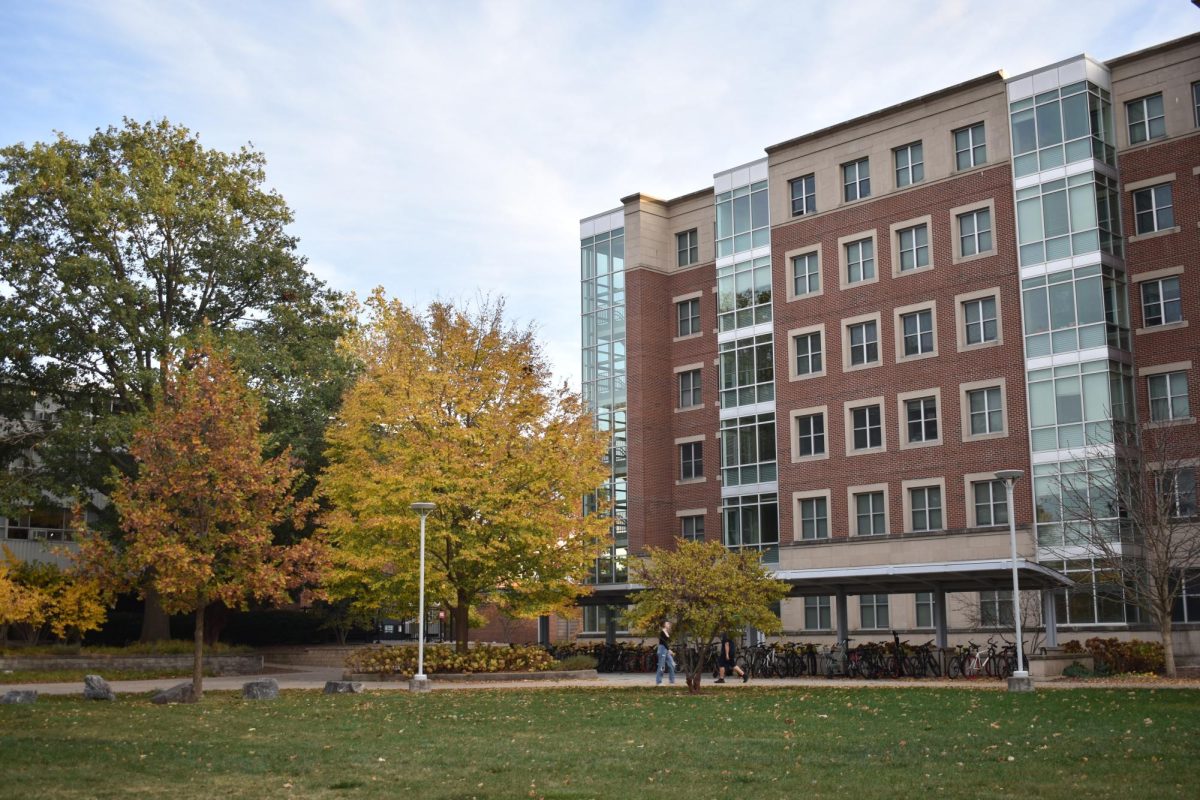
As the University continues to face a student housing shortage, fraternity and sorority houses are emerging as an option for students looking for both a place to live and a sense of community.
Greek housing may look polished from the streets of Champaign-Urbana, but what is it really like to live inside? For students, the reality is a mix of support, structure and the occasional chaos of communal living.
Patrick Holt, member of Pi Kappa Phi and junior in ACES, said moving into the fraternity house presented challenges from the start.
The newly chartered chapter inherited a house that was left with various holes in the walls by its previous tenants.
“There was a good amount of damage to the house,” Holt said. “We had a lot of cleaning and damage to fix, (which is) why we’re remodeling the house this year.”
Get The Daily Illini in your inbox!
Repairs, cleaning and long-term remodeling became part of the brothers’ early experience as tenants.
Even after settling in, Holt said nights in the fraternity house could be unpredictable. When dozens of members trickle back from the bars in the early morning hours, the noise makes it hard to sleep — but it also creates a sense of responsibility, as brothers often keep an eye on one another to make sure everyone gets home safely.
“Sometimes it was decently difficult to get to bed because (we’d) have like 20 people coming in between 3 a.m. and 5 a.m.,” Holt said.
Noise and activity aren’t reserved for late nights, as the chaos frequently carries into the daytime.
Sam Culotta, member of Acacia and senior in Business, said the house can feel hectic on certain days.
“I would definitely say it is chaotic at times when we have chapter on Mondays,” Culotta said. “(But) if there are important things going on, then we try to keep everything sort of chilled out.”
For many students, the difficulties are outweighed by the sense of community that comes with Greek housing.
For Sloan Markin, member of Alpha Omicron Pi and junior in AHS, living in the house was the moment she truly felt connected to her sorority.
“I did not fully know if I belonged in my sorority until I lived in,” Markin said. “Everyone is very different, but we all have a bunch of unique unifying qualities that make us one.”
Holt also said the layout of the Pi Kappa Phi house has strengthened connections among members. The house is divided into pods, creating smaller living groups within the larger space.
“It gives you a really good opportunity to have a really close group of people within the fraternity,” Holt said. “It is a nice balance of fully communal living, like the dorms, and also being completely separated (like) a normal apartment building might.”
Beyond community, members also point to convenience as one of the biggest benefits of living in a fraternity or sorority house.
For Markin, the meal system is one of the most notable benefits.
“We have an app where you can see what the meals will be for the week,” Markin said. “You can select a ‘late plate’ or a ‘sack lunch’ … if you need to eat later in the day, but we are provided lunch and dinner on all weekdays and dinner on Sundays.”
Food, friends and convenience are part of the appeal, but deciding whether to live in-house is about more than perks — it’s about whether the experience will pay off in the long run.
Culotta offered some perspective on navigating that uncertainty.
“The best thing to do in college in general is to be confident in any situation that you’re anxious about,” Culotta said. “Living in a fraternity or sorority is always going to have its ups and downs, but I think that it really helped me personally grow.”