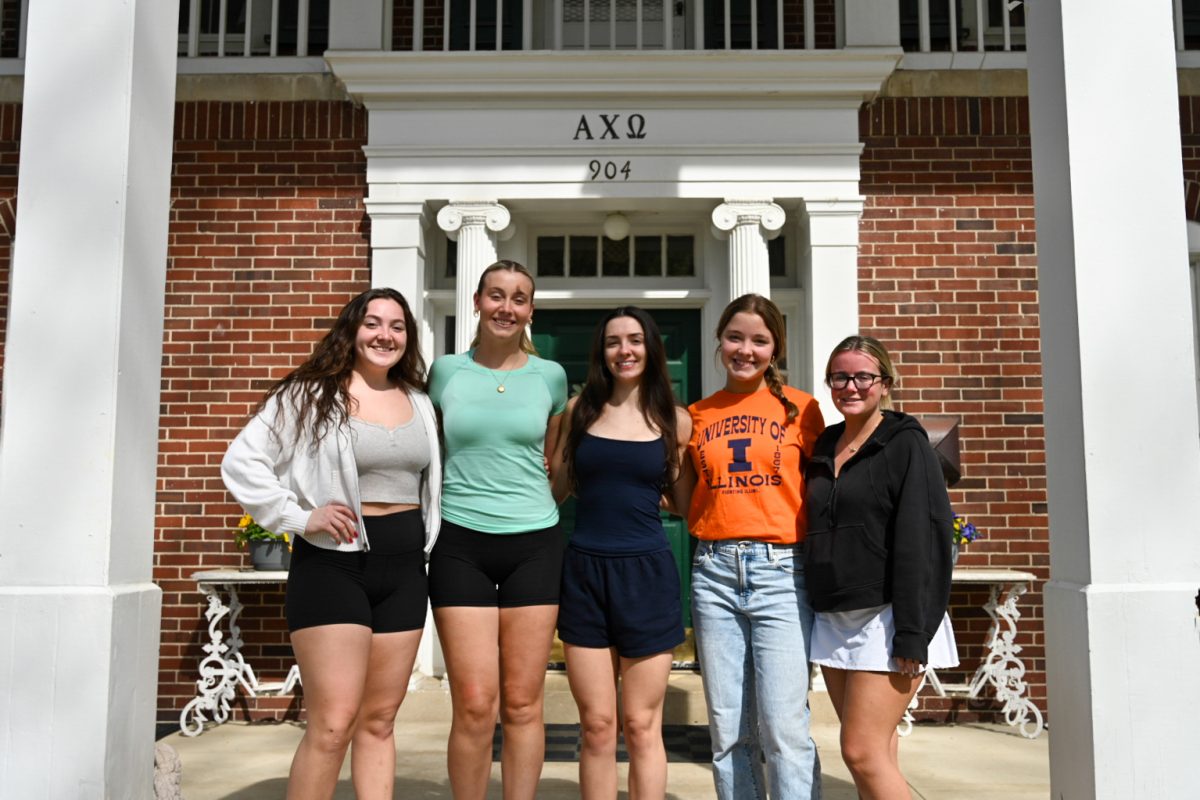
As an incoming freshman, the opportunities to network and expand your horizons on campus seem limitless. Among the largest and most prominent RSOs on campus are fraternities and sororities.
The Fraternity & Sorority Affairs website offers an overview of information about recruitment, philanthropy and each council’s values. Students can start to form an idea of which council best matches their interests and find information on the existing Panhellenic Council, United Greek Council and Interfraternity Council websites. Information about the Black Greek Council can be found on the FSA website.
In addition to this wealth of information, executive board members shared personalized insights with The Daily Illini. They also addressed common misconceptions to help incoming freshmen with what they should know about fraternity and sorority life.
A key clarification
One important distinction board members made was the relationship between the four councils and the FSA. Interfraternity Council President Ross Bodine, senior in ACES, explained that while the office provides guidance and oversight, the councils are independent, student-run organizations.
Get The Daily Illini in your inbox!
“We don’t work for the office, but they do have a hand in a lot of things that we do,” Bodine said.
While FSA and the councils both shape the Greek life experience at the University, their responsibilities are significantly different. As a unit under Student Success, Inclusion & Belonging, FSA provides oversight and ensures that Greek life organizations recognized by the University follow campus policy.
On the other hand, councils and their chapters are student-governed, managing their own daily operations. Bodine explained that the University typically takes a hands-off approach, encouraging student leadership on campus and only stepping in when necessary. While responsibilities between the two differ, the relationship between them is meant to be collaborative and democratic, allowing for student leadership while upholding University policy.
Recruitment
While all four councils participate in similar events meant to promote recruitment, like Quad Day, they also have individual events that are specific to their respective councils and chapters.
The BGC and UGC both participate in an event that showcases their chapters to students. Dan Statam, BGC president and senior in ACES, described Meet The Greeks as a panel for students to get information about each chapter and the Black Greek life experience.
“We’ll have representatives from each fraternity and sorority; we’ll answer the burning questions that many people outside of Greek life wouldn’t know the answer to,” Statam said. “After that, we give them some time to interact with the members of the organization.”
Based on details provided on its website, the UGC also participates in Meet The Greeks and Quad Day to introduce its chapters. However, each UGC chapter determines its timeline for taking in new members. Dates and times for informational meetings for each chapter can be found on flyers around campus.
The IFC’s recruitment process is also mainly informal, with chapter-specific events. Bodine mentioned his personal experience of finding friends on Quad Day and the benefit of getting to know each chapter on a more personal level through the IFC’s informal recruitment process.
In the fall, PHC participates in a formal recruitment process. After formal recruitment, certain chapters also host informal events.
Formal recruitment is a mutual selection process between potential new members and chapters. It begins with an orientation followed by four themed rounds. It builds up to Bid Day, when participants receive offers to join a chapter and head to their new chapter houses for welcoming events, according to the council’s website.
Campus initiatives, philanthropy-related events
Each council typically leads one or more annual council-wide initiatives while chapters engage in their individual philanthropic efforts.
One of PHC’s campus initiatives this past year was Hoops for Hope, a series of basketball tournaments in which all chapters on campus competed. The first-place prize was a check to the winning chapter’s philanthropy.
PHC Vice President of Recruitment Toni Reynolds, senior in LAS, explained the mindset the council takes on when choosing its campus initiatives.
“‘What is the greater U of I community looking for at this time?’” Reynolds said. “I think that, with being the largest women’s RSO, we are able to make such a difference. It’s almost like if we don’t … ‘What is PHC? Why are we doing this?’”
Along with Hoops for Hope, PHC collaborated with IFC to actively recognize Sexual Assault Awareness Month this past year, Bodine said.
He also discussed the IFC’s council-led efforts aimed at addressing and ending sexual violence on campus.
“We had a fundraiser where we raised over $400 for R.A.C.E.S. (Rape Advocacy, Counseling, & Education Services) on campus,” Bodine said. “We also hosted a speaker about ending sexual assault and fighting back against that.”
Statam reflected on the BGC’s council-wide initiative from the previous school year.
“The Black Greek Council also hosts service events monthly in which all of the active chapters participate,” Statam said. “One of the initiatives from last year was during Women’s History Month — we wrote letters to those who were victims of domestic violence.”
According to the UGC website, previous council initiatives involved making cards for local hospitalized children and delivering Valentine’s Day cards to residents of the Swann Special Care Center.
Size, scope
Board members also provided the size of their councils with clarifications on the included chapters.
Bodine said that the IFC is a council made up of 35 different chapters with over 2,000 active members. He added that while not all are part of the North American Interfraternity Conference, most are.
Bodine clarified the potential misconception that the IFC includes all professional fraternities. However, some chapters have religious or vocational associations. There are also professional fraternities for fields like business, medicine and dentistry that function separately from the IFC.
Reynolds provided a closer look at the Panhellenic Council’s structure, highlighting a mix of traditional and interest-focused chapters.
“We have 18 NPC (National Panhellenic Council) chapters,” Reynolds said. “We also have associate chapters predominantly founded on our campus: 4H and Sigma Alpha, our agricultural sororities, and AOE and Phi Sigma Rho, our engineering councils.”
There are currently four active fraternities and sororities affiliated with the BGC. The UGC is composed of nearly 30 cultural sororities and fraternities, according to the list of fraternities and sororities on the FSA website.
Connection, shared purpose
Bodine, Reynolds and Statam highlighted the unity of all the councils and their closeness to each other, which might come as a surprise.
“All of us meet together every week, and we discuss the different issues between our councils,” Bodine said. “If there’s an issue in the Greek community, likely it involves all of us because we’re all so interconnected.”
Statam reflected on his positive experience working with members of PHC who assisted in running the StepDown Step Show this past May.
“I really enjoy spending time with the Panhellenic girls; they actually volunteered to help run the (StepDown Step) show in terms of tickets and making sure everyone’s in their seats, so (I) definitely give major gratitude to them,” Statam said.
Reynolds added that beyond promoting council unity, she believes leaders like herself have a responsibility to help all students find their place on campus, even if Greek life or PHC isn’t the right fit for them. By talking to students, she and others could redirect them to organizations more suited to their interests.
“At the end of the day, we’re all just humans trying to navigate Earth,” Reynolds said.