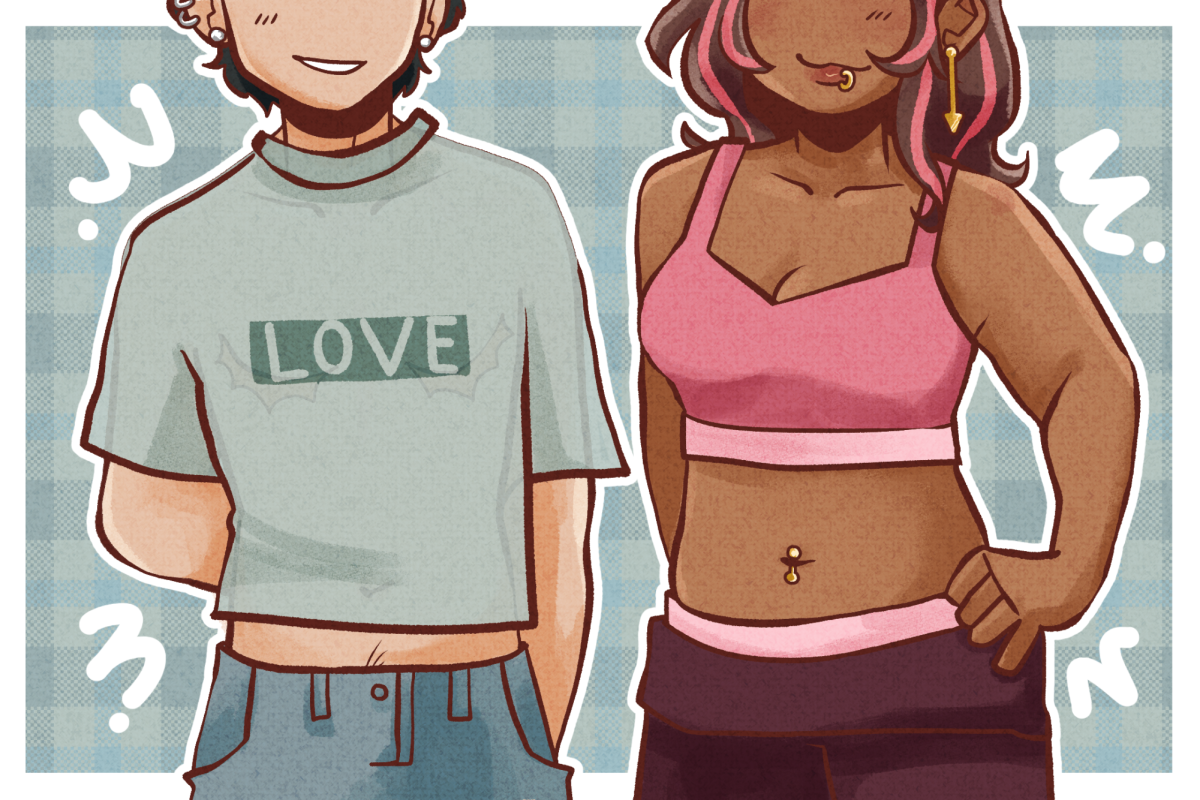
Identity can be expressed in many small ways.
It’s changing your hair color on a whim, throwing on a cute outfit just to walk around the house or putting together an intricate outfit to go to a house show. These personal choices often become quiet ways that people explore their own gender identities, with or without any outside influence.
For many students, gender exploration doesn’t happen all at once. It’s shaped gradually by the community around them, instead of being one single moment of realization.
Cayleigh Kissinger, senior in LAS and Media, started thinking intentionally about her gender in high school. Being part of queer spaces surrounded her with people of all identities, which prompted her to experiment with her own pronouns. That questioning resurfaced more clearly during her junior year of college.
“I realized that a lot of my fears about how I present, and a lot of my anxieties around it in general, stem from this idea that I felt like I was stuck in a specific label,” Kissinger said. “I realized I could loosen the grip on that because there doesn’t have to be one way to be anything, and I don’t have to just be what I’m born as.”
Get The Daily Illini in your inbox!
Rather than rejecting femininity, Kissinger thinks of it as something she simply gravitates toward, not something she owes to her womanhood. Adopting she/they pronouns helped her loosen some of that pressure and comfortably accept her own ideas of gender.
She shows this shift in how she expresses herself. Kissinger has dyed her hair for years in different shades of red, pink and even pastel green as a playful way to experiment with her gender identity.
Clothing also offers a similar freedom. As a lover of both masculine and feminine styles, she notices a change in the way she carries herself when she wears different types of clothing.
“When I’m wearing a skirt, I notice the crossed legs, and I notice the more feminine attributes coming out,” Kissinger said. “If I’m in a muscle tee, even the way I sit will change, and the way that I speak and my hands and voice will change.”
While some students experienced gender exploration as letting go of social expectations, others have to balance the internal and external restrictions that come with it.
Ximena Munoz, senior in FAA, identifies as a transgender woman. She first explored the idea of being gender-fluid but settled into identifying as female during her junior year.
While Munoz found a supportive community among friends at the University, her parents don’t carry the same acceptance. Since she hasn’t told them about her transition, she tries to limit her visits home and avoids wearing feminine clothing around her family.
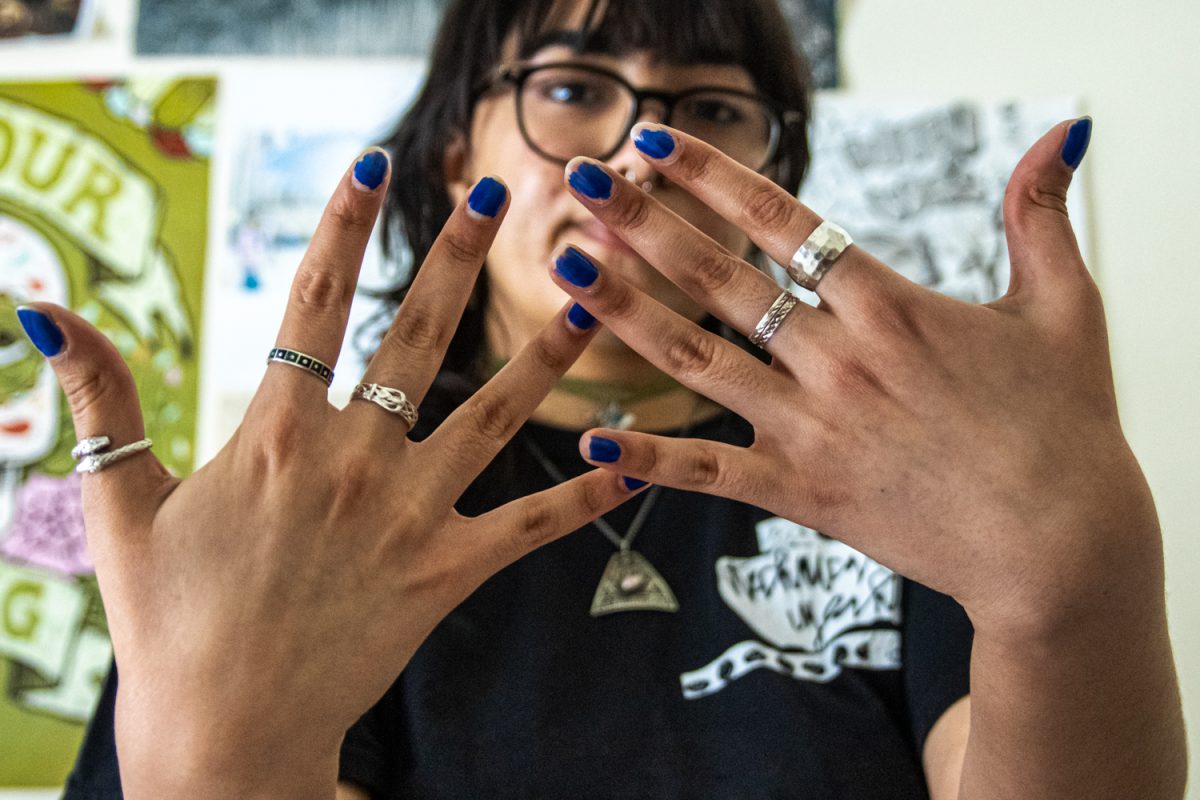
Instead, she expresses her femininity in quieter ways, by shaving her facial and body hair, painting her nails or doing her makeup.
“I kind of just try to be myself,” Munoz said. “I don’t feel like I have to portray certain things, even in private.”
House shows in Champaign-Urbana have been especially important for Munoz. In those settings, she’s allowed to dress and exist however she wants without fear of judgment.
Still, she doesn’t see femininity with a narrow mind. Munoz enjoys both masculine and feminine interests and learned that the two can coexist with womanhood.
“It’s not like I have to wear (feminine clothes) to feel like that, but it definitely does help kind of express it, and I think it helps me feel like other people can see (my identity) a little bit more,” Munoz said.
Even with that freedom of expression, growing up in a religious Mexican household has left some internal struggles. Instead of facing judgment from others, Munoz finds herself having to unlearn beliefs that were instilled in her early on.
“Even when you leave home, and you are able to really express yourself, there is still a mental block that’s really difficult to get through, and that often is there for a long time,” Munoz said. “(Even though) I have been able to start more freely expressing myself, there is still always something nagging at the back of my mind of, like, ‘You’ve been taught that this is wrong.’”
At times, gender expression can be about avoiding labels altogether. Rat King Crow, a local musician, identifies as gender-fluid. Crow said some days they feel feminine, some days they feel masculine and some days they “don’t want to be anything at all.”
After going to high school in a small town, returning to C-U allowed them to explore their gender more openly. Crow enjoys expressing themself through “weird” clothing, often dipping into both feminine and masculine themes. Their favorite piece resists gender altogether: a hospital gown.
“In my head, I don’t really think of gender when I look at a hospital gown,” Crow said. “It just raises the question of, ‘Why are you wearing a hospital gown?’ instead of, ‘Why are you wearing a dress?’ So it makes you not think about what gender I am.”
Through layering and experimentation, Crow tries to redirect the attention from their gender onto their creativity. For them, feeling comfortable in their own skin often comes before worrying about how others label them.
“Easier said than done, but stop caring what people think,” Crow said. “Be kind to yourself; don’t stare into the mirror too long.”