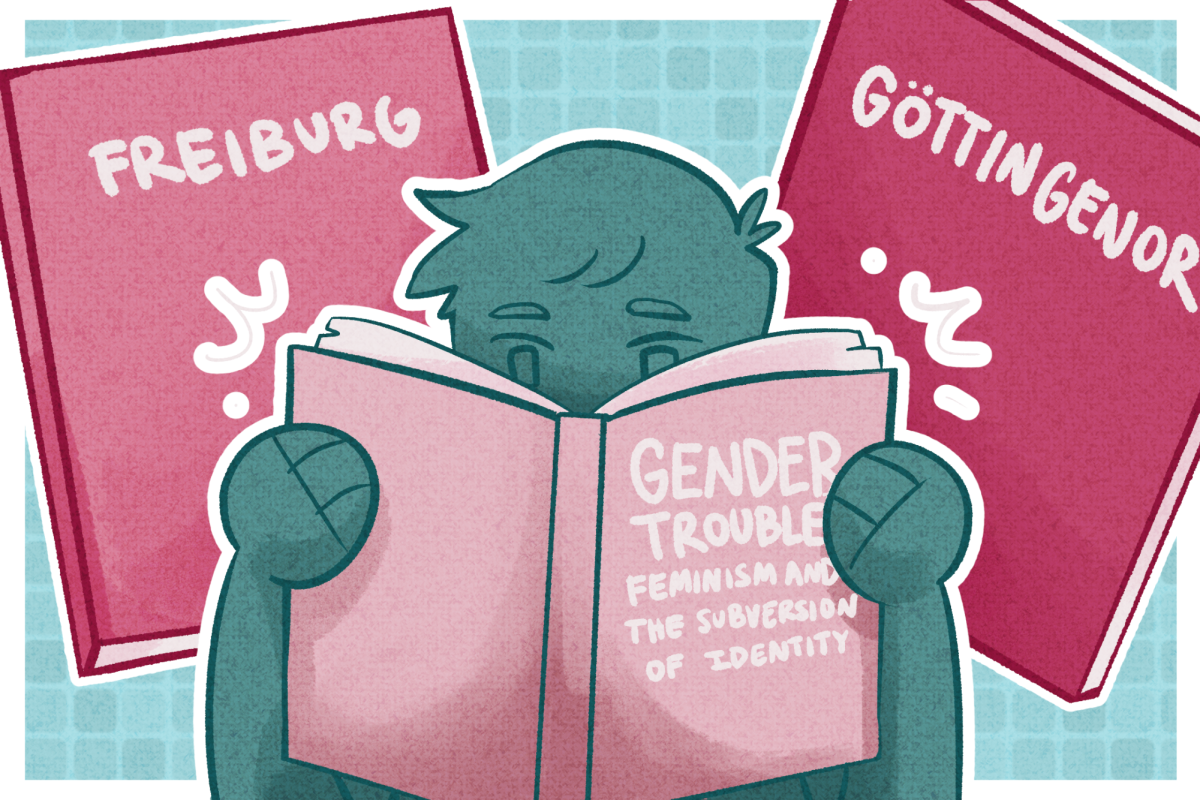
You can see it in YouTube video essays, TikTok comments and social media trends. Purity culture is back. Waves of tradwife influencers like Nara Smith and Ballerina Farm, rising numbers of religious content creators and trends like “staying inside on Halloween for my future husband” have prompted online creators to question whether purity culture is resurfacing again.
According to a literature review published in the journal Theology & Sexuality, purity culture refers to a set of beliefs that frame sexual abstinence as the ideal characteristic for women. Purity culture became popular in the 1990s, with its ideals enforced through practices like virginity pledges and purity balls. While these rituals are not as common anymore, some students have said that purity norms are still prevalent but in more subtle ways.
One example is the “clean girl” trend. The “clean girl” trend stresses a minimalistic look, accompanied by slicked-back hair, matching sets, gold hoops and smooth, acne-free skin.
“The clean makeup trend … subtly promotes certain ideas of femininity and simplicity,” said Yichen Wang, senior in LAS. “It’s interesting to see how they overlap with some of the traditional purity culture ideals.”
Some attribute the reemergence of purity culture to recent social and political crises.
Get The Daily Illini in your inbox!
“Purity culture is providing a script for a reclamation of a power that feels to be sliding away,” said Shelby King, visiting lecturer in LAS. “In terms of strictly religious rhetoric, we can see that certain figures within the purity culture movement have figured America as a nation in decline but one that can be saved by the … reinstitution of traditional normative structures.”
One core pillar of purity culture is abstinence-only education. The Reagan administration enacted the first federal abstinence-only education program with the Adolescent Family Life Act, and the following administrations have continued to enact similar legislation.
These policies have had long-term consequences for how adolescents view sex, health and relationships, according to Stefan Vogler, professor in LAS.
“Coming from this background can leave people uninformed about what healthy sexual practices look like,” Vogler said. “People who have abstinence-only education are more likely to get pregnant out of wedlock. They’re more likely to engage in unsafe sexual practices because you’re not taught how to use contraception.”
Growing up with an abstinence-only education also shapes how students view their own sexual experiences.
“I grew up with abstinence-only sex education, but in reality, we didn’t even get much education on sex at all,” Wang said. “I was raised in a misogynistic culture where terms like ‘slut’ were shamed, not empowered, and heterosexuality was treated like the default. It wasn’t until college that I started to explore my own sexuality and challenge these narrow views.”
A 2025 study published in The Counseling Psychologist found that individuals who grow up with purity culture may also have difficulty understanding the right to give and withdraw consent. This sentiment is something that Wang has observed in many students.
“I have been a … (First Year Consent and Relationship Education) facilitator for three years,” Wang said. “I notice that people often assume certain things, like if you do something once, it means you want to do it again, or that you are always interested in sex. This kind of idea can make people ignore the importance of asking for consent and respecting boundaries.”
Students said purity culture also manifests in online spaces frequented by students.
“I feel like things that contribute to … the negative perpetuation of (purity culture) stems from toxic masculinity bred from media like the ‘manosphere’ and Andrew Tate-like media,” said Anumitha Suresh, freshman in Engineering.
Purity culture ideals can negatively affect students navigating their own identities, impacting their perceptions of sexuality, according to Wang.
“Purity norms create a lot of shame and confusion about what is normal and healthy in terms of sexual behavior,” Wang said. “Heterosexual, monogamous and longer-term committed relationships are the default. It can make it harder for students to navigate their own desires or boundaries, as they may feel pressured to conform to a very narrow definition of what is acceptable.”
While many students emphasize the harms associated with purity culture, others stress that the issue lies more with how these values are enforced.
“I cannot say whether purity culture is positive or negative, but it is just the way that certain groups of people have shown it in a light of either sexism, infantilization or condescension,” Suresh said.
As purity culture continues to evolve, its presence in media, religion and cultural norms will continue to shape how students navigate their identity.
“(In the future), I hope that purity culture will shift away from the binary definition of ‘pure’ or ‘impure’ and more toward a healthier focus on consent, communication or personal agency,” Wang said.