**Gay, bisexual and queer men will primarily be referred to as “queer men” in this article.**
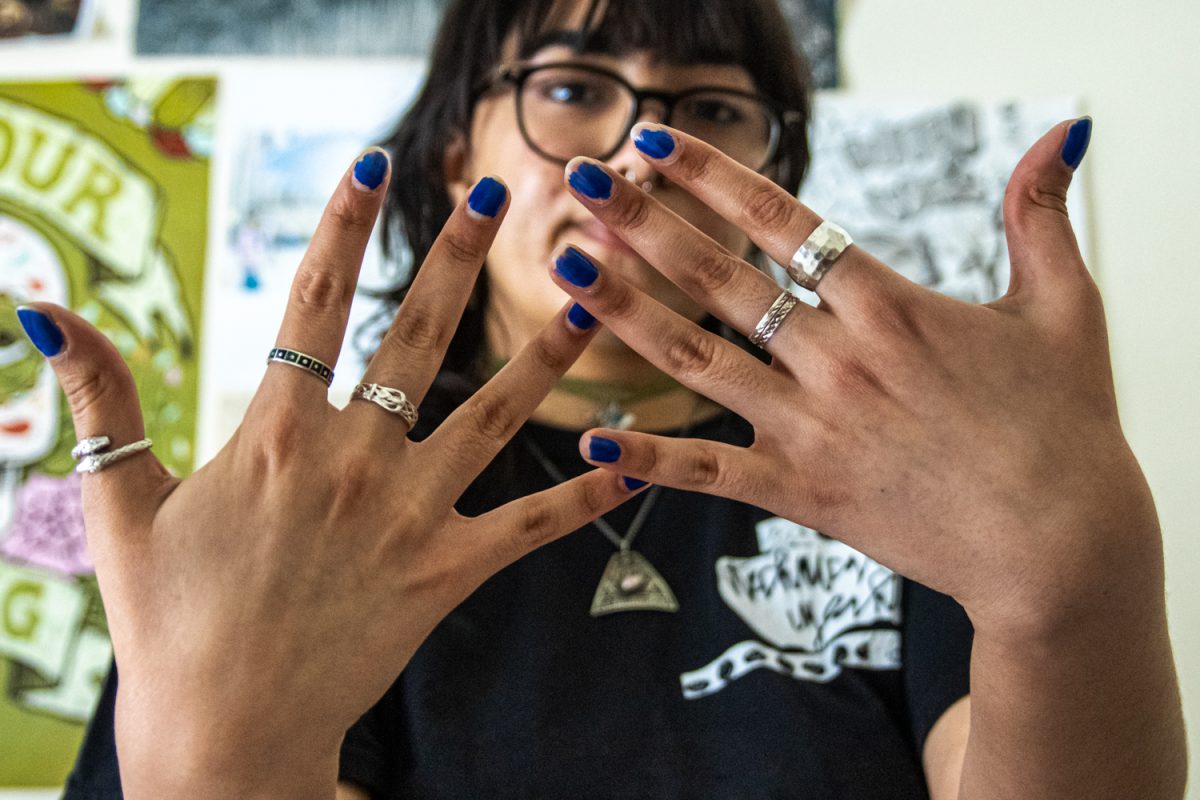
Earrings. Tight shirts and skinny jeans. Instagram posts surrounded by girls. Lorde concerts. “Like yeah-uhh.”
Ah, yes. The “gay guy.” No matter what kind of batteries your gaydar runs on, there’s the once-in-a-while-gay you can pick out of a crowd like an orange ping pong ball on a white piece of paper. You don’t ask, they don’t need to tell.
Stereotyping is innate to human decision-making. As Paul Bloom, the Brooks and Suzanne Ragen professor emeritus of psychology, said, “You don’t ask a toddler for directions, you don’t ask a very old person to help you move a sofa, and that’s because you stereotype.”
Get The Daily Illini in your inbox!
You don’t assume the skinny guy wearing fairy wings at a Halloween party is the modern-day Casanova.
Queer men already struggle to find potential partners — only 6% of men in the United States identify as LGBTQ+. To combat this, they have developed physical characteristics to signal their interest in same-sex relationships. For example, a red necktie used to signal interest in queer encounters.
“Such heuristics can be useful when decisions must be made quickly, or when information is lacking,” according to Alexander Stewart, honorary professor at the University of St. Andrews School of Mathematics and Statistics, and Nichola Raihani, professor of evolution and behavior at the University of Auckland School of Psychology.
It’s social Darwinism: A queer man easy to pick from a crowd is more likely to find a partner than others. Therefore, more queer men adopt traits to make themselves easily identifiable.
If a queer man wants others at the bar to know his sexual identity, he will likely perform as the “gay guy.” Some only do this to ensure their intentions are met with successful recognition.
But it isn’t working. Sixty-two percent of queer men have reported being single, compared to 32% of all American men. Many just aren’t comfortable being the “gay guy.”
“It’s not necessarily a stereotype, more so an expectation, but ‘being one of the girls’ gets annoying,” wrote one user on Reddit.
Queer men must curb these stereotypes by being less “gay.”
The media presents homosexuality in a heteronormative frame. Male same-sex relationships frequently consist of distinct dominant and effeminate-male binaries to create clear character divisions and appeal to mass audiences.
There is the “almost straight,” masculine top and the skinny, clean-shaven bottom: Will and Jack in “Will & Grace” and Nick and Charlie in “Heartstopper,” for example.
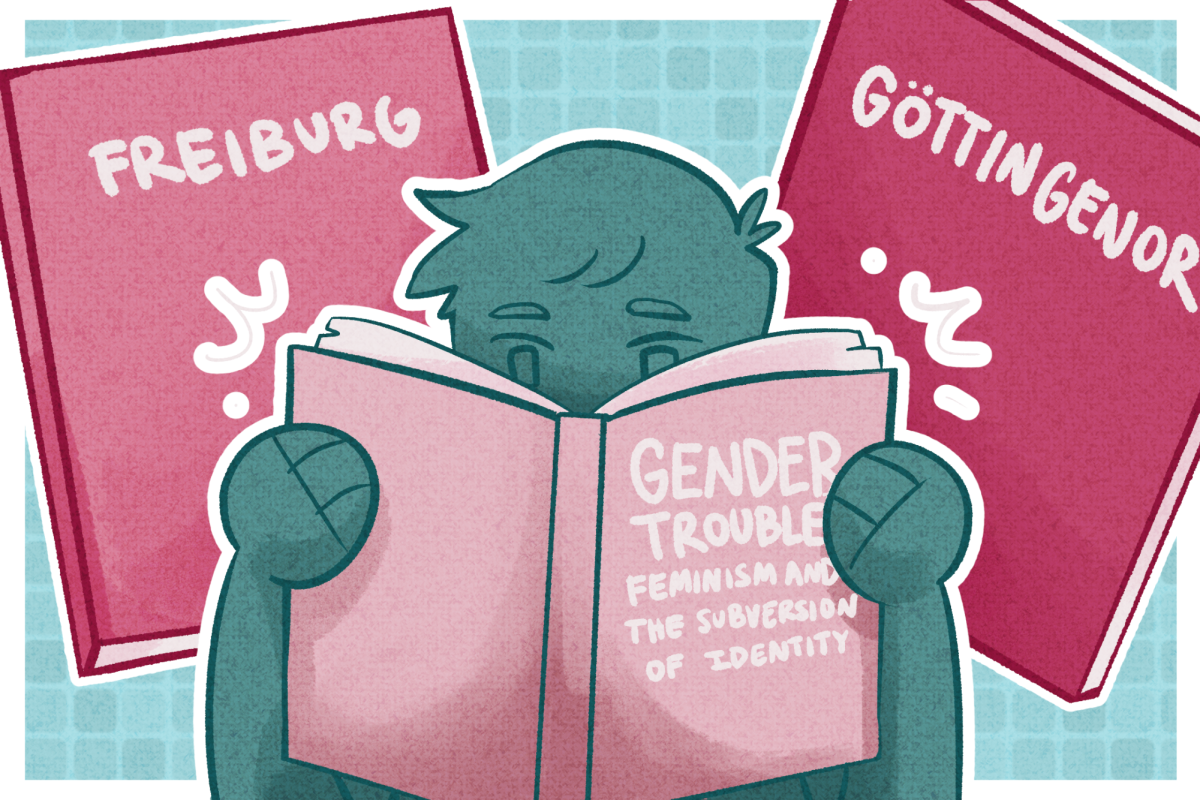
These archetypes “hail” queer men. French philosopher Louis Althusser’s theory of interpellation suggests behavioral ideologies “hail” people like a cop saying, “Hey, you!” — queer men see models of identity presented as reality by the media and think, “Oh, that’s what I should act like.”
Granted, there are more accurate, challenging depictions of homosexuality in films and TV shows like “Moonlight,” “Sex Education” and even “Brooklyn Nine-Nine.” However, these are few in number and usually target more niche audiences or are not the focus of the narrative.
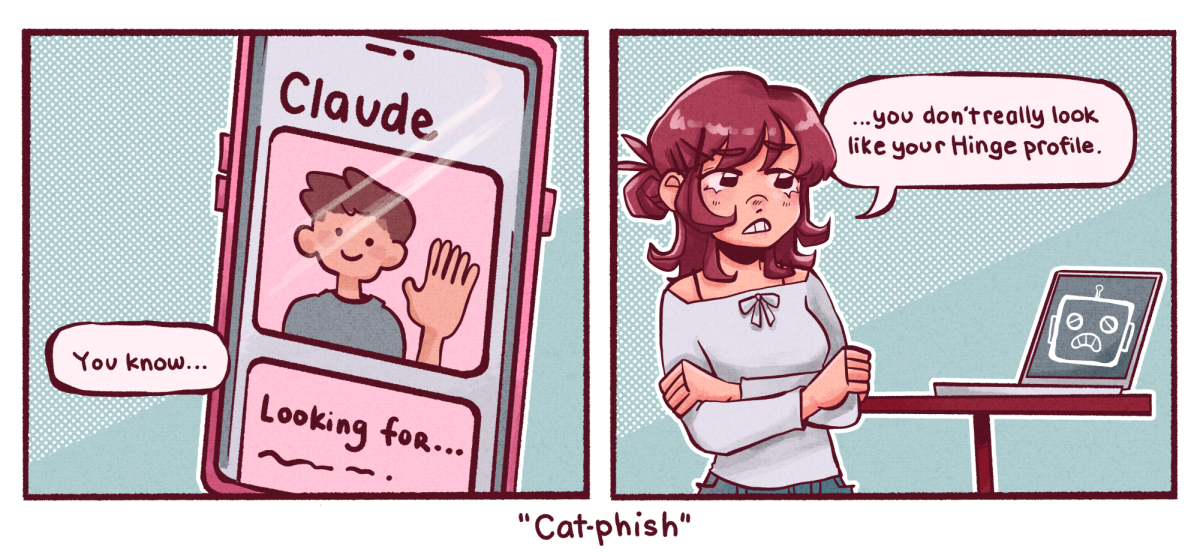
Then there are representations of queer men in porn and on platforms like OnlyFans and Grindr. In fact, 57% of queer men have used a dating app. These outlets promote labels like “DL,” “Twink” and “Bear,” funneling queer men into rigidly defined, promiscuous cliches.
As a result, public vernacular regularly associates queer men with homophobic narratives like sexual and romantic desperation, polygamy and being carriers of disease, a residual from the 1980s HIV/AIDS epidemic.
It’s social osmosis: As more gay men choose one of these models to mirror, the stereotypes exit the screen and enter their surroundings.
“Stereotypes can therefore be self-fulfilling prophecies, and are not only opinions we have about others, but opinions we come to believe about ourselves,” according to author Dan Pilat and decision scientist Sekoul Krastev.
It comes as no surprise that, in 2022, 58% of LGBTQ+ youth reported experiencing symptoms of depression, and 45% seriously considered attempting suicide. Seventy-seven percent of users reported feeling regret after using Grindr in 2018.
While the media and online platforms capitalize on gay cliches, it is on queer men themselves to overhaul the exoticization of male homosexuality.
Researchers at the University of Amsterdam conducted a study of possible interventions to reduce gay stereotypes. They found that presenting media of queer characters in difficult situations to heterosexual men was the most effective.
A prime example is Jack and Ennis in “Brokeback Mountain.” Both men are hypermasculine. They struggle with their attraction to each other, and a presumable act of homophobic violence affects one primary character in the end.
As gay as Jack and Ennis may be, they retain their masculinity and make their homosexuality “nobody’s business but (theirs).” This generates more hetero-societal empathy for their relationship. Unfortunately, it also promotes the notion that queer men who aren’t expressive about their sexuality must remain closeted.
The lesson for queer men to take from this isn’t that they should appeal to ideals of masculinity for approval. It’s that queer men who don’t naturally desire to perform in more expressive ways shouldn’t.
Instead, they should be open about their sexuality while retaining their individual qualities.
Some may see this as “straightwashing.” Queer groups have criticized politician Pete Buttigieg for this. Conservative political commentator Tucker Carlson went so far as to theorize that Buttigieg is secretly straight.
Only 13 members of the 119th U.S. Congress openly identify as LGBTQ+ (not including George Santos). Buttigieg, the first openly gay presidential cabinet member, has already transcended boundaries for the queer community, reaching a platform few ever do.
And now you’re telling him he has to be gay in a certain way?
The very fact that Carlson is so scared of Buttigieg that he thinks he’s straight is a sign of progress. It reflects Sigmund Freud’s concept of “the uncanny,” suggesting people repel shocking material when it evokes subconscious thoughts or desires.
Carlson repelling Buttigieg’s homosexuality proves people are terrified of the truth: Queer men are everywhere and not so different from their straight counterparts.
This is not suggesting that more expressive ways of challenging sexual norms are ineffective. Dyeing hair helps individuals embrace their queer identity. Emphasis on pronouns has also proven to help affirm gender identities for those who may challenge gender norms.
The reality is, there are more queer men out there than the few dressed as hunky firefighters. Many simply don’t feel comfortable outwardly expressing their sexuality because they don’t want to perform common gay paradigms or homophobic narratives.
It’s going to take some “balls” to reduce “gay guy” stereotypes. Queer men need to show that effeminacy, outfit choices and drinking vodka crans are unique to the individual rather than their sexuality.
This means blurring expected dress codes for hetero and homosexual males. It also means being equally open to having male and female friends or partners, veering away from stereotype-enforcing outlets, like Grindr, and occupying more traditionally “straight” spaces — all while being openly gay, bi or queer.
Hopefully, the media will represent these individual trends, in turn leading to fewer queer men mirroring exoticized models of sexuality.
Curbing overtly gay expression is not conforming to or infiltrating heteronormative standards. Society benefits from openness about orientation and authentic expressions of sexuality.
By refusing to perform as caricatures, queer men will reach platforms where they can promote and be models for change. They can then develop a social climate more open to all forms of sexual expression, helping a wrongfully marginalized and stereotyped group become happier and healthier.
Moving away from practices that closet many queer men will also force homosexuality to become more present in social settings. When gay men aren’t on Grindr, they have less of a choice to avoid flirting with men in bars.
Sexual expression is not something to be “hailed” by. A queer man can wear quarter zips just as they can skinny jeans and listen to Creedence Clearwater Revival just as they can to Mitski.
It doesn’t have to be in their faces, but it is people’s business to know that they are living in a world where they’re surrounded by homosexuality in all forms, fairy wings or not.
Alex is a sophomore in LAS.