After years of campaigning for expanded reproductive rights in Illinois, state advocacy groups watched Gov. JB Pritzker sign House Bill 3709 in August 2025. It mandated that public Illinois universities and colleges provide access to medication abortion and contraception through student health services.
The law, which took effect at the start of the 2025-26 academic year, is comparable to laws in California, Massachusetts and New York implemented in recent years. HB 3709 is the first of its kind in a Midwestern state.
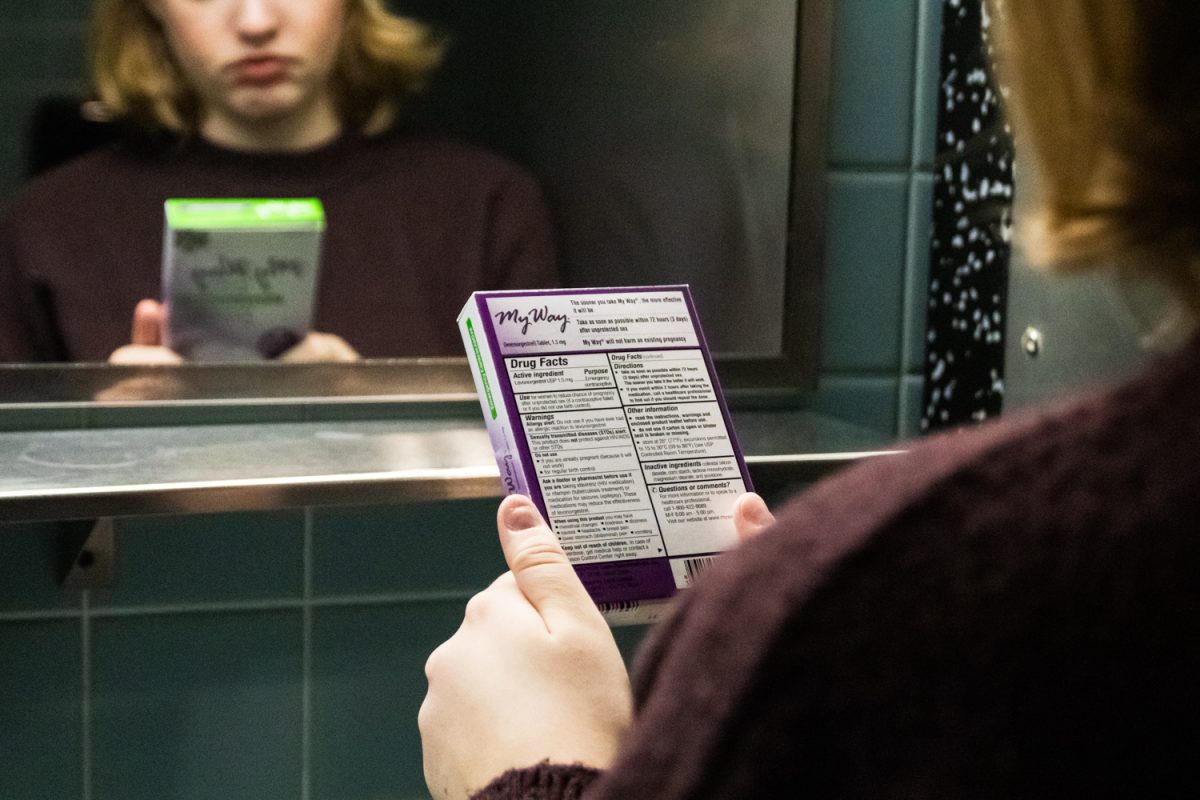
By partnering with Planned Parenthood of Illinois, McKinley Health Center now facilitates access to medication abortion. Students begin by attending a telehealth appointment, in which a health care provider may prescribe mifepristone and misoprostol — sent by mail to the student’s campus address.
“As reproductive rights are restricted elsewhere, Illinois is setting a national example,” wrote Garth Reynolds, executive director of the Illinois Pharmacists Association, in an August 2025 press release. “These laws expand access to critical reproductive health services and safeguard the pharmacists and healthcare providers patients rely on for their care.”
Kylea Liese, associate professor at the University of Illinois Chicago and expert in reproductive health equity, told The Daily Illini that despite the new law, stigma and inaccessibility remain barriers to reproductive care.
Get The Daily Illini in your inbox!
“Even though Illinois has been a state with really supportive policies to promote access, sometimes, on the ground, it’s a lot more restrictive than some of the policymakers realize,” Liese said.
According to Illinois law, medication abortion and contraception are required at campus pharmacies. But after calling over two dozen pharmacies in the Chicagoland area, Liese discovered most do not carry the medication.
These limitations in accessibility can pose an even greater challenge for college students, who may lack the time or resources to receive off-campus care.
Intersecting identities like ethnicity, religion, primary language and immigration status also play a role in how individuals approach family planning, Liese said.
“All of these issues of reproductive justice, they’re all part of how we make our decisions about whether to have a child, whether to not have a child and the ability to raise children,” Liese said. “I think it’s really about creating campuses that support all of the different intersections of reproductive justice.”
After surveying prospective and current college students, researchers at Gallup concluded that over 70% of college students took reproductive care accessibility into consideration when choosing which university to attend.
“When you’re talking about young people, I think there are additional barriers, because (college students) might have more apprehension getting into a bigger clinic, or Planned Parenthood, and there aren’t (that) many services all over the place,” Liese said. “Being able to do something through University Health Services with their insurance is really, really important.”
While the law is intended to expand on-campus access, implementation varies by institution.
UI Health, the UI System’s health care provider, offers a range of services related to reproductive health care in addition to abortion care. Birth control consultations, emergency contraception and pregnancy loss counseling are just some of the services it provides.
“I think what I would want (students) to know is that they have ultimate autonomy about their body and this process,” Liese said. “Things that should be available to them, first of all, are really patient-centered care. They should have someone who’s able to really talk to them about their options and their support systems and what the process of abortion care is like.”
Students seeking medication abortion and other reproductive care can still access off-campus services through UI Health and other community-based providers.
Nationally, abortion remains a common outcome of unintended pregnancy. Data from the World Health Organization found that 6 out of 10 unintended pregnancies end in induced abortion.
“I have a lot of faith in young adults and students for actually knowing their bodies and their choices and their lives,” Liese said.