For generations, the answer felt simple: Cheating meant physical intimacy with someone who wasn’t your partner. But for today’s University students — navigating dating apps, social media and increasingly blurred relationship labels — the definition has become far less clear.
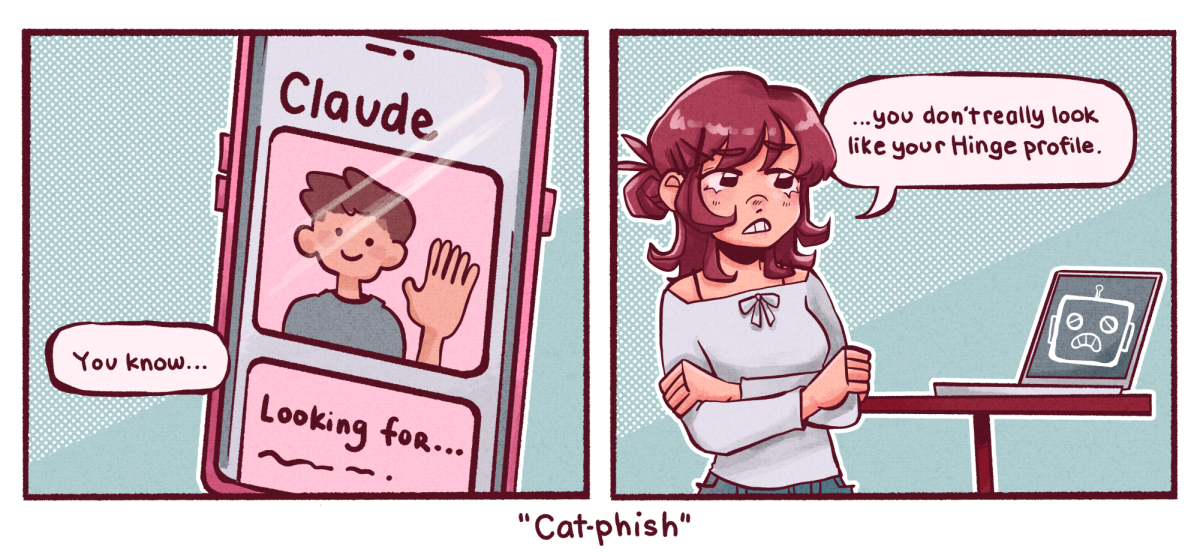
Is liking a thirst trap on TikTok cheating? What about venting to someone else about your relationship? Seeking emotional intimacy from an AI chatbot?
For some, the line between harmless behavior and betrayal no longer sits in one obvious place. Instead, it lives in gray areas shaped by communication, expectations and trust.
“Cheating” today is less about a single act and more about whether someone crossed a boundary and violated their relationship agreements.
Emily Mendelson, graduate student studying communication and co-managing editor for the “Sex and Psychology” blog and podcast, said modern dating has added more layers to the act of cheating.
Get The Daily Illini in your inbox!
“Cheating has always been something that has been complicated, but, of course, we hear about it more often now,” Mendelson said. “But I think that the other part of it is that there have been developments in how people can cheat.”
Infidelity no longer starts and ends with physical intimacy. It can show up in private messages, flirty replies or even hiding apps on one’s phone.
Emotional cheating — confiding in someone else, building intimacy outside the relationship or hiding conversations with another romantic interest — has become one of the most debated gray areas.
Social media adds fuel to the confusion, turning likes, story replies and streaks into signals that are easy to dismiss but hard to ignore.
In many relationships, it isn’t one action that crosses the line, but the secrecy behind it.
For Paolo Spica, junior in LAS, boundaries come down to transparency.
“I would not do or say anything that, if my partner was right there … they would be upset about,” Spica said. “But I have recently learned that people’s relationship experience, and expectations vary a lot (more) than you would think.”
Despite how central boundaries are to modern relationships, dating culture on college campuses can make those conversations even harder.
Situationships, long-distance relationships and the blurred transition from talking to dating can leave students unsure of when commitment and its expectations officially begin.
Mendelson said situationships, in particular, create confusion around cheating.
“We have seen things like the rise of situationships, which is especially messy territory when it comes to cheating,” Mendelson said. “A situationship means two people are in disagreement about the status of their relationship. And when that happens, there are a lot more behaviors that are going to be interpreted as cheating because of that mismatch.”
Still, some may argue that campus culture is slowly creating space for more honesty.
“(The University) is a more progressive campus,” Spica said. “Because things like hookup culture and polyamory and stuff like that are starting to be seen as OK, people are more open to being truthful about what they want in a relationship.”
As conversations around hookup culture, open relationships and polyamory become more visible, students may feel less pressure to conform to a single definition of commitment.
That openness, however, does not eliminate the emotional weight cheating can carry. For some students like Spica, cheating is not always an automatic dealbreaker, but context is key.
“Some relationships are open, and cheating isn’t even a thing,” Spica said. “I think, though, that (cheating) often is a dealbreaker because that is such a profound violation of trust, but nothing can’t be worked around.”
For students navigating modern dating, the question may no longer be “Is this cheating?” but rather “Have we agreed on what this means?”
As definitions of cheating continue to evolve, one thing remains consistent: There is no single rulebook. In a world of constant connection and endless gray areas, the line isn’t crystal clear — it’s something students have to figure out for themselves.