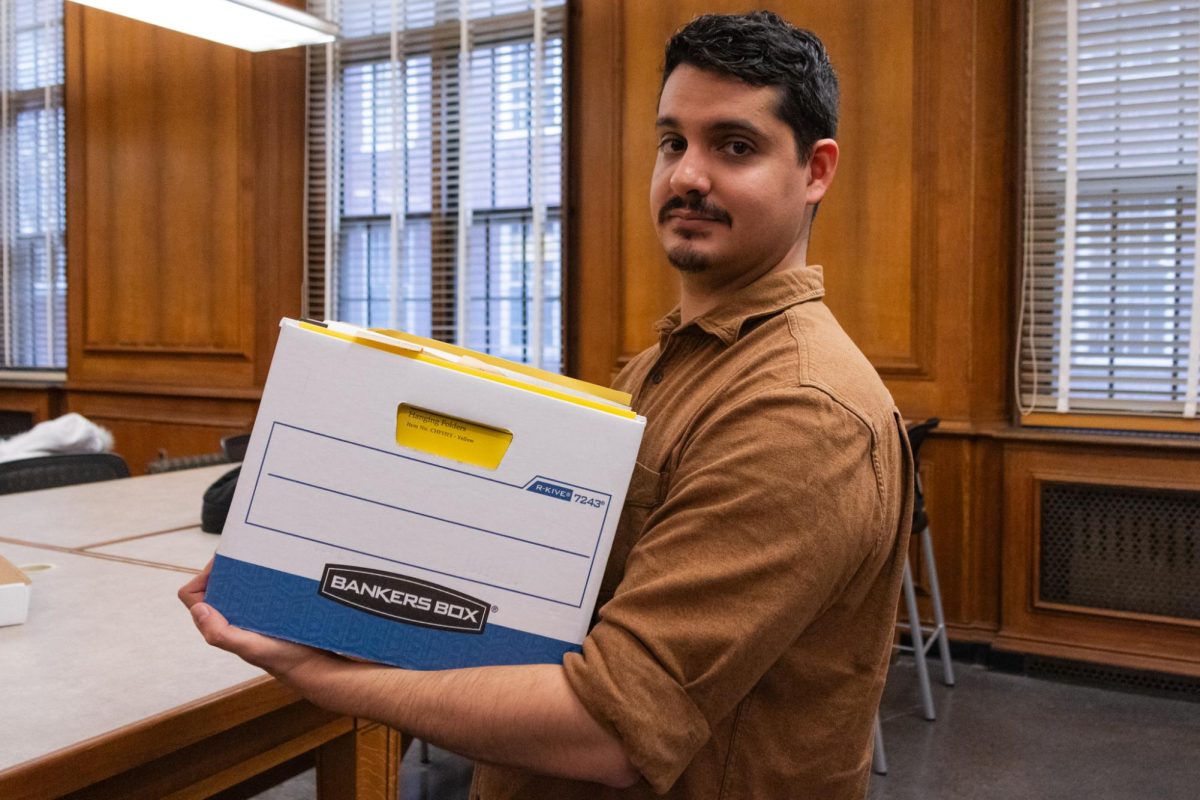
The preservation of AIDS history in the Champaign-Urbana area nearly disappeared years ago after its archivist died in 2022. Now, Daniel Rodriguez is committed to finishing what was started.
As a graduate student studying 20th-century LGBTQ+ history with a focus on transgender history, Rodriguez said the opportunity to work on an archiving project with the Greater Community AIDS Project felt “like fate.” The organization provides housing, financial services and other support to individuals living with HIV and AIDS in central Illinois.
AIDS, or acquired immunodeficiency syndrome, is a disease whose victims have suffered stigmatization and inadequate governmental responses since its appearance in 1981. The disease became associated with gay men, who have a higher risk of contracting its precursor, HIV, or human immunodeficiency virus. By 1999, it had killed 14 million people worldwide.
Today, 40.8 million people across the globe live with HIV. Though no cure exists, numerous prevention and treatment methods have decreased its mortality.
Before Rodriguez’s involvement with the archiving project, Kathryn Oberdeck, professor in LAS, led the archiving of AIDS-related historical documents housed at GCAP. When she died from cancer in 2022, GCAP lost its access to the archiving she had done.
Get The Daily Illini in your inbox!
Rodriguez, who had taken one of Oberdeck’s graduate seminars, decided to restart the archiving process from scratch.
Ultimately, Rodriguez aims to create an online database on GCAP’s website, where each piece would be archived according to decade and subject matter.
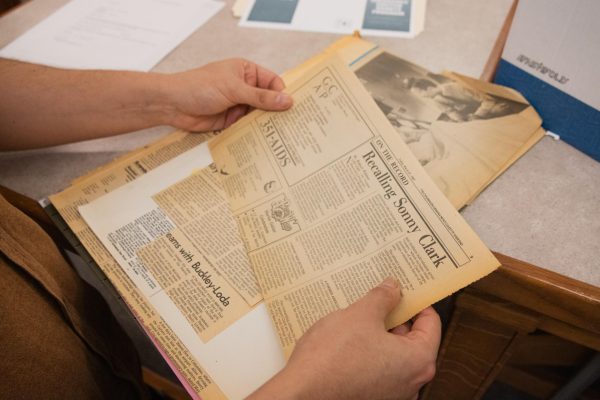
“Whatever we produce, I want it to be research-legible,” Rodriguez said. “I want a researcher who’s curious about the history of AIDS, the history of community organizing, nonprofit work around AIDS … I want them to be able to pull up these documents and use them, because it doesn’t have to be me.”
In his work, Rodriguez sorts and digitizes newspaper clippings, photos and more that relate to GCAP’s work and other AIDS-related events. Archival projects like this one allow historians to analyze trends, attitudes and events that have occurred across time.
“The entire discipline of history is based on boxes like that,” Rodriguez said, pointing to a box of archived documents. “Every history textbook that you’ve ever read, its primary foundation is just a collection of documents that historians will then look through and create narratives about.”
Rodriguez spoke about the importance of local history in telling national and global stories.
“We piece together narratives based on these smaller-scale archives, and we then start to zoom out slowly until we have a sense of that big picture,” Rodriguez said.
Darya Shahgheibi, executive director of GCAP, said the archiving project is important for ensuring local AIDS history is not forgotten.
“We don’t want this history to be lost and buried, especially in a time right now when that’s exactly what the government is trying to do,” Shahgheibi said. “They’re trying to bury this very important issue, and people forget that AIDS is still here, and AIDS still kills.”
Shahgheibi noted that Rodriguez is also archiving new documents and photos from GCAP as they come.
“This archival work is continuing because history is always being made,” Shahgheibi said. “AIDS is still here, and we’re still fighting against it.”
Between being a graduate student, teaching assistant and Writers Workshop consultant, Rodriguez has limited time to devote to his archiving project. Still, he hopes to write a research article using the archive in the future.
“Maybe when I finish my dissertation, and I have an opportunity to think about new directions in my research, I’ll have some time to reflect on some of these documents,” Rodriguez said. “Maybe there will be an article someday. I would really love to do it.”