Madagascar is home to over 200,000 species of animals, making it one of the most biodiverse countries in the world. The world’s fourth-largest island is defined by its beauty, with distinct wildlife and alluring greenery covering it from coast to coast.
Unfortunately, as human-caused deforestation, invasive species and climate change now run rampant, the life that’s spent centuries getting comfortable there faces disruption. Out of Madagascar’s over 300 species of frogs, most of which can only be found on the island, many face the threat of extinction to varying degrees.
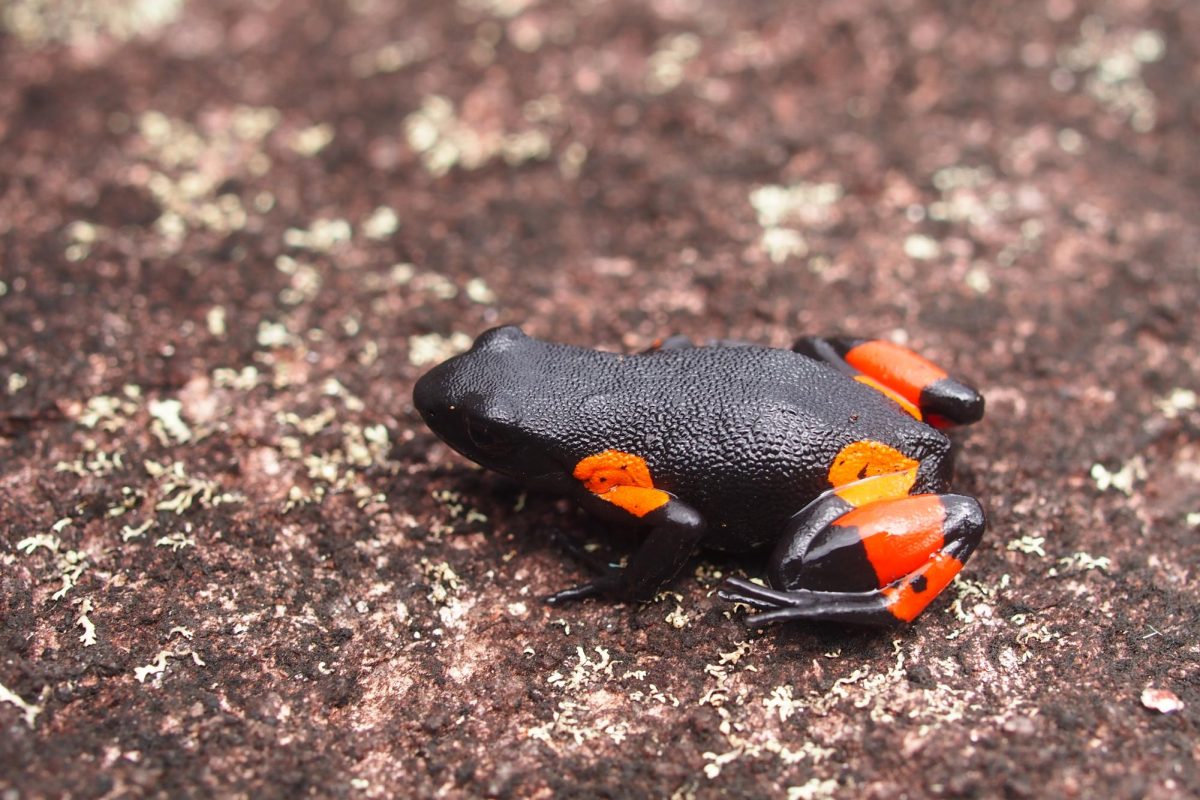
One of such frogs is the vibrant Mantella cowanii. Defined by its bright orange and black skin, this frog is considered endangered. Graduate student Devin Edmonds, who’s been studying conservation for years, is one of many professionals working on an ongoing project to help protect this species.
“It’s called the Mantella cowanii Action Plan,” Edmonds said. “Experts who kind of know about the frog, people who live near the frog in Madagascar, government officials in Madagascar, herpetologist people who work with organizations, NGOs that are responsible for implementing conservation efforts and responsible for habitat protection — they all met together to make a plan to make sure the species doesn’t go extinct.”
The specific questions Edmonds’ research focuses on are as follows: How many frog populations remain in Madagascar? What size are these populations? Are these populations stable? And finally, what is the trust of local people in conservation plans?
Get The Daily Illini in your inbox!
Edmonds and his team work on-site in Madagascar and use various statistical methods to gather information about these frog populations. By meticulously hand-counting and identifying different frogs through the patterns on their bellies, the research team can draw conclusions about the frog populations and their chances of surviving year to year.
“We took tissue samples from some of the frogs, a little, tiny, tiny piece of tissue, which then we use for genomic analyses,” Edmonds said. “And then you can look at things like the genetic diversity within these populations, and look at their history … How big was the population size, 30, 40 years ago? or even hundreds?”
They have yet to find positive trends through their research, noting that unique patterns of Mantella cowanii reproduction also put the species at risk.
“I guess the good news is we didn’t find any real evidence of any sharp declines in genetic diversity,” Edmonds said. “We did find they are hybridizing with another species (Mantella baroni) at one site. And that could be bad, because this other species is really common. So it could be like the genetic identity of this endangered frog is kind of being eroded by this common frog at one site.”
In addition to focusing on the wildlife of Madagascar, this research also takes into account the local citizens’ perceptions and attitudes towards the conservation plan.
“We interviewed over 400 people who live near these endangered frogs, and asked them questions related to what influences their trust,” Edmonds said. “Being familiar with the conservation strategy might be one way to help build trust between conservation organizations working in the area and the people who live there.”
For Edmonds, an interest in this frog had been forming long before he found out they were endangered. Before the Mantella cowanii were protected, they were exported commercially for pet trade — an inferred contributor to their population’s consistent decline in size.
“I actually saw it the first time in real life as a child in Wisconsin, for sale at a pet store,” Edmonds said. “They’re black and orange, they’re really beautiful, and that’s what kind of made me interested in the first place.”
Looking ahead, these efforts put us on the right track and are crucial to help build a future where Madagascar’s endangered species survive. With help from continuous research like that of Edmonds’ team, these endangered animals could be saved from extinction.
“Hopefully this information can be used to kind of guide the species conservation going forward,” Edmonds said.