The University boasts over 545,000 living alumni, each with their own successes. In the fall of 2025, two alumni were named in MIT Technology Review’s Innovators Under 35 list for their scientific advancements and research.
Manling Li and Zihao Ou have both made names for themselves after attending the University.
After studying computer science at the University, Li graduated in 2023 and is currently a professor at Northwestern University.
Li has worked on developing artificial intelligence and large language models to further benefit humans. Her research focuses on observing and adapting the technology to an ever-changing society.
She specifically researches methods that allow AI to use media from the physical world to train and become more active in everyday life.
Get The Daily Illini in your inbox!
“She is widely regarded as a rising star in our field, and her leadership and creativity consistently stand out,” wrote Heng Ji, Li’s doctoral adviser and professor in Engineering, in an email to The Daily Illini. “She has produced ground-breaking research which is, in my opinion, among the most exciting work in NLP and multimodal research area in the past several years.”
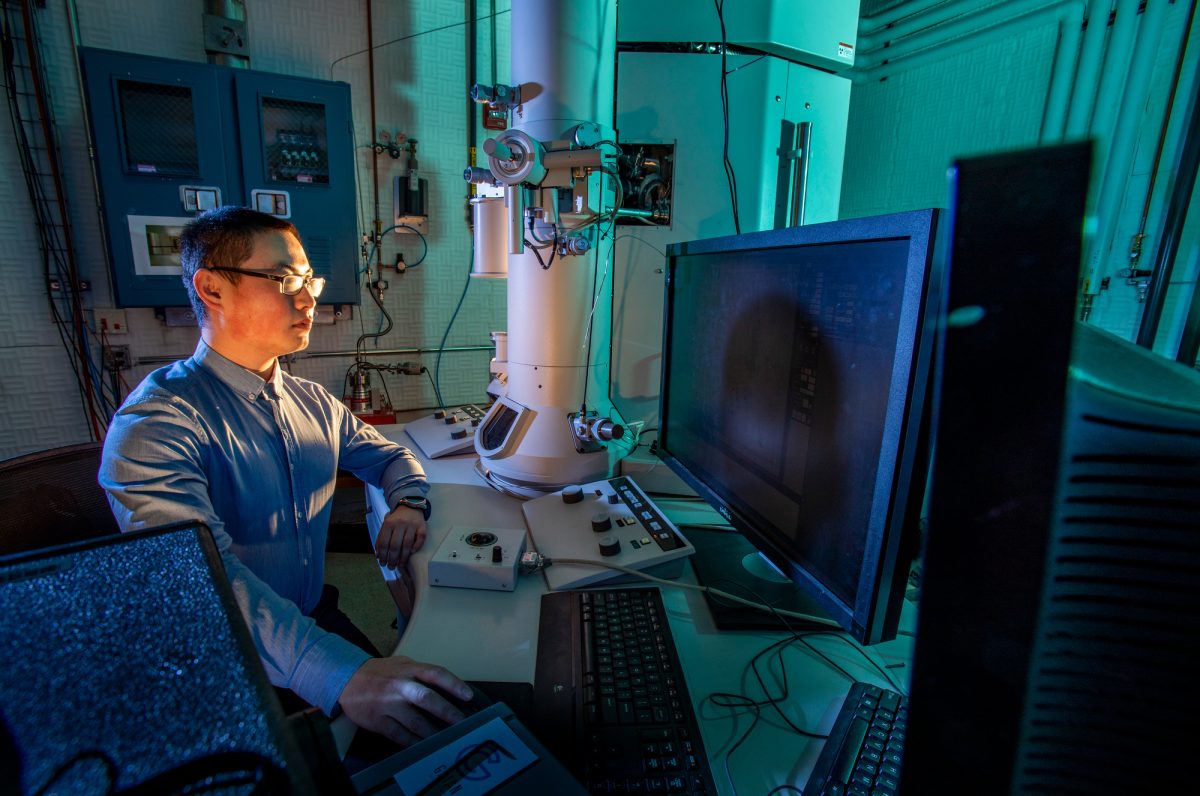
Ou, who spent his graduate years at the University studying materials science and engineering, now teaches and continues his research at The University of Texas at Dallas. Since his graduation in 2020, Ou has been developing new bio-imaging tools that he hopes one day will improve the field and reduce disparities in biomedical equipment access.
“That’s what we are hoping, in the future, that our technology or innovation can change the life of everybody,” Ou said.
In its natural state, skin tissue is not see-through due to biological properties that reflect light. Ou and his team use a molecular tool to tinker with these properties, reducing the biological difference between water that exists in the body and the biological matter, making the skin tissue translucent.
When Ou pitches his idea, he often says he is on his way to making “invisible men.”
Although this may sound permanent, the application of these molecules is actually through a simple topical cream that washes away and allows the skin to return to its normal opacity.
Some of the long-term goals of this technology are to replace existing medical imaging tools, like the X-ray or MRI machine. Ou said that his method is very inexpensive compared to other biomedical imaging tools, which will benefit those without the funds to purchase such technology.
Reflecting on how far he’s come, Ou attributes much of his scientific success to his time studying at the University.
“I feel lucky I did (my) Ph.D. at Urbana, where everything is very, very focused,” Ou said.
He described that the University gave him the tools to explore his passions and the means to develop the fundamentals of research.
Most of all, Ou believes a great amount of his success is due to Qian Chen, Ou’s doctoral adviser and professor in Engineering.
Chen was just starting her faculty role at the University when Ou approached her about joining her research group, which studied how to demonstrate nanoparticle movement through movies. His unique background in physics gave him a new perspective to add to the group.
“So the optical principles is actually all there, right, it’s actually even in textbook(s),” Chen said. “But because Zihao is really deep, he has this very deep and methodical thinking habit to kind of train in my group, so he was able to really go beyond those equations.”
As Ou was finishing his degree at the University, he discussed the possibility of moving into the realm of biology for his postdoctoral study area. With Chen’s advising, he selected to continue his education at Stanford University to blend his unique background into a true testament of scientific research.
Chen believes that Ou sets the stage for students looking to combine their areas of interest to create scientific solutions and serves as an inspiration for future innovators.
“What I feel (is) the most important thing to do is once we decide, we just forget about everything else and just make it happen,” Ou said.