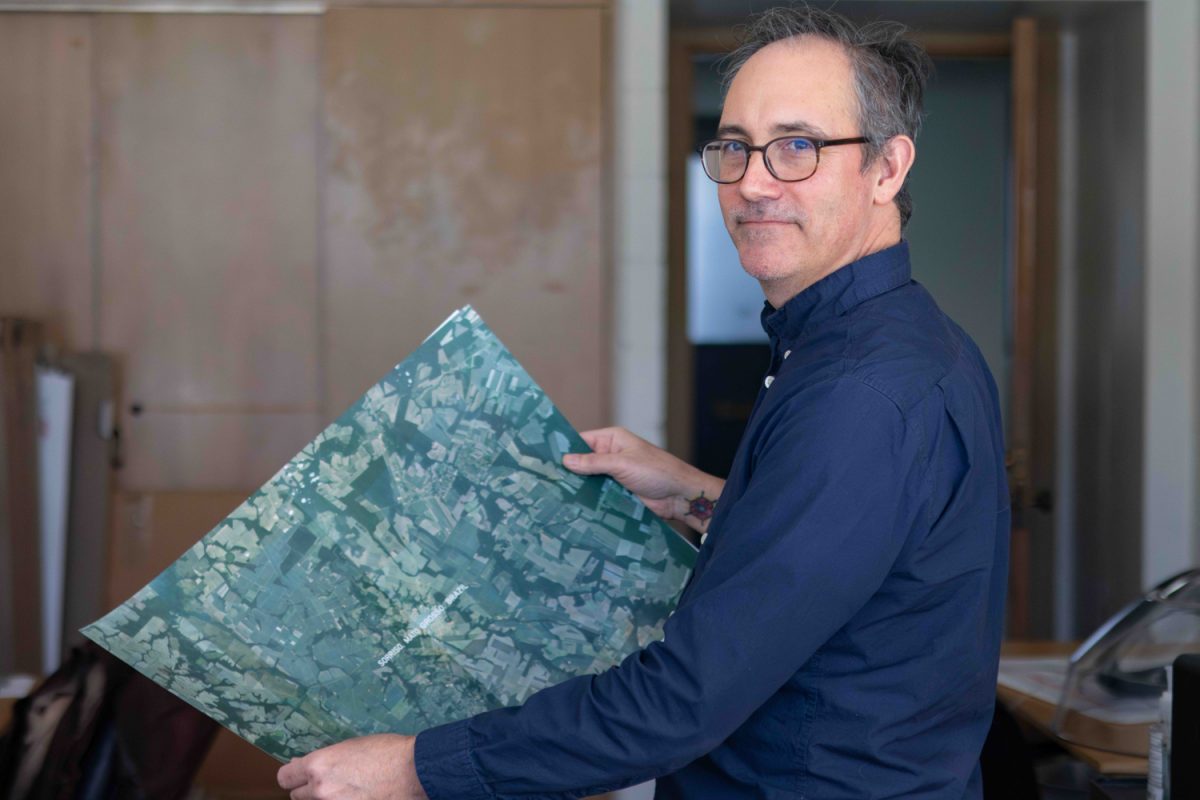
Ryan Griffis, professor in FAA and faculty fellow at the Humanities Research Institute, is in the final stages of creating an experimental documentary film called “When the Landscape Recognizable Today Was Shaped.” The half-hour film will debut in an exhibition, “Another Place: Storymaking the Entangled Prairie,” starting on Jan. 29 at the Krannert Art Museum.
The documentary examines how restoration and conservation practices altered the wetlands of the Illinois River Valley. Griffis uses typical documentary methods in combination with poetic and science fiction modes of storytelling to explore how engineered landscapes influence ecological futures.
Central to the film is a fictional narrator from the future, which Griffis calls a “feral soybean,” who observes a version of the Illinois River where the levees, pumps and channels never existed.
“In this future, the engineering of the river is unmade,” Griffis said. “The floodplain of the river is allowed to go back to what it was before levees and pumps kept the river in the confined space that it’s in currently.”
Griffis’ imagined future contrasts with the highly engineered reality of the river today. The river has undergone drastic changes due to channelization, agricultural drainage and the Chicago River reversal in the late 1800s. These changes contributed to issues like erosion, pollution and altered sediment patterns, reshaping ecosystems across central Illinois.
Get The Daily Illini in your inbox!
One of Griffis’ main sites of study is the wetland restoration project of the Emiquon Preserve, significant in both its ecology and history.
It was inhabited by Indigenous communities long before colonial settlement converted it into levee and drainage districts to be used for farms.
Griffis started to wonder about the Illinois landscape after moving to Champaign-Urbana from his hometown in Florida. He described how Champaign is surrounded by massive fields of corn and soybeans from every direction. Griffis questioned how these landscapes came to be.
“I realized how much the landscape had been completely transformed,” Griffis said. “There used to be different kinds of wetlands, prairies and oak savanna forests — ecosystems that are now very rare in this part of the continent.”
His curiosities shaped the direction of his research, eventually branching into the future of restoration.
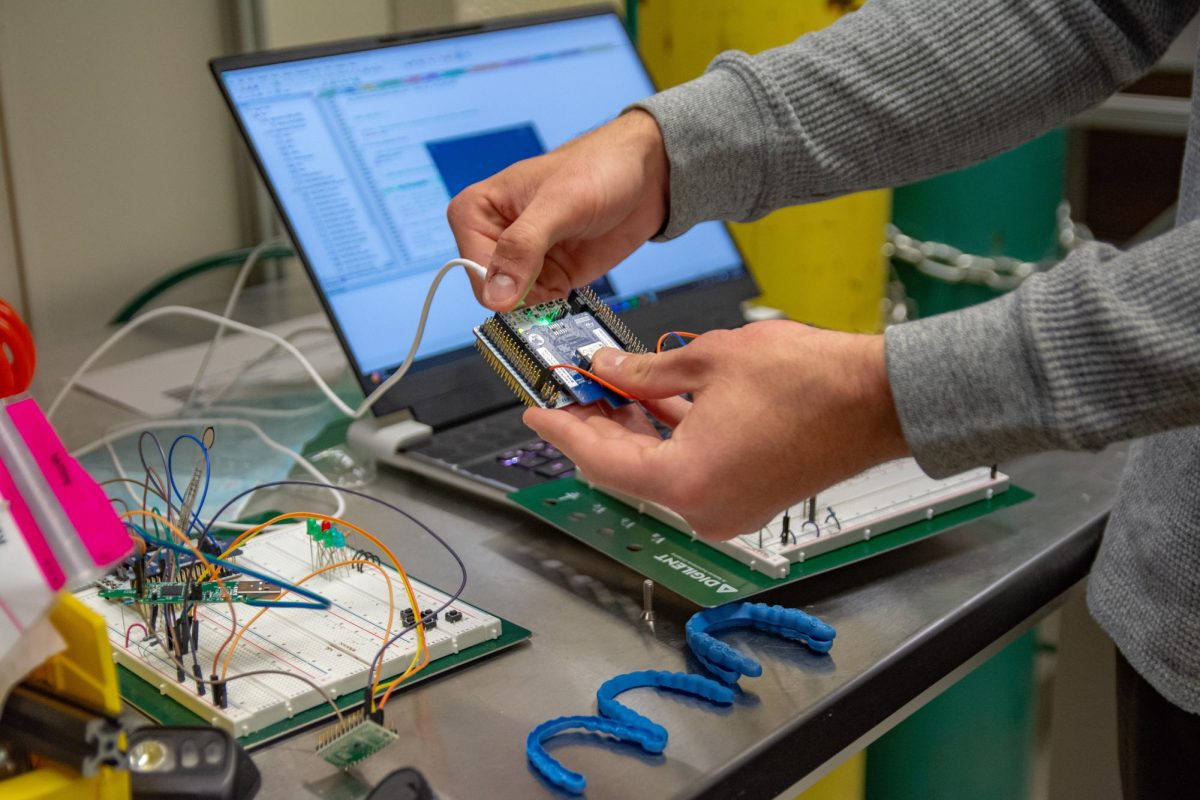
The film and exhibition will also feature various contributions from four collaborating artists, two of whom are Griffis’ fellow colleagues in the College of Fine and Applied Arts. Stephen Signa-Avilés, professor in FAA, has created a wearable sculpture used as a piece of science fiction technology for the film.
Emmy Lingscheit, professor in FAA and printmaking artist, is making a graphic timeline representing the wetlands’ transformation into the future. Musician and Chicago-based visual artist Damon Locks produced sound and music for the film, along with School of the Art Institute of Chicago professor Josh Rios, who contributed various forms of sound art.
As an HRI faculty fellow, Griffis will receive a teaching release for the spring semester and a research stipend. He will also contribute to a yearlong fellows seminar, sharing and receiving feedback.
His work falls under the 2025-26 theme of “Space and Time.” He also draws from “Wetlands Drainage, River Modification, and Sectoral Conflict in the Lower Illinois Valley, 1890-1930,” written by former University professor John Thompson, for further historical context.
Griffis’ film will be presented at KAM along with 10 other featured artists until July 2. He is currently working on a book to accompany his August exhibition in Chicago.