Today, artificial intelligence is a billion-dollar industry and seems to be the future of technology, science and engineering. However, according to Rashid Bashir, dean of The Grainger College of Engineering, the most impressive supercomputer lives between your ears and runs on sugar: the brain.
His fascination with biology and a knowledge of engineering have led Bashir to spend the past 12 years creating biohybrid robots that could change the way scientists study diseases.
“If you look at so many of the systems in nature, like animals, trees (and) human beings, we’re all made of living cells,” Bashir said. “The idea is that we could take cells and use them as basic building blocks for building systems and machines, and learn the design rules of building systems with cells.”
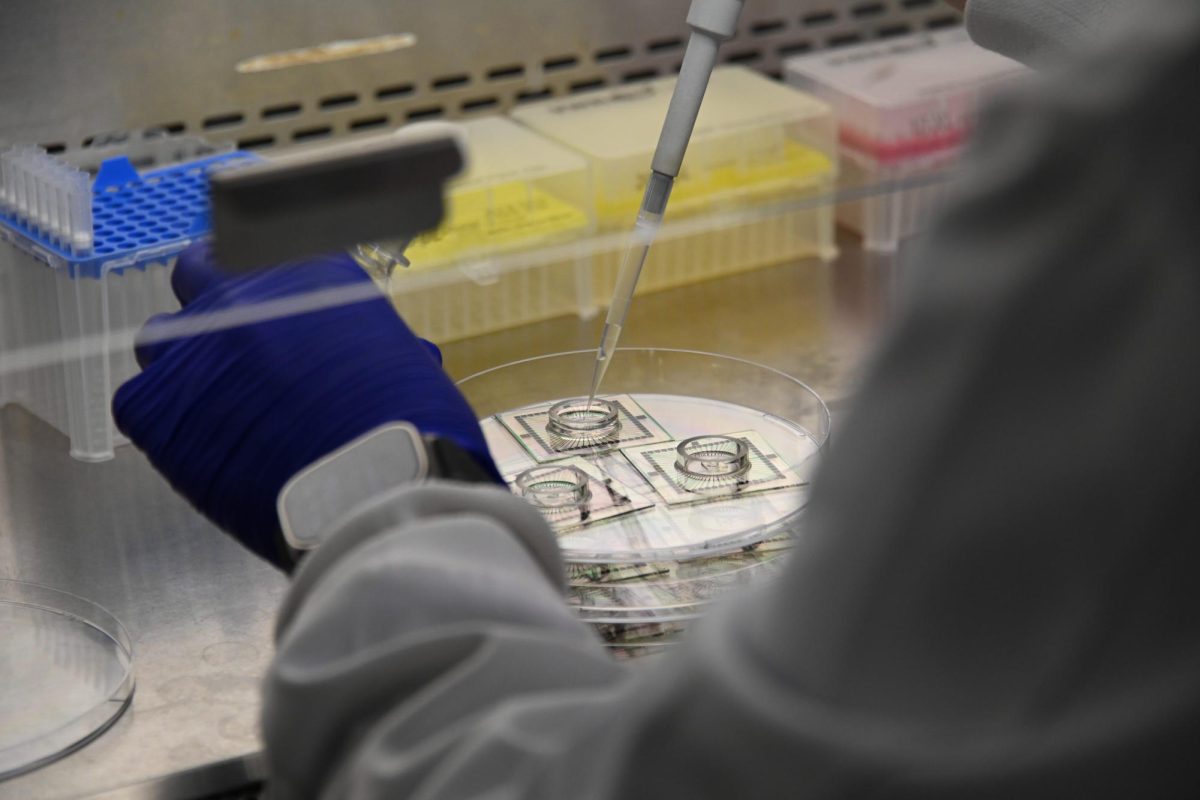
Over 10 years ago, the United States National Science Foundation partnered with the University, the Massachusetts Institute of Technology and the Georgia Institute of Technology to develop living machines. Bashir and his lab have engineered these biohybrid robots to mimic a human muscle to better understand muscle contraction, also known as tetany.
While analyzing muscle contractions in the robots, the researchers are also studying inflammation between neuromuscular junctions — where neurons connect to muscle fibers. It’s an exploration that could help future scientists in various ways, according to Bashir. This focus could help scientists study diseases like Alzheimer’s and ALS at a much smaller scale.
Get The Daily Illini in your inbox!
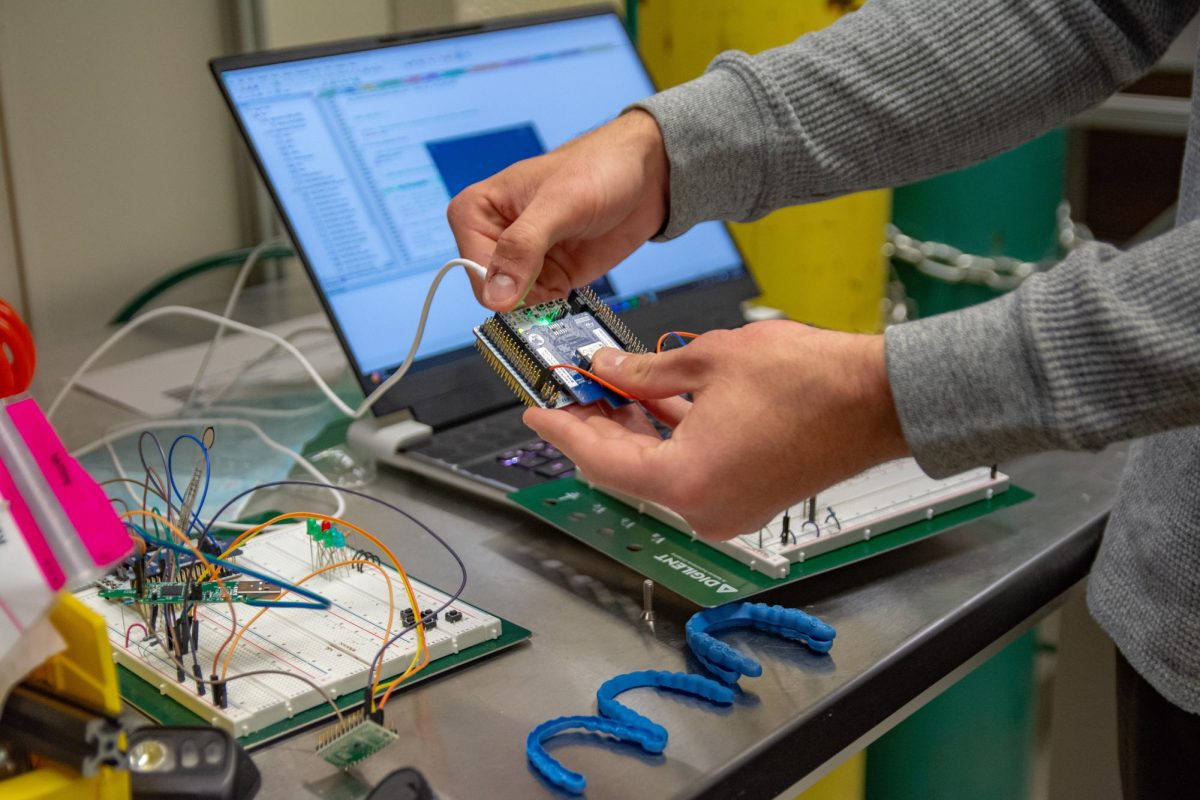
Tarun Rao, senior in Engineering, has been part of the project since his freshman year. He conducts his own experiments regarding the research and 3D prints the robot skeletons.
“The goal of this project is to take the muscle actuation within the body and take it in an in vitro environment,” Rao said.
Hyegi Min, postdoctoral researcher, works on the neurological side of the biohybrid robots to move them in different ways and measure neurological junctions. In a human muscle, neurons control the muscle fibers and send a chemical signal, which stimulates the muscle to contract.
“We demonstrated neuromuscular junction, the junction between muscle and neurons,” Min said. “Neurons have a lot of functionality; they can learn, memorize stimulation and adapt. This junction can simulate the several stages of the (muscle) operating mechanisms.”
Rao helps 3D print these robots, which can crawl across a table like inchworms due to their neural training. Now that the robots can move and develop patterns neurons can replicate, Katy Wolhaupter, graduate student studying bioengineering, is working to maximize the speed and force output of the robots. That task, however, isn’t easy.
“One of the struggles in biology, in general, is that it’s very finicky,” Wolhaupter said. “The cells sometimes have a mind of their own, and sometimes, things just stop working, and we just don’t know why. And it takes a long time to figure out why, and we haven’t exactly found solutions.”
Since the robots can biologically decompose, they are environmentally sustainable and usable for water and agriculture. Bashir said they could one day monitor water supplies for viruses and bacteria and detect toxins.
Teamwork within this project is especially essential due to the interdisciplinary nature of the field.
“I have students and (postdoctoral fellows) with backgrounds from bioengineering, mechanical engineering (and) cell biology, that have to come together and work with each other and understand each other’s language,” Bashir said.
Superheroes like Wolverine and Deadpool have always fascinated Rao, he said. Their healing capabilities to regrow a limb pulled Rao into the world of bioengineering.
Now, Rao and his colleagues use their own superpowers to transform and improve society with their robots.
“(Bioengineering) could help so many people with so many diseases, so that’s why I was drawn into bioengineering in the first place,” Rao said.