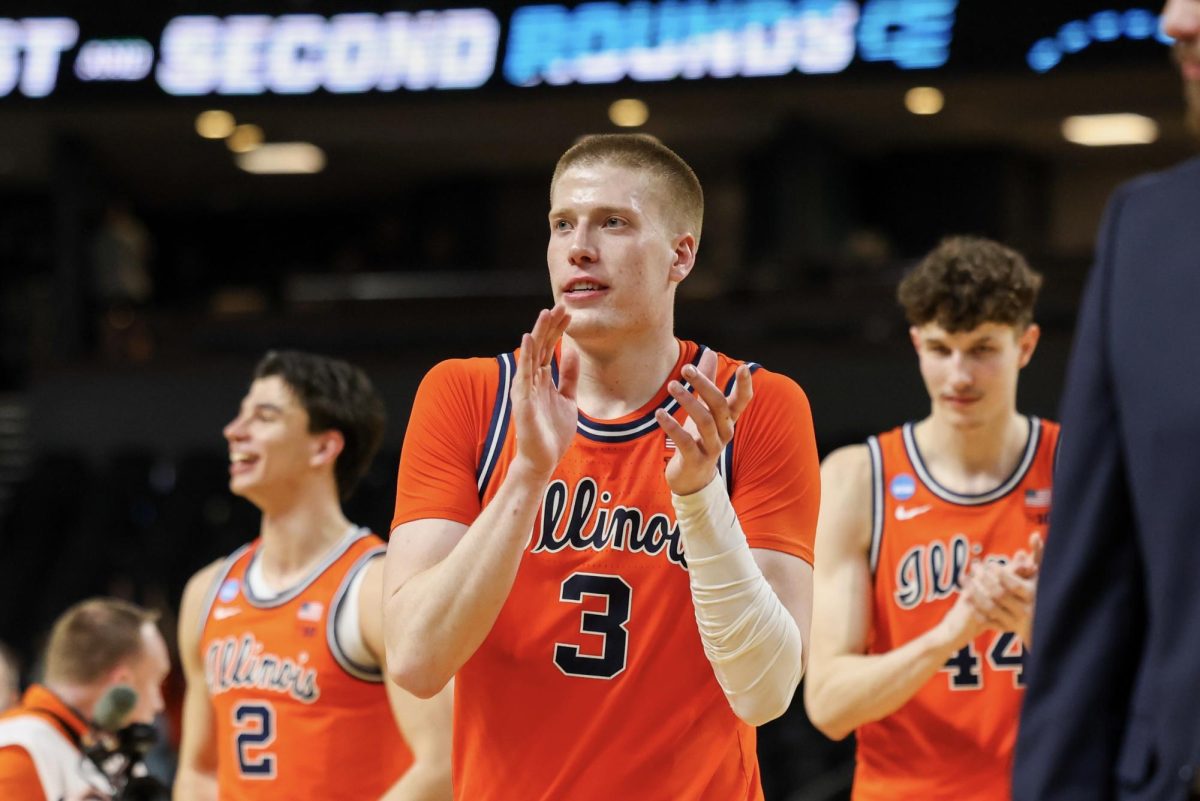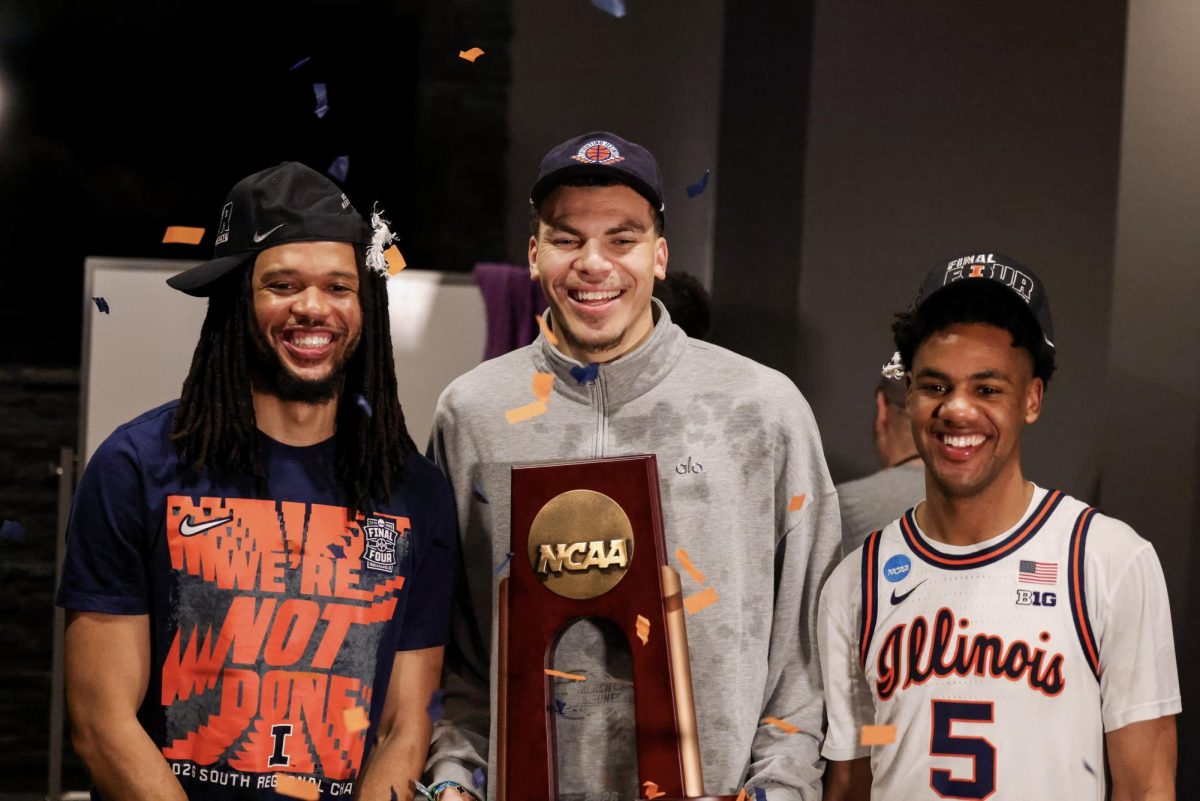
With Illinois returning to the Final Four for the first time in 21 years, it’s time to look back at the now six Final Four appearances in program history.
1949, 1951, 1952
Although the NCAA tournament was a shell of the expanded 68-team form of today, this was the most successful stretch of Illini basketball to date. They reached the Final Four three times in four seasons. Illinois placed third in each of these runs, beating Oregon State, Oklahoma State and Santa Clara, respectively, in the “National Third Place Game.”
Despite the lack of national championships during this span, Illinois won the Big Ten title in each of these seasons.
Harry Combes was the man at the forefront of the success. In his 20 seasons as head coach, Combes set the record for most wins in program history with 316. This mark was broken 25 years later by fellow Illinois Final Four head coach, Lou Henson.
Get The Daily Illini in your inbox!
1989: The Flyin’ Illini
Arguably the most iconic Illinois team ever, the 1989 squad was a force to be reckoned with. The aforementioned Henson led the Illini to a 31-5 season, utilizing an aggressive full-court defense, alongside a high-powered offense. Forward Kenny Battle’s season steals record of 89 still stands to this day.
Although dominant, the team’s success went far beyond the court.
Rich Excell, an assistant professor in business and a junior at Illinois during the 1988-89 season, echoes this sentiment.
“That team was the first one that was really nationally known,” Excell said. “And I think therefore, a lot of people that came to U of I in the 90’s came to U of I because … it really opened people’s eyes to what was going on.”
Excell argues that the ‘89 team was instrumental to Illinois’ modern-day success. Since it attracted more coaches and players to the program, it laid a foundation for the program’s future.
Illinois fans were hopeful before the season, but cautious after the No. 3-seeded 1986-87 team was eliminated by No. 14 Austin Peay State just two years prior.
“Everyone in their head kind of expected it, in their heart were certainly hoping for it, but were still in their stomach really nervous that it wasn’t going to happen,” Excell said. “So when it actually happened, it was maybe more of a relief than anything else.”
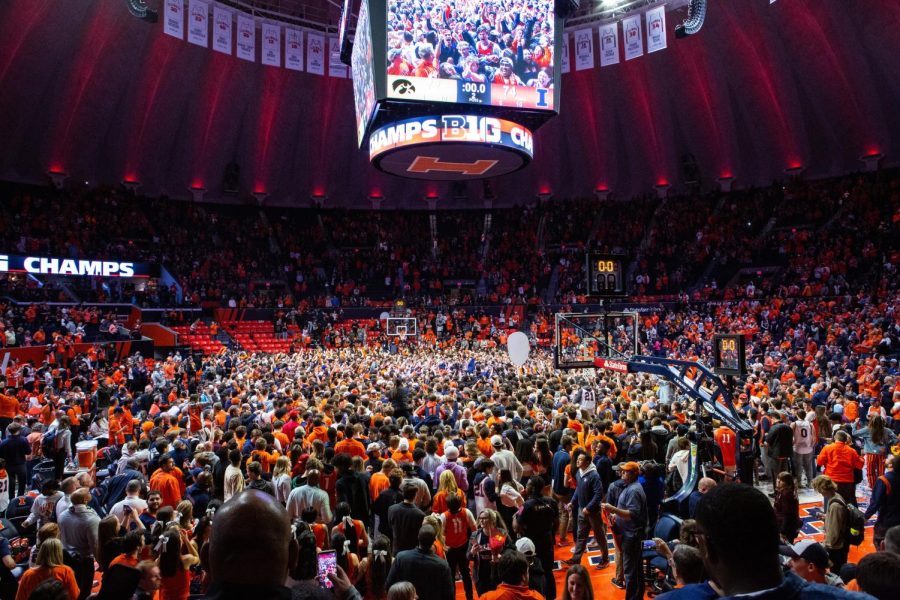
When he lived near Washington Park, commonly known as “Frat Park”, Excell recalls a large celebration when the team made it to the Final Four.
“There was a huge buzz for sure,” Excell said. “I do remember that (the) whole area, everyone kind of spilling into the streets after the game. So there was kind of like a de facto block party.”
2005
It didn’t bring the culture shift of the ‘89 team, but the 2004-05 squad is still highly revered amongst fans and alumni. Head coach Bruce Weber led the team to a program-best 37-2 record that still stands to this day. Illinois’ 72-57 victory over Louisville also remains the program’s only Final Four win. The team earned the No. 1 seed in the NCAA tournament, marking the third time in school history, joining the ‘89 and ‘01 squads.
Mike Carpenter, host of Illini sports podcast “The 200 Level,” and instructor in the College of Media, was a senior at Urbana High School during the 2004-05 run.
Acknowledging that people often compare the ‘89 and ‘05 teams, Carpenter mentions that while the ‘05 team didn’t have the athleticism of the ‘89 team, it was effective in its own right.
“There was this sort of cohesion with which the five of those starters played,” Carpenter said. “They (had) such big personalities that it went beyond what they did on the court. They were just really likable guys.”
Expectations were high for the Illini, but two games really highlighted their presence as players that March. The first one was an 89-72 win over No. 24 Gonzaga, followed by a 91-73 rout of No.1 Wake Forest.
“And from that moment, the narrative was Illinois or UNC, that was it,” Carpenter said. “It was like a foregone conclusion.”
Carpenter argues that the one regular-season loss to Ohio State actually aided Illinois in its journey deep into the tournament. He also mentioned that it helped them make an iconic comeback against Arizona, scoring 15 points in four minutes.
“I think for 30 games they’(d) been playing with that undefeated or bust, and it … lifted the lid off the steam pot,” Carpenter said. “Where, if it hadn’t, I don’t think they would have made the comeback against Arizona. I think that needed to happen.”
Like the ‘89 team, the success of the Illini strengthened the bond in the community.
“It was intoxicating,” Carpenter said. “The community was electric, from the minute they got the number one ranking, and held onto it for the rest of the year … people could not buy up enough stuff.”
Whether someone was a fan or not, they were hearing about the Illini.
“This was like a five-month celebration, a coronation,” Carpenter said. “It was everywhere all the time, top of mind, and just impossible to extricate yourself from that if you were living in the Champaign-Urbana area.
2026
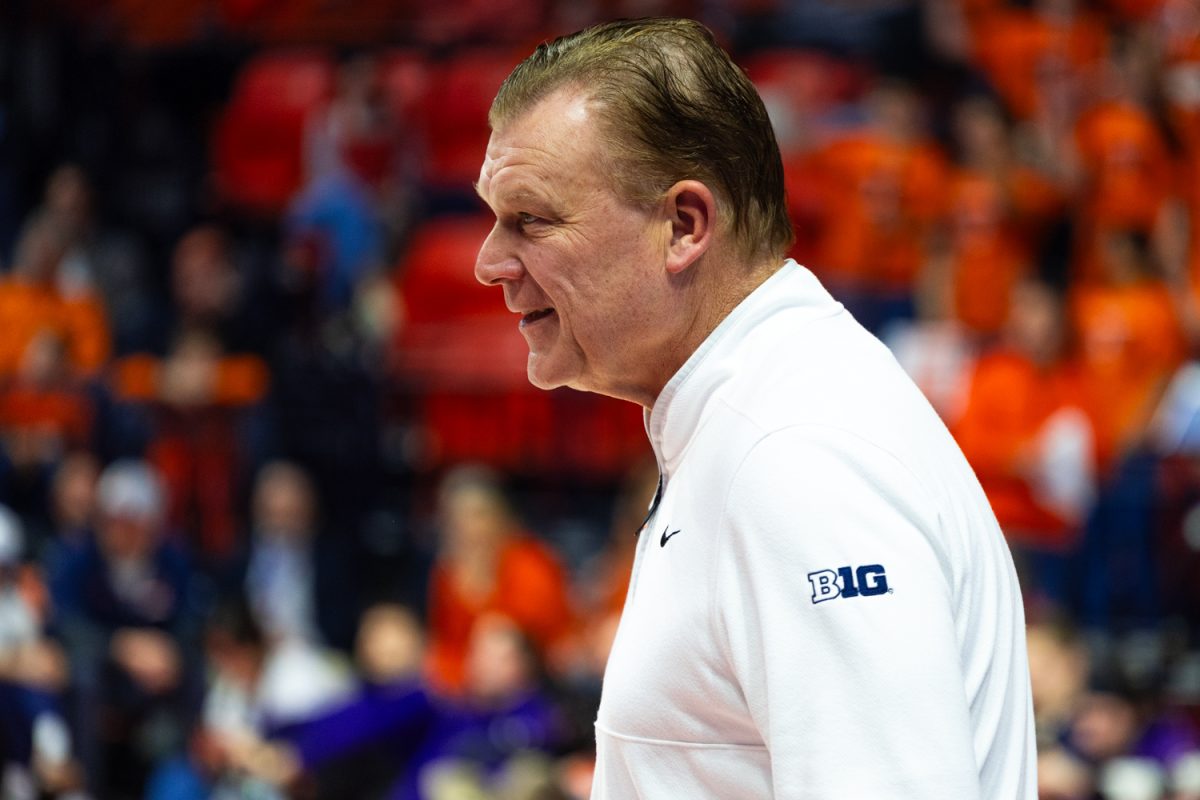
The only team with its ending yet to be written is the 2025-26 Illinois squad. The Illini went 28-8 and entered the tournament as the No. 3 seed under ninth-year head coach Brad Underwood.
What contrasts this team to any of its predecessors is that its capabilities weren’t fully known until deep into March. With a red-hot middle of the season to some frustrating conference losses near the end, the Illini came to March Madness as a strong team, but were often pinned as unknown.
Now that they’ve gotten this far, one question remains. Just how far can they go?
@kacper_rajwa07