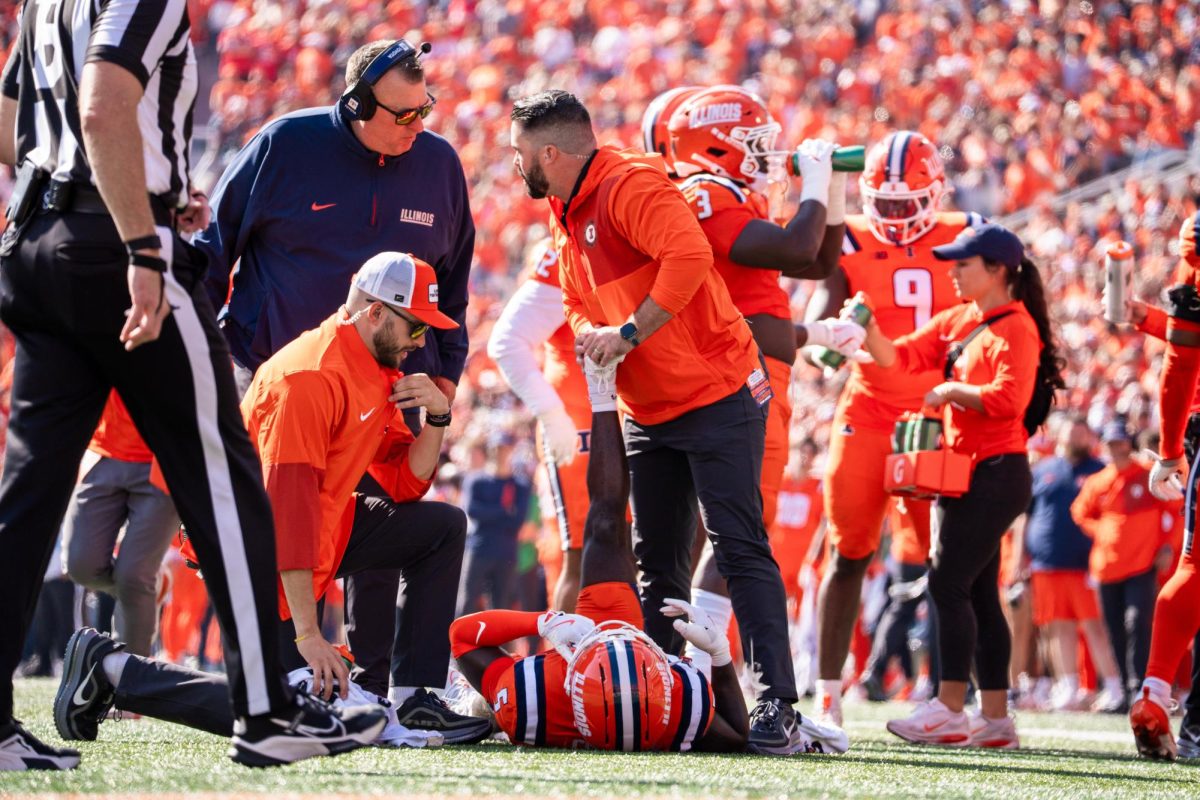
With reported annual earnings of more than $1.5 million, Illinois football head coach Ron Zook was the highest-paid employee at the University of Illinois in the 2010-11 fiscal year.
Men’s basketball head coach Bruce Weber was second, with $1.3 million, and football assistants Paul Petrino and Vic Koenning were also in the top 10 earners.
University President Michael Hogan was fourth with $620,000.
Such salaries are driven up by the market, said Scott Tainsky, assistant professor in sports management at the University.
Specifically, the value of football coaches can be looked at in two ways, Tainsky said. The first is absolute value, or, “How much success is the coach having?”
Get The Daily Illini in your inbox!
“As long as someone is bringing in more value than their cost, that’s a good asset to the company,” Tainsky said.
The second is relative value, which takes into account supply and demand and what other employers are willing to pay.
College football coaches’ salaries tend to be higher in part because there are relatively few qualified for the job, but also because the NFL pays its head coaches relatively large salaries.
“There’s overlap in those markets, and therefore the price for those coaches isn’t independent of the NFL market,” Tainsky said.
The high-paying job opportunities within the NFL drive up the salaries for college football coaches because many coaches have the opportunity to switch between the two. There’s also competition between the hundreds of universities across the country, with only so many qualified to coach collegiate athletics.
“The perception of it is that sport is a game, and therefore when you compare it to things like teachers and firefighters, that employees of sport organizations should be paid less,” Tainsky said. “But the reality is that the number of qualified head football coaches is less than the number of firefighters.”
The size of an athletic department also affects how much it can pay coaches. In 2009-10, the Illinois Division of Intercollegiate Athletics brought in about $75 million in revenue. Of that, football brought in about $26 million.
Most of Zook’s salary comes from bonuses and extra benefits like TV deals. Though he makes about $1.5 million, his base salary is $505,000.
The athletic department mainly operates independently of the University; its coaches’ salaries are paid for by athletic department revenues.
In 2009-10, Athletics as a whole did receive some University support, however, totaling about $4 million. Of that, $3 million was from student fees and used to help pay for Memorial Stadium renovations made in the 1990s, while $1 million came directly from the University for athlete’s tuition waivers.
The tuition waivers were originally put in place in the 1970s to help the University add women’s sports. The $1 million per year is expected to be cut in half within the next five years.
“Otherwise, we’re responsible for raising all our own revenue to pay for our budget and keep that budget in line,” said Illinois Sports Information Director Kent Brown. “So no state funds go in support of the (Athletic’s) operating budget or salaries.
“In today’s world, salaries are often times put in place by the marketplace, and that’s where a lot of those numbers come from.”