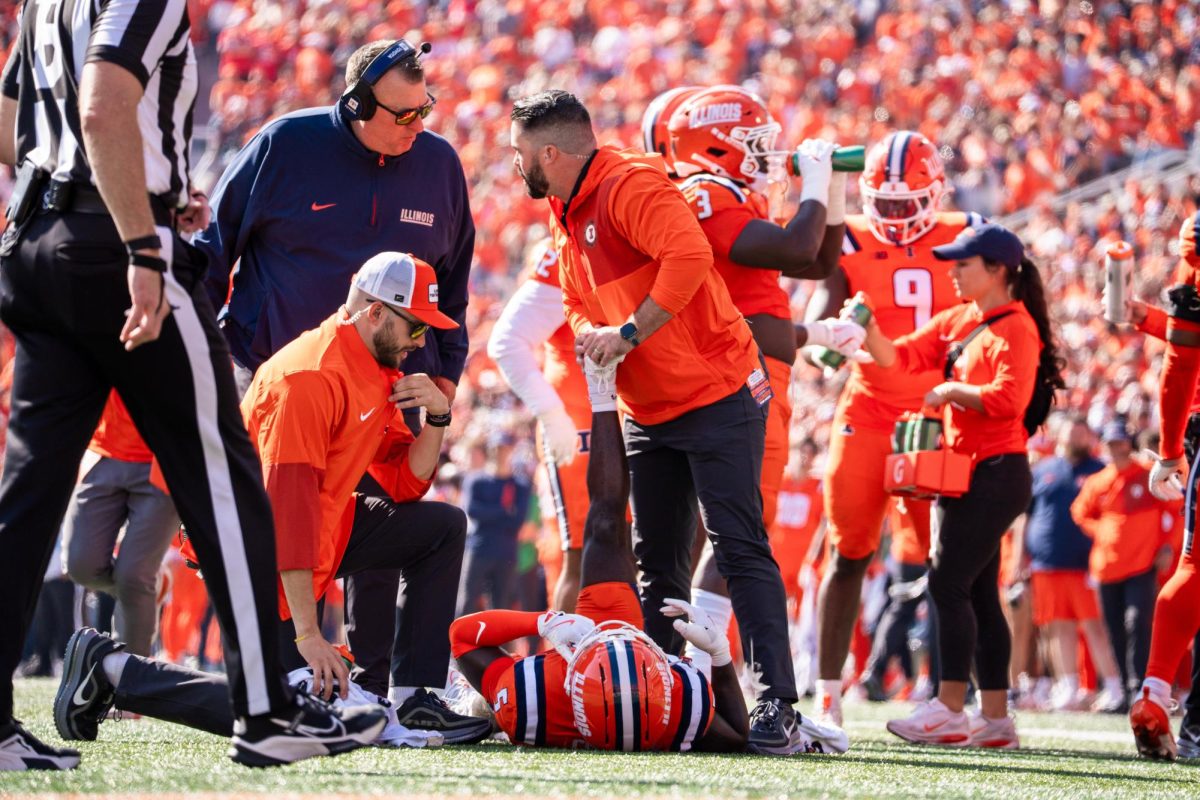
After a night out, a glow stick-clad student is sprawled face up on the couch in his apartment. His shoes have not been removed and his mouth hangs slightly ajar. In attempts to wake the unresponsive party-goer, his friends shake his shoulders and gently tap his face, but the efforts are ineffective. Unanimously, the group decides a hospital trip is necessary.
Kimberly Dalluge, department manager of the University Student Health Insurance, has heard many variations of this story from University health insurance holders, but her response is always the same: It’s covered.
In fact, despite the common misconception held by students, Dalluge said there’s not much that University insurance doesn’t cover.
“We cover so much more than (accidents),” Dalluge said. “I don’t think the average student really understands that because they’ve been with Mom and Dad and they’ve never had to worry.”
In addition to accidents, University insurance covers preventative care, physical therapy, congenital diseases and several types of immunization. Birth control, emergency contraception and diaphragm insertion and removal are fully covered for students with University insurance, as are BRCA tests for breast cancer, routine checkups and chiropractic procedures.
Get The Daily Illini in your inbox!
Dental and vision are not covered for most students, but discounts are available.
Restrictions apply to University insurance coverage, however. If an injury is sustained while a student’s blood alcohol level is above the legal limit, that injury usually isn’t covered.
“If you get hit in the head with a flying beer can, that’s not your fault, so you’re probably going to be covered, but if you break your arm while intoxicated, you probably won’t be,” Dalluge said.
Additionally, student insurance includes a maximum $200,000 worth of coverage per occurrence for undergraduates and $1 million for graduate students. Students are still covered if they study or travel abroad.
Kiaralis Rodriguez, freshman in LAS, said she was surprised to learn the extent of her coverage as a University insurance holder.
“I thought since it was school insurance it wouldn’t cover much,” Rodriguez said. “I just thought it would cover the common cold, the flu shot and stuff like that.”
After learning about the benefits, Rodriguez said she plans to start taking advantage of her plan.
“I feel like I don’t have to be so careful with my life now,” Rodriguez said jokingly.
While students can opt out of University insurance, all students must pay the health service fee.
According to Dr. Robert Palinkas, director of McKinley Health Center, this $230-per-semester fee helps finance McKinley Health Center and the Counseling Center and helps keep the price of medications at McKinley low.
Palinkas added that because everyone pays this fee, all students can take advantage of the Counseling Center, McKinley and the inexpensively priced medication.
“Frankly, the most important thing that we would like to get out to students is that we are here for them,” Palinkas said. “We are their lowest cost, most convenient and most private way to obtain health care.”
For information on student insurance coverage, visit healthcare.gov or attend the student health insurance meeting on Feb. 25 in Illini Room A of the Illini Union from 4 to 5 p.m.
Bailey can be reached at [email protected]