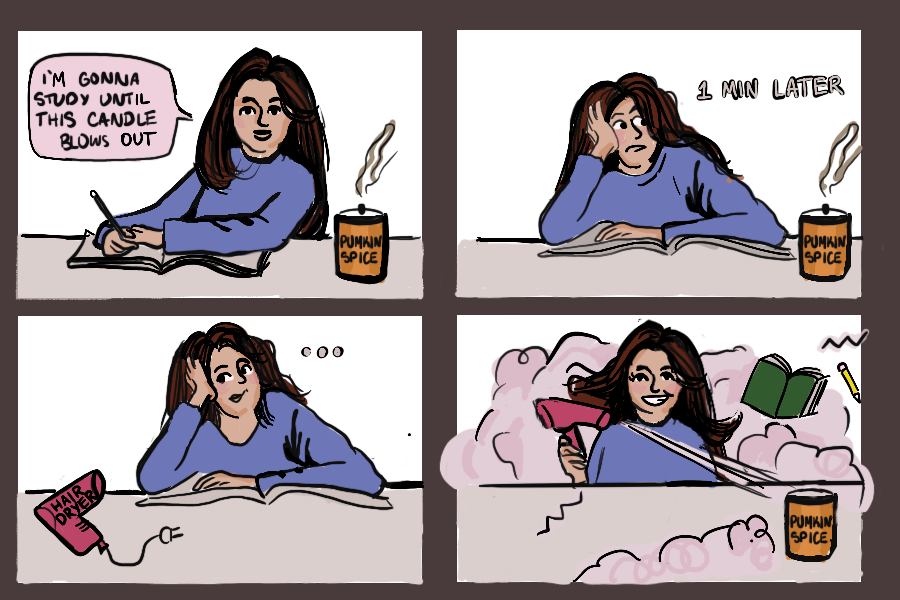
If you’re reading this article while scrolling through tweets, texting your mom and catching glimpses of the latest episode of “Saturday Night Live,” you have FOMO. But no need to worry — there is a cure.
FOMO, as defined by Urban Dictionary, is the “fear of missing out.” Most often, it’s an incessant need to remain connected to your technology devices for fear of missing something great. FOMO isn’t a new ailment, but it’s not getting any easier to conquer either.
According to the Pew Research Center, more than four in five teenagers sleep with their phone on or near their bed. The study concluded some of the motivations behind this action are to ensure 24-hour connectivity and an alarm clock for the morning.
Yet, in 2008, researchers from Wayne State University and Sweden’s Karolinska Institute found that participants exposed to mobile radiation “experienced headaches, changes of moods, confusion, and trouble in sleeping.”
Even with the evidence that sleeping next to your phone may indeed incite these harmful effects, breaking the cycle of connectivity is no easy feat.
Get The Daily Illini in your inbox!
If college is a time of exploration, how can one experience all there is to do if your handy-dandy lifeline is not by your side? Especially when your calendar is filled with tedious homework assignments, exams and obligatory social events, putting the phone down seems counter-intuitive. And when you miss Wine Night at Cly’s (which you shouldn’t), the pictures from last night will inevitably invade Facebook, Twitter and Instagram all at once, creating quite a predicament for someone attempting to avoid FOMO.
However, if you don’t remedy the condition soon enough, it will keep you up at night — whether you like it or not.
A Swedish study discovered that heavy cellphone use — defined as maintaining a permanent connection to your phone — contributed to sleeping problems. Setting your phone on vibrate is a step in the right direction, but it’s not a strong enough measure to truly enjoy that well-earned night of rest.
Experts now say that sleep texting is becoming increasingly more common among teenagers, which means your FOMO may accompany you into your dreams.
The vibrations from your phone won’t stop you from responding to a text message while you’re half-awake in bed. And if you’re not sleeping, you’re susceptible to a whole slew of other problems such as overeating, lower levels of concentration and acting overemotional. Unfortunately, these issues could lead to feelings of anxiety, which will only aggravate your FOMO. However, FOMO is not a permanent condition; the cure lies in the decisions you make every day.
The best exchange of the year, the funniest tweet of all time and The Walking Dead Season 3 finale (watch it later) can occur without you, as long as you let them. If you have time to be everywhere at once, you’re lucky. But since so few of us can spontaneously transfigure into three different people, knowing when to say yes and when to turn off your phone is the best way to kick your FOMO to the curb. The next time you find yourself anxious over missing some awesome event, just remember, FOMO won’t be there for you when you begin to look like the characters on The Walking Dead, but your pillow will.
Alice is a freshman in Media. She can be reached at [email protected].