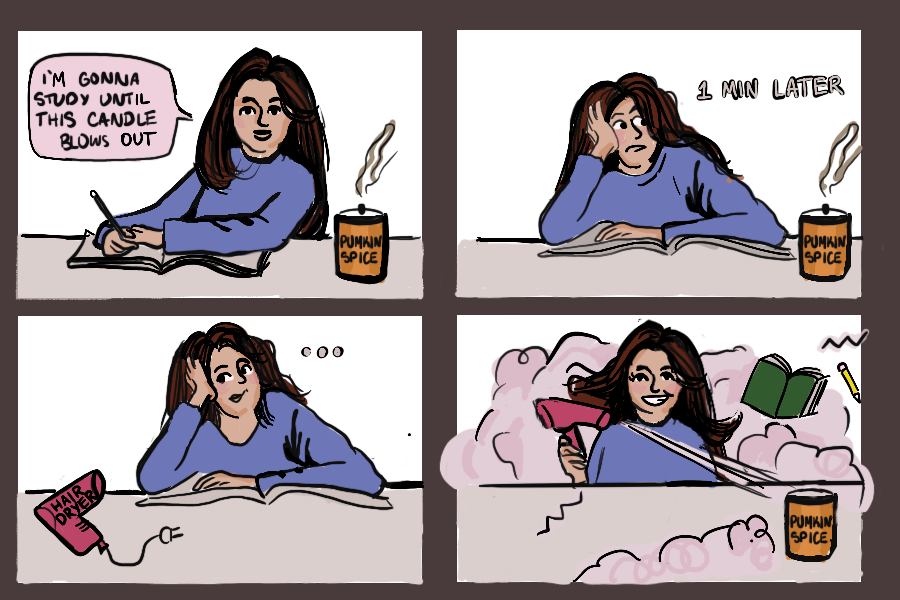
I do not drink much coffee. As far as energy drinks go, I have never tried one. But I have a feeling I’m in the minority on this campus. According to Johns Hopkins Bayview Medical Center, it is estimated that somewhere between 80 to 90 percent of children and adults in North America regularly consume caffeine. Therefore, when I decided to try going a week without caffeine, I thought it would be fairly easy. Two days into the week, I wondered if my challenge should have been to increase my caffeine intake instead.
I decided to visit Rebecca Roach, teaching associate in ACES and professor of food science and human nutrition, hoping she could tell me a little bit more about the stimulant before I made my final decision.
“It is a central nervous system stimulant … it would probably cause you to feel a bit jumpy,” Roach said. “Maybe you would have a hard time falling asleep.”
Needless to say, I decided to stick with the original plan.
How did I do?
Get The Daily Illini in your inbox!
I said that I do not drink much coffee. But I never said anything about tea. This could be more difficult than I had originally thought.
My tea mug reminds me of home. The smooth contour of the cup, the acrylic flower painting on its side and the mint-infused steam which rises from it and tickles my nose all remind me of the comfort of my bed and homemade meals. Usually, I consult my mug whenever I am stressed and need a little energy boost.
It was 2 a.m. on Day Four of the challenge, and I was working on an environmental history reading when it hit me. I looked down to realize that I was cradling my mug, which was halfway full with Brenner green tea. I hadn’t thought about the caffeine in the tea while picking up the mug from my desk, heating up the water, dipping a tea pouch in my cup and drinking from it. All I had focused on was that I was tired, stressed and in dire need of feeling awake and relaxed, all feelings that I associated with my mug.
Gregory Freund, professor of Medicine, said that what I experienced that night might not be so abnormal. After I told him that I felt a bit irritable after not having tea for a few days, he said that “ritualization,” or performing a routine act over and over, in my case, drinking tea out of my mug, might be the reason why.
“We are creatures of habit,” Freund said.
Before going to sleep that night, I decided to challenge myself and resume my experiment of staying away from caffeine for the rest of the week. When I woke up later that day, I steered clear of the stimulant.
That is, until I walked by Espresso Royale.
One second I was in line, thinking about buying a bottle of water, and the next I had changed my mind and ordered a medium hot chocolate. True, I never tried an energy drink, but boy, do I love chocolate. I then realized I had already lost the “no caffeine challenge” once but I could possibly redeem myself by skipping the hot chocolate I had just ordered. The swirl of the whipped cream teased me as it sat on my hot drink. As a matter of fact, I realized, the cookie cake my friends brought over earlier this week, on the first day of the challenge, was a chocolate chip cookie cake. That had caffeine. Also on Monday, I had several chocolate and hazelnut cream-filled wafers. That had caffeine, too. The box of assorted Fannie May chocolates that I continued to eat away throughout the rest of the week — that also had caffeine.
I had shamelessly indulged.
If my unsuccessful challenge taught me anything about my consumption, it is that my diet was not as caffeine clean as I thought. However, that does not mean it is a bad thing — caffeine is known to have positive effects on the body. While I don’t plan on going completely caffeine-free again, I learned the importance of keeping my caffeine intake in check.
Lyanne Alfaro is a sophomore in Media. She can be reached at [email protected].