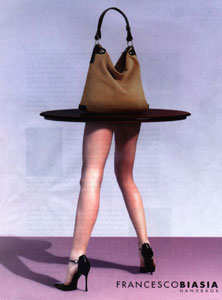
Objectification of women is an epidemic in this country and all over the world. And too few people speak up about it. Yet, we see women being objectified daily. We see it in magazines. Women’s long and slender legs being used to sell us something that we do not really need. Women blending in an advertisement as the beer bottle. Not drinking one like “a man” but portrayed as the actual beer bottle — something that can be taken a hold of, taken advantage of.
We see it online. Advertisements on the Internet are everywhere with women posing seductively. When men mirror those same images, we laugh; we find the humor in the poses. But when women pose seductively, we just accept it as part of life. We do not laugh. We do not think it is cute. We as a culture accept it.
We see it on television and in movies. Impossibly thin women being shoved in front of us: think Angelina Jolie. Advertisements by Carl’s Jr. that portray eating a burger to be sexy. I don’t know about any of you, but in real life, I have never ever equated eating fast food with being sexy.
Speaking of things that should never be sexy: Even Minnie Mouse and Daisy Duck and a few other beloved Disney characters were slenderized and sexualized thanks to Barneys New York last year. Minnie suddenly dreamt of being a model. What? Are we really OK with filling young children’s minds with these images? We must be if Barbie and Bratz dolls are still on the shelves at stores.
Or is it less about being OK with it and more of just not noticing?
Get The Daily Illini in your inbox!
Until I took a class that covered women’s portrayals in media last semester, I knew this was going on, but I admittedly did not notice it. I did not realize just how much the sexualization and objectification of women is portrayed in the media.
People want to sell their products, but there has to be a way to do it that does not say everything should always be about pleasing a specific set of hormones. Yet, it is. That’s why we end up with advertisements of beer bottles designed to look like a woman’s midriff.
This gets into the minds of young women everywhere. Even though we aren’t objects, somewhere, in the back of many people’s minds, they start to think the only way we can be beautiful is if we allow ourselves to become objects rather than people.
I’m not saying all campaigns and advertisements do this — the Dove commercials use “real women” to advertise their products. And even more recently, they added “Real Beauty Sketches” to their campaign where one woman describes herself to a forensic sketch artist, and then the artist draws accordingly. A stranger who the woman only met briefly then describes that same woman to the artist. The stranger seems to describe the woman prettier than the original woman did about herself. But even in this powerful commercial, they are all fairly attractive women. They are mostly wearing makeup and dressed well. The concept is good, but it does not get the job done. And it certainly can’t undo so many years of what has been ingrained in our minds as to what is outer beauty.
Which then leads us to buy things to make ourselves feel better about ourselves and then we become the advertisement — we become the object. And even then, it still is not good enough in the media’s eyes.
And it bothers me that we let it happen here on campus to some extent.
When women go for a run outside, they are going for exercise, for training, for a chance to escape from the world for a while. But many times, men see this opportunity as a chance to call them out on it. They honk, they cat-call. That woman, for a few split seconds is nothing more than an object to them versus a woman trying to better herself — because the constant advertisements surrounding them say it is OK when it really is not.
If women ever want to be seen as something more than an object to men in real life, the first step is to change how we view women in the media. Maybe by starting to support a company like Dove or go even further than that. But until the media starts to take women seriously, not as objects but as real people with real thoughts and feelings, I fear realistic representation is too far off.
Joanna is a senior in LAS. She can be reached at [email protected].