Rating: 4/10
If given the grace of a typical racy romance, “Wuthering Heights” is a fun enough time. But beyond that, writer-director Emerald Fennell’s newest attempt to provoke is not as daring or transgressive as it would like to be.
It’s hard to talk about “Wuthering Heights” without mentioning its generationally impactful source material, the classic novel of the same name by Emily Brontë. Yet, judging the film by a metric of loyalty to Brontë’s vision feels unfair, since it’s clear that Fennell approached this adaptation with a very independent set of intentions.
This film is as tied to its original material as other adaptations like “10 Things I Hate About You” and “Anyone But You” are to their Shakespearean sources. Which is to say, not much at all. But by keeping the novel’s name and not much else from it, Fennell invited expectations that were bound to not be met. By opting for a reaction-inducing, familiar reference rather than a full commitment to originality, Fennell’s creation fails to stand on its own two feet.
Get The Daily Illini in your inbox!
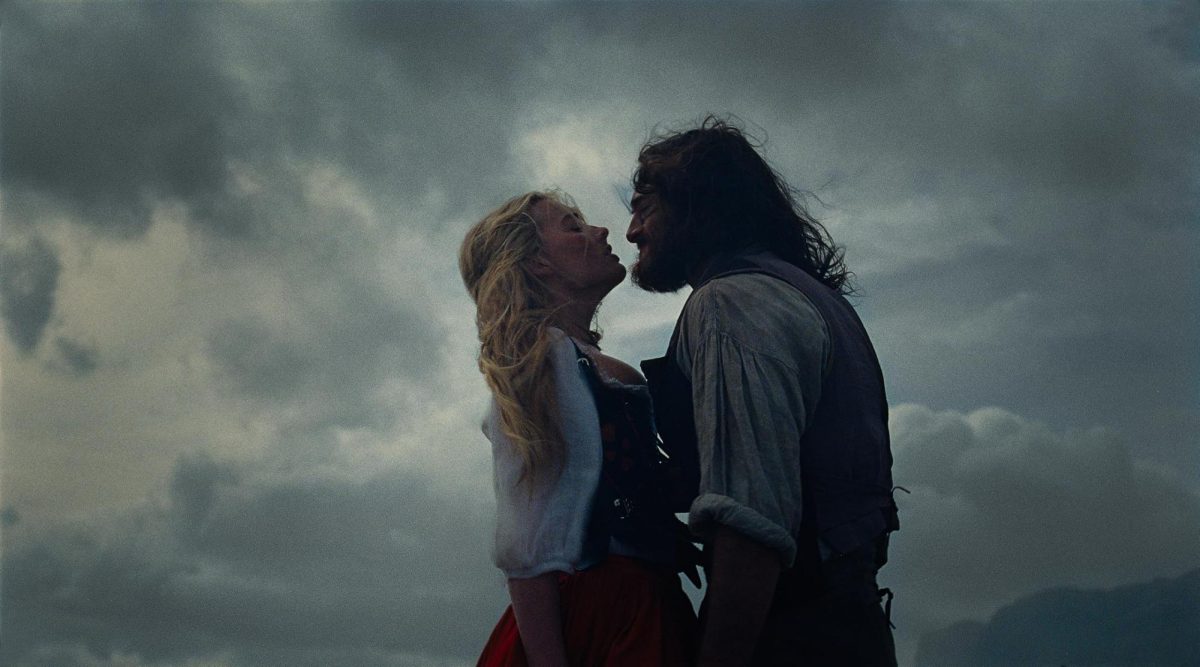
The extravagant set design of “Wuthering Heights” is one of its best qualities, with careful attention to detail contrasting Catherine’s (Margot Robbie) childhood home and the household she marries into. Although accuracy for the time period is completely thrown out the window, Fennell crafts an intentionally artificial-looking world that gives the film a unique touch it could’ve used more of.
It’s not a reach to say that one of the main intentions of the film was to shock the viewer. There are scenes that are clearly included to induce a reaction, but it still constantly felt like the film wasn’t going far enough with its risks.
One of the most powerful moments in “Wuthering Heights” is the opening. This was a rare moment in the film where what was shown was genuinely subversive, and the soundtrack was actually setting the tone rather than distracting from it. Then, it never gets that bold again. Things end, go out of frame or move just off-screen before you can get too uncomfortable.
In most cases, restraint is good — it helps build tension, but only when it doesn’t feel like the movie is shying away from its own subject matter. When crazy moments end before they get too crazy, it doesn’t feel like a well-written glimpse into the lives of these characters, but rather a half-written moment that could’ve done more.
Like most romances, “Wuthering Heights” struggles with creating conflict that doesn’t feel cliche. Fennell’s versions of Catherine and Heathcliff aren’t directly plucked from the book. Straying from the source gives her creative freedom that she can’t exactly handle when it comes to building the two leads as people and giving them clear motivations.
Fennell received some backlash because of the whitewashed casting of Jacob Elordi as Heathcliff. In the book, it’s implied that this character is not fully white, and his race impacts how others treat him. Many adaptations of “Wuthering Heights” also don’t abide by these descriptions, and in doing so, rid themselves of a crucial race-based theme present in the book.
It’s obvious that, in Fennell’s world, racial dynamics aren’t meant to be perceived in a time-accurate sense. In contrast to Elordi as Heathcliff, the casting of Hong Chau as Nelly and Shazad Latif as Edgar introduces changes to characters who were white in the book. However, by avoiding the characters’ races and barely acknowledging their economic differences, the film just ends up feeling empty.
The only conflicts are interpersonal, which makes them feel like a weak foundation if you want viewers to see these problems as urgent and truly difficult to resolve. There’s barely any societal push, which means a lot of these characters create their own problems, and that gets annoying when everyone feels like a conflict-inducing plot device.
The film includes an original soundtrack by Charli xcx, which, on its own, is an excellent album that follows the themes of Brontë’s book. However, this doesn’t equate to it matching the voice of the film. Except for “House featuring John Cale,” every other Charli xcx needle drop unfortunately felt distracting and forced compared to the setting and emotions of the film.
This mismatched, jumbled stylization was made even worse when a folk song not at all from the Charli soundtrack, “Dark Eyed Sailor” by Olivia Chaney played twice. There’s such a stark contrast between these two types of songs that, again, it felt like the film was unwilling to commit to its own ambiance.
“Wuthering Heights” is not the boundary-pushing, sensational twist on the classic novel that it may be marketed to be, but it can still be a fun watch with the right people.