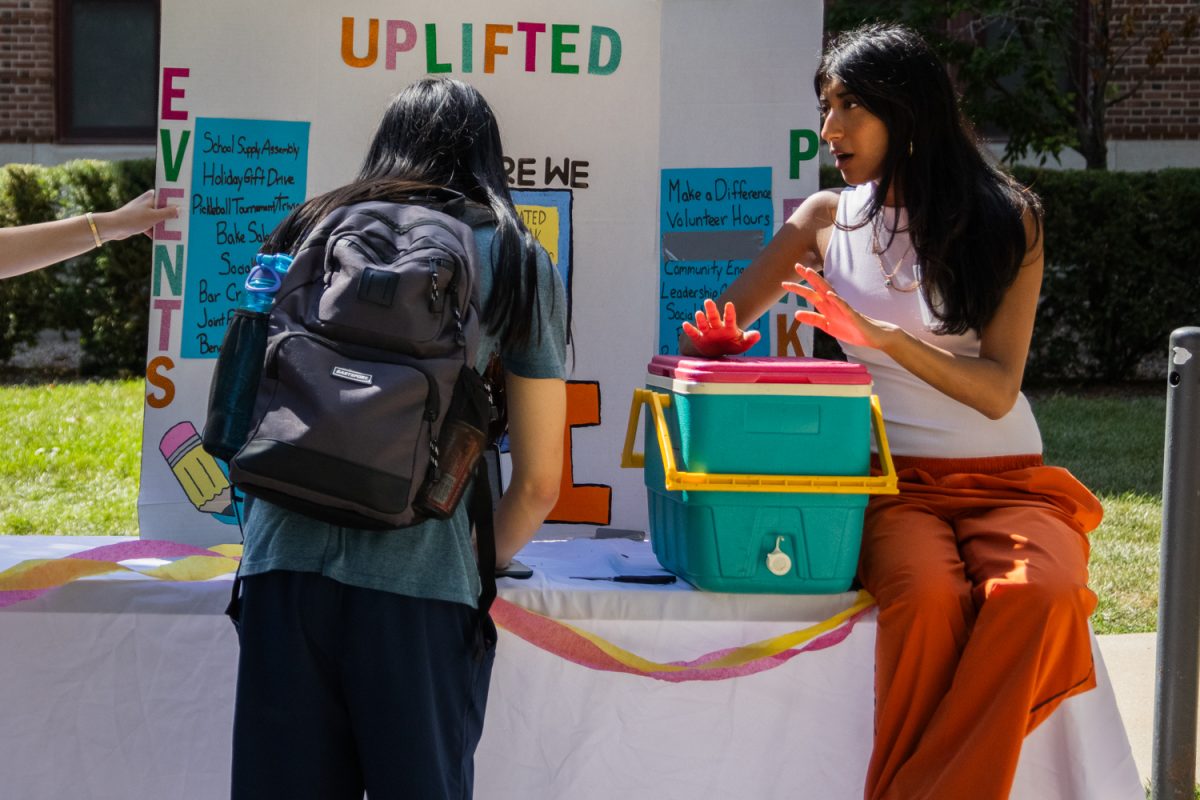
On a campus where over 1,000 RSOs already buzz with activity, carving a space for a new organization at the University is easier than it seems.
According to Nick Fink, senior assistant director of Student Org Development & Administration, there are 1,084 registered student organizations currently on campus. Although many niches are already filled, each year brings an onslaught of new communities ranging from fun hobbies to advocacy groups.
“When we think of the holistic collegiate experience, student organizations provide students with the opportunity to find community and connection on our campus,” Fink said. “We start roughly 120 new organizations every year.”
Fink encourages students to build a club because little interests matter, saying that SODA tries its best to streamline the process to motivate new clubs to register, as outlined on the department’s website.
Eli Bennett, senior in Engineering as well as one of the founders and current technical director of Liquid Rocketry, believes that student organizations provide hands-on experience of student interests that can’t be found within the walls of a large lecture hall.
Get The Daily Illini in your inbox!
“When it comes to engineering as a whole, there is so much you learn in industry that you just can’t learn in class,” Bennett said. “You’re never going to get the teamwork skills you need. You’re never going to get the project workflow skills you need. Internships are going to get you somewhere there, and they’re really helpful; but part of it, too, is you need these RSOs to get you an internship.”
One of the first steps in creating an RSO is the constitution process. Both Fink and Bennett emphasized the importance of having a clear mission statement, which is the organization’s “perspectives, interests and scopes,” as noted on the SODA website. These pillars are the core of an organization’s constitution and make each University club unique.
“Creating a quality mission statement is one of the most important parts,” Fink said. “Taking the time to really think about how you can distill your big vision for what your (organization) will be is the quintessential part of making an RSO.”
A template for creating a constitution is available through the SODA office.
Jess Chen, junior in LAS and founder and current president of Psych Bites, established her club this year. She was looking for an RSO dedicated to research writing for psychology and initially joined the neuroscience board, but found it too foreign as she preferred psychology.
New RSOs are required to have a minimum of five people who are currently enrolled at the University to fulfill the roles of president, vice president, treasurer, secretary and membership director.
“Generally, people wanted to help out (starting the RSO),” Chen said. “I asked my friends and their friends to be my exec board, and especially in psychology, people are focused on research, so people helped.”
Another psychology club, Women In Psychology, was founded by Michaela Justus, who graduated from the College of Liberal Arts & Sciences in 2025 and started her club in her sophomore year. She began WIP for a similar reason: to fill a gap in the psychology club space of an organization dedicated to a community of women.
All three RSO founders identified the funding aspect of their club as the most difficult to navigate.
“The hardest part of creating an RSO is working with the money department,” Justus said. “We didn’t have any feasible ideas as a new club to ask them for money, so we started with dues instead.”
To be in good standing, financial balances of RSOs cannot go below $0 in their Student Org General Fund and Gift Funds. In order to get funding from the SODA office, there has to be a specific outline for what the money would be used for and why.
“Funding sources for RSOs (feel) catered towards non-engineering RSOs,” Bennett said. “The way it works is you get $5,000 you can apply for, but you’re meant to only use it for reusable materials.”
The final requirement of all RSOs is that the organization adheres to the student code and policies. The duration of the registration process can vary, with founders like Bennett and Justus completing the process after about a semester’s worth of time. However, Fink says the SODA office tries its best to finish the process within two weeks, which is the time it took for Chen.
Although the process of creating a new organization on campus may be stressful at first, Justus says the outcome is worth it.
“No matter how small, no matter how big, RSOs create a space of belonging,” Justus said. “That’s what I was missing my freshman year, and instead of sitting there complacent, I wanted to create something.”