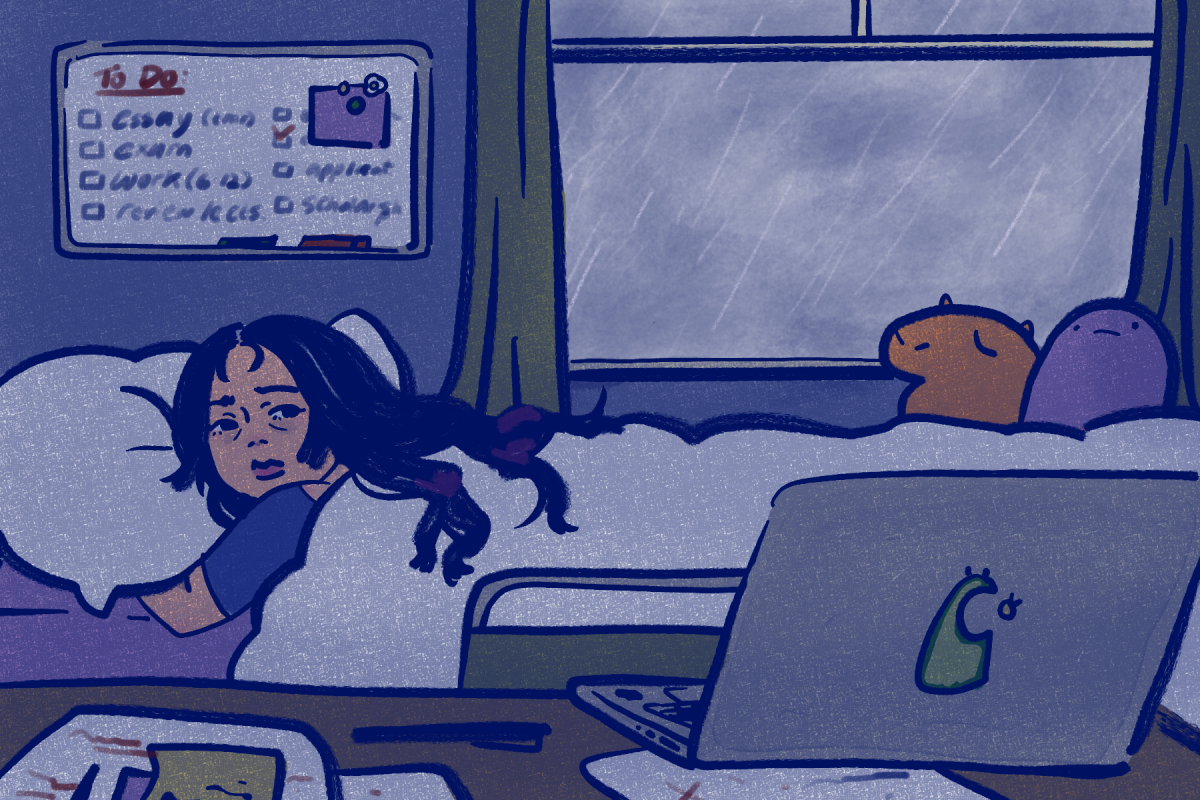
Looming economic anxiety, the advancement of artificial intelligence and changing hiring practices have all changed the way recent graduates experience the job market.
While the postgraduate job search has always been an anxiety-inducing prospect for college students, these changes have increased young people’s concern about finding a job in recent years. According to a Handshake survey, 56% of class of 2025 graduates said they were somewhat or very pessimistic about starting their careers in the current economy.
Jordari Rene is the assistant director of employee relations and professional connections at the University’s Career Center. He has seen a shift in the attitudes of the students he works with throughout his seven years in the career service industry.
“I do see worry,” Rene said. “And it does hurt me a little bit, seeing students come in very highly anxious, in fear, especially my rising seniors or my ones who did additional grad school,” Rene said.
He pointed out that increased negative media coverage and worrying reported figures, such as the fluctuating unemployment rate for recent graduates, have contributed to students’ fears. According to data from the U.S. Bureau of Labor Statistics, the unemployment rate of recent college graduates is an estimated 5.6% as of December 2025.
Get The Daily Illini in your inbox!
While Rene said he wouldn’t consider the job market to be “tough” for college graduates, he acknowledged that economic ambiguity has caused employers to change their hiring practices, making the job search a little more challenging to navigate.
He noted that the internship-to-hire pipeline has lessened, and employers are keeping employees in entry-level positions longer. He also said that people are more willing to take positions for which they are overqualified relative to their level of education.
With the recent advancements in artificial intelligence, there is also concern about the automation of jobs in many current industries.
Jaezl Bata, senior in LAS, is looking for a job after graduation and said she has anxieties about how AI is interfering with her chosen industry.
“I am trying to get into human resources, which is responsible for recruitment and employee selection,” Bata said. “I just don’t see how a computer program can do that job effectively.”
She began actively searching over winter break and described applying to 15 to 20 jobs at a time. She has heard back from some positions for follow-ups.
“I would … describe it as throwing things at the wall and hoping it sticks,” Bata said. “That’s kind of what it feels like.”
Online platforms that seek to connect employers with people looking for opportunities and positions, such as LinkedIn and Handshake, have also revolutionized the hiring process.
Rene thinks LinkedIn has been a positive resource for forming professional connections and sees nearly everyone he works with using it. Platforms like LinkedIn allow people to find and apply to more positions than they ordinarily could.
While he endorses the use of the platform, Rene said that he found recent changes to LinkedIn’s subscription system to be unnecessary. They offer a free version and a paid Premium subscription with an array of additional features. One change is that users with the free version are now limited to sending up to five personalized messages to employers per month when they apply for a position.
“They’re realizing the advantageousness of people desperately seeking positions, and it’s not my favorite,” Rene said.
Despite this, he thinks students can still be successful with the basic version. He also encourages students to be more intentional about their applications on whichever platform they are applying.
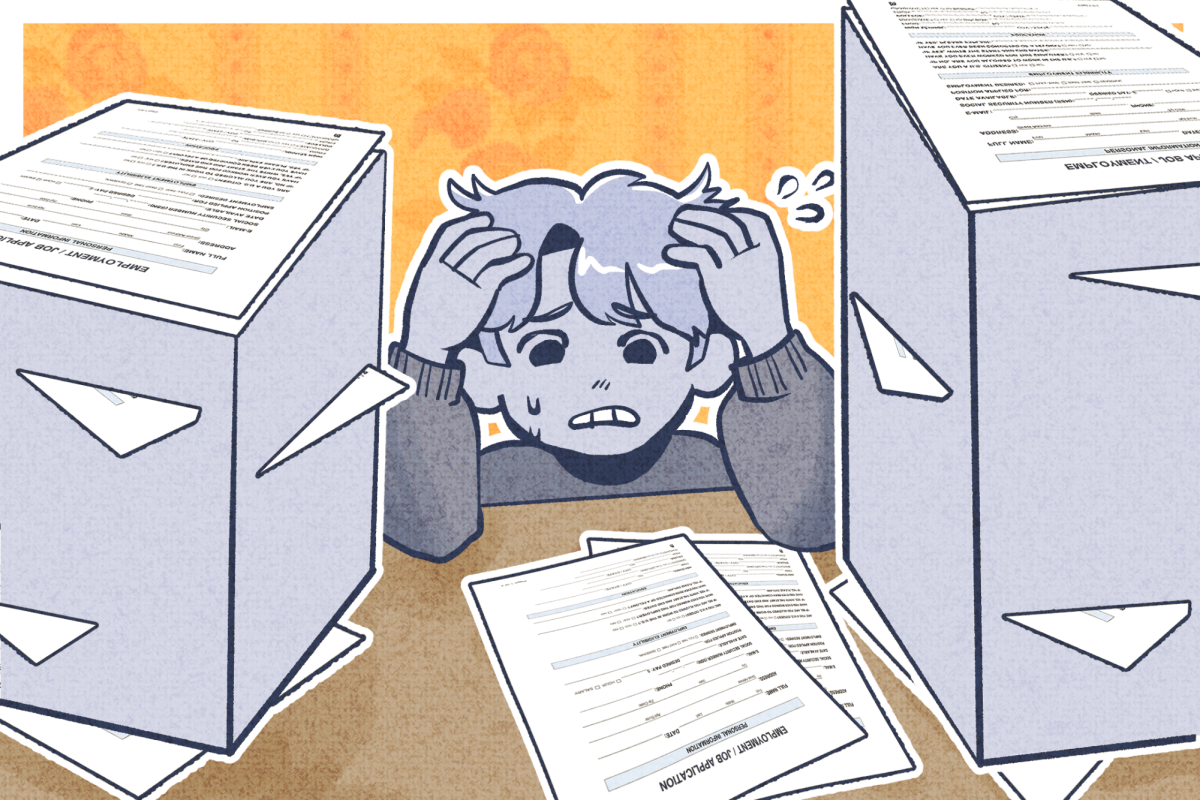
He has seen the rise of people using AI applications to send out mass job applications to many more employers at once than would be possible to do manually. He explained that these applications don’t contain the specific tailoring or personal direction that handwritten ones do.
“And so students will do these ‘mass applies’ thinking, ‘Well, more means better, right?’” Rene said. “‘If I send 500 random applications to 500 companies, I’m closer to these positions.’”
He said the issue with this is that students will be more successful if they tailor their applications to the specific position. Additionally, this practice causes each company to receive far more applications than it ordinarily would. This means that they rarely have the time to even look at every applicant.
Mya Boeser, junior in LAS, thinks that AI can be helpful for tasks like tailoring resumes, but agrees that students should be more intentional.
“People definitely need to be determined,” Boeser said. “It takes a lot of time, and you need to be actively on the search and competitive when looking for jobs.”
Rene said he encourages students to spend a maximum of two hours per day on their job search and then move on to something else for their well-being.
“I think it’s better that you don’t let the job-search process control you while you are actually ahead of that control,” Rene said. “You can’t control society. You can’t control the economy with your own hands, but what you can do is be intentional.”