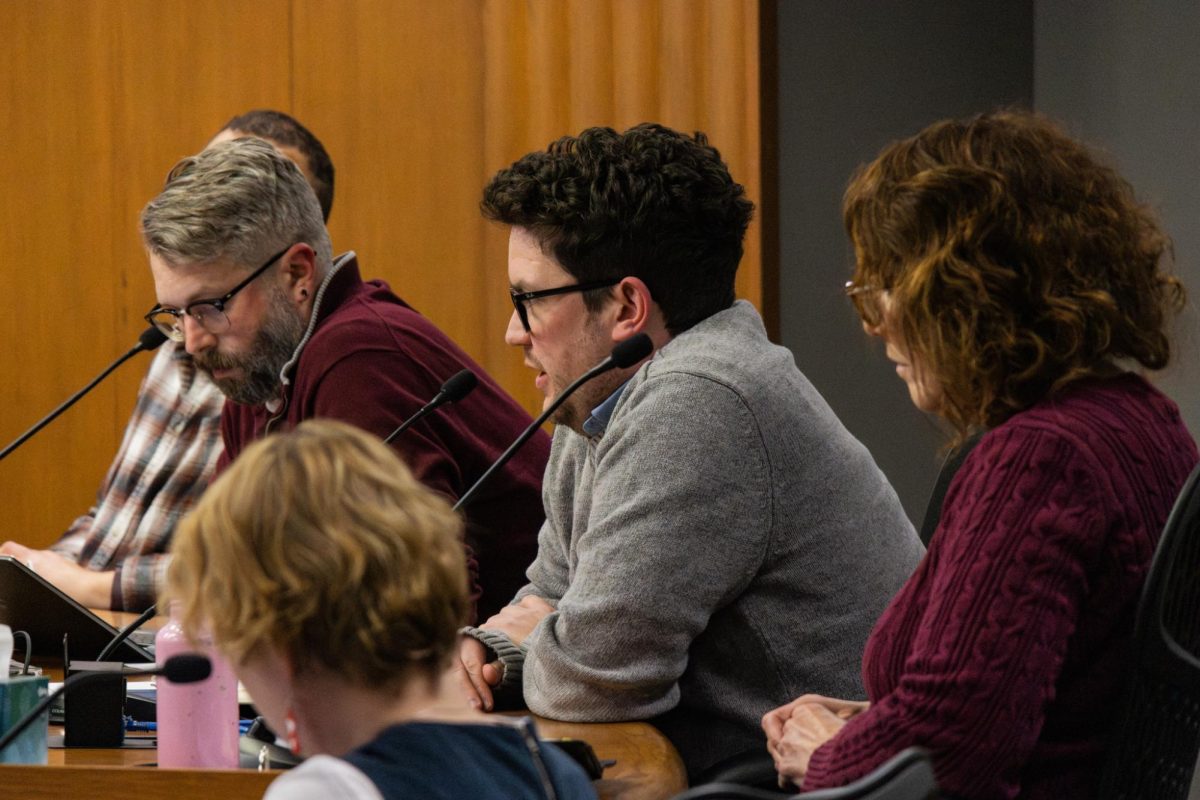
On Monday, Urbana City Council unanimously approved the Imagine Urbana Comprehensive Plan following years of community input. The plan outlines strategies to shape Urbana’s land use, housing, transportation and economic development over the next 20 years.
“This plan isn’t just about where we want to go — it’s about how we get there, together,” said Urbana Mayor DeShawn Williams. “Imagine Urbana reflects what our community cares about most, and now it’s our job to bring it to life.”
Imagine Urbana is centered around what it labels as four “Big Ideas.” These are that the city should be a place for everyone, become financially and environmentally resilient, be a city of connected neighborhoods and embrace its cultural vibrancy and character. In order to achieve the ideas outlined, the plan proposes 11 “Big Moves.”
Key proposals
Of the aforementioned 11 “Big Moves,” many tackle housing, which Cunningham Township supervisor Danielle Chynoweth previously labelled as the community’s most prominent issue, citing “double digit jumps” in rent over the past couple of years.
Get The Daily Illini in your inbox!
Imagine Urbana identifies a shortage of affordable housing in Big Moves 1 and 2, and plans to “continue to work with local affordable housing providers and developers to expand the City’s stock of permanently affordable units.” To support this effort, Imagine Urbana proposes rewriting zoning ordinances, though specificities were omitted from the plan.
Another issue Imagine Urbana addresses is a vision to make Urbana a more walkable city. A survey conducted by the National Association of Realtors in 2023 stated that 90% of Gen Z and millennial respondents indicated that they would pay more for a home in a walkable community, with a third saying they would pay ‘a lot more.’
“Walking is the most equitable form of transportation,” the plan reads. “Designing an equitable city and putting people first means that walking must be at the forefront of how things are built.”
To do so, the plan proposes expanding Kickapoo Rail Trail, updating zoning ordinances and land development codes to “implement complete streets and traffic calming measures where appropriate,” updating brick sidewalk ordinance and more. The plan also proposes to consider eliminating minimum parking requirements.
Minimum parking requirements are a regulatory requirement on the number of parking spaces a new building is required to have. In 2018, the city of Champaign eliminated this regulation in and around Campustown and Downtown.
“(Minimum parking requirements) have drawn criticism for increasing construction costs, negatively impacting the design of buildings, and inducing greater automobile traffic,” said a City of Champaign news release.
There are also many ideas in the plan that seek to revitalize Urbana’s downtown. Big Move 5 seeks to expand Urbana’s Arts and Culture Program, and one of its subproposals is to evaluate the feasibility of establishing a Downtown Tourism and Entertainment District. Big Move 4, which seeks to make downtown the “economic driver” of the city, proposes repurposing city-owned lots into community assets, such as tax-paying properties or public spaces.
2005 comprehensive plan
Urbana’s last comprehensive city plan was approved in 2005. It was updated once in 2006 and amended numerous times with new plans such as 2016’s Bicycle Master Plan and more. Imagine Urbana acknowledges that many parts of the 2005 plan did not live up to its promises.
“The City’s 2005 Comprehensive Plan reflected the economic environment at that time,” Imagine Urbana’s plan reads. “Since then, there have been national crises and local events that have altered the direction of the City and rendered elements of the Plan obsolete.”
Said national events include the 2008 financial crisis and the COVID-19 pandemic. Locally, Carle Health moving offices from Urbana to Champaign resulted in a “mass exodus of workers that supported Urbana restaurants, grocers, and retail businesses,” according to the Imagine Urbana plan.
The 2005 plan was reviewed in a 2021 assessment. The 2021 assessment found that, of the implementation strategies outlined in the plan, 40% were either completed or ongoing, while the rest were partially or not completed. It also found that the longer the timeline for a strategy, or if it required coordinating between City Departments or with outside agencies, the less likely it would be implemented.
Imagine Urbana states in its plan that it intends to be a living document. It will be fully updated every five years to maintain its relevance, and metrics will be tracked quarterly.