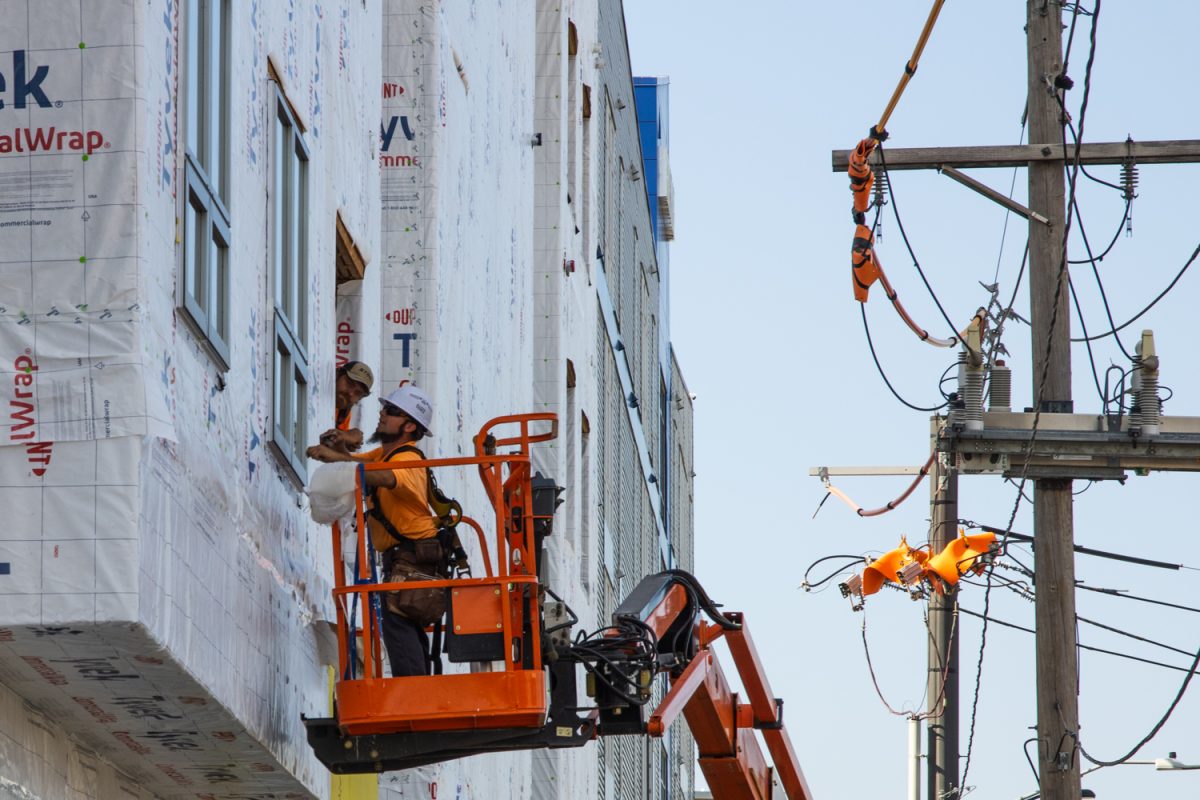
In early August, University Group notified tenants via email that its 60 E. Green St. apartment complex, which is under construction, would not be available for the scheduled Aug. 23 move-in date. The company warned that the delay could extend up to a month.
Delays in construction or renovations aren’t uncommon, and they regularly affect students, according to Anthony Allegretti, a staff attorney at Student Legal Services.
“This sort of thing happens pretty regularly,” Allegretti said. “I’d say nine times out of 10, there’s some building or even some remodeling or renovations that don’t go as planned and … you’re basically living in a construction zone.”
Student Legal Services, which is available to all students who pay the Urbana campus service fee, primarily assists with landlord-tenant issues, according to Allegretti. He said he has frequently represented tenants in situations where construction delays prevented them from moving in on time.
Cause of the delay
Get The Daily Illini in your inbox!
University Group was quick to blame Ameren for the delay in the construction of the apartment.
“This delay is due to an issue with Ameren Illinois Power,” University Group said in the email. “They did not reroute power from the west side of the street to the east side of the street, on our agreed upon timeline. This has affected our ability to finish the east side of the building on schedule and obtain our occupancy permit from the City of Champaign.”
Ameren, meanwhile, maintains that they have worked collaboratively with University Group.
“Our engineering team has worked cooperatively with the University Group since before construction began on the 60 E. Green St. apartments, including de-energizing an adjacent overhead power line so exterior building work could be safely completed,” said Karly Combest, Public Relations Strategist for Ameren Communications, in a statement to The Daily Illini. “Permanent power will be provided once the University Group completes the required site preparation.”
Regardless of which party is to blame, Allegretti is doubtful that the apartment will be ready for students for the coming semester.
“From the pictures I saw of the place, it doesn’t look like it’s going to be ready in 30 days,” Allegretti said. “If it’s ready this semester, I think that would be ambitious.”
A precarious situation
When apartment management companies renege on their offer to provide an apartment due to construction issues, they are in violation of the contract they outlined in the lease. This may allow students to recover damages.
“You’ve been told they’re going to breach the contract by not being able to provide the apartment,” Allegretti said.
University Group gave students an opportunity to fully sever themselves from the lease, writing in an email to students that they are offering to “fully release you … and refund your security deposit.” However, this option may come with a couple of caveats.
“The landlord is agreeing to just terminate the lease and cut them loose — essentially they escape any sort of liability for this,” Allegretti said. “They signed people up for this apartment … people have signed the lease, thinking they had locked in something for the fall, they were going to move into a brand new apartment, the location was acceptable to them on Green Street and, last minute, you’re getting the rug pulled out from under you because the construction is not going as expected.”
By terminating the lease completely, University Group escapes any consequences for the breach in contract.
“Whatever they would have you sign — you’re likely going to be agreeing to waive any sort of claims you would have under this lease … you’re not going to be able to seek any damages,” Allegretti said. “We would advise students who were in the situation to come in and make an appointment to talk to us before they sign anything.”
Due to the breach in contract, students would be within their right to ask University Group to make up the difference for any new apartment they reside in because University Group’s is under construction.
“They’re going to breach the contract by not being able to provide the apartment and you can find another apartment … and if it’s more expensive, you can seek to recover the difference in rent in court if they’re not agreeing to cover those differences,” Allegretti said.
Another apartment, within reason, Allegretti added. The apartments should be of comparable quality.
Some students may find it in their interest to simply terminate their lease and find another option, especially if they do not want to deal with the challenges of negotiating with University Group.
The renting landscape
University Group owns over 3000 apartments across campustown. It is one of many corporate landlords renting to students.
“What is happening in Champaign Urbana — you’re seeing it across the country,” Allegretti said. “The landlord is becoming a larger company, it’s not the mom and pop down the street … they’re becoming more and more of a larger entity. They’re not based here in Champaign and we’re seeing rents increase beyond the increase in salaries. None of this is unique to University students here.”
The question of renting from a large or a small entity comes with its own set of advantages and disadvantages. While high-rise apartments may have amenities, they inherently have a large ratio of tenants to apartment managers, leading to less customer service.
“You’re just one tenant in a portfolio of a thousand,” Allegretti said. “Maybe there isn’t as much attention focused on you as opposed to someone who … have the one building and they’re around all the time.”
To navigate the complex world of renting in C-U, Allegretti has a couple of pointers. The first is to thoroughly read through the lease agreement before signing.
“Read your lease before you sign it,” Allegretti said. “It’s very easy to sign a lease, especially online, where you’re just clicking through — you don’t want to treat it like some sort of end user agreement to sign to use some piece of software or a website online. It’s a legally binding contract for thousands of dollars … be sure to read it, if you have questions, you can come to us and make an appointment.”
He also advises renters to thoroughly document the condition of their apartment so that they’re not held responsible for any damages and face having their security deposit withheld.
“Make sure you’re documenting what the place looks like,” Allegretti said. “Take as many photos as you need to, video, fill out the move in reports that are required … document these pre-existing conditions of the unit so that you’re not being accused or you’re being held responsible for these damages at the end of the lease when you move out.”
Security Deposits
University Group, among other renters in C-U, has faced controversy in the past for withholding security deposits from student renters.
“The security deposit is the tenants’ money held by the landlord for damages and if these damages are beyond normal wear and tear and they can be attributed to the individual tenant, they can be deducted from the deposit,” Allegretti said.
There are legal limitations on what the landlord is allowed to charge tenants for with regard to that security deposit.
“(Landlords) don’t just get to clean the carpet unless it’s beyond normal wear and tear,” Allegretti said. “They aren’t allowed to paint all the walls just because they want a fresh coat of paint for the next tenant and charge it to the previous tenant.”
Allegretti reiterated the importance of documenting the apartment’s initial condition.
“We have had students come into the office … the landlord is claiming they’ve made over $1,000 in damages and the student doesn’t have any proof to back up what they’re saying,” Allegretti said. “Having proof is very helpful to your case.”
Students can schedule in-person or virtual appointments with Student Legal Services on their website as long as they are current University students.