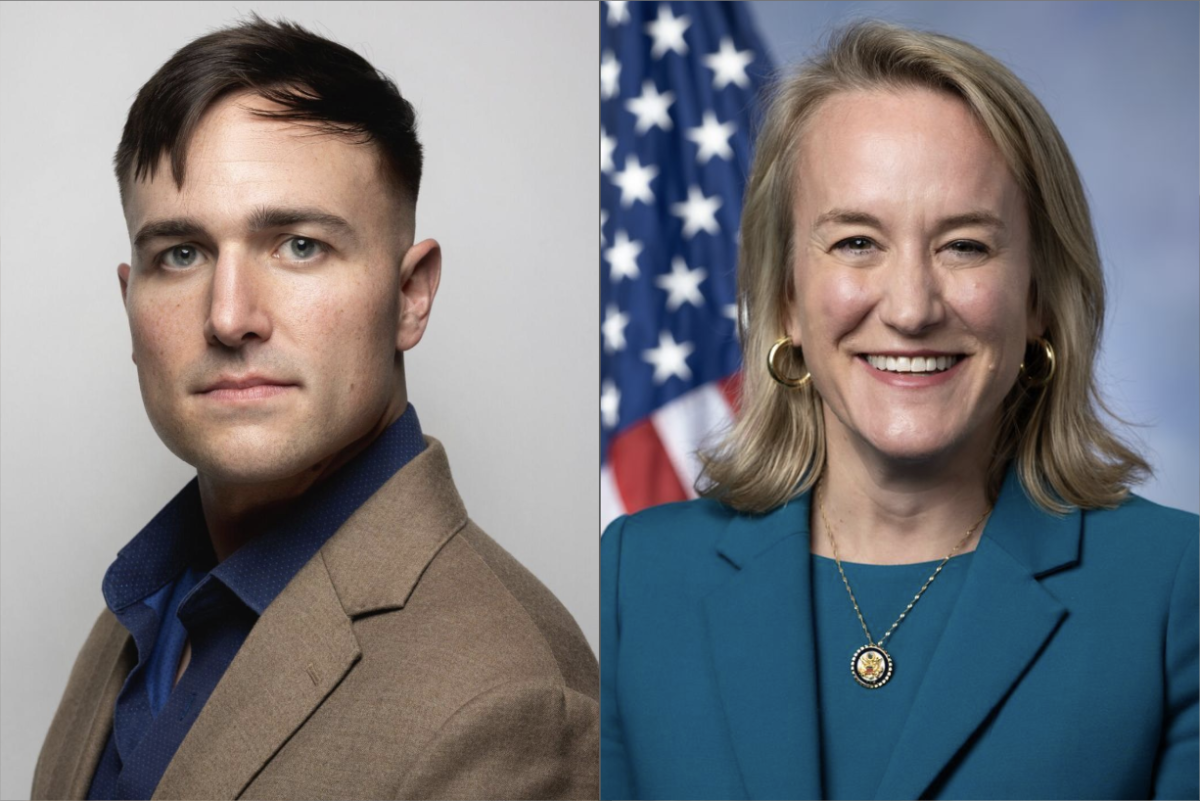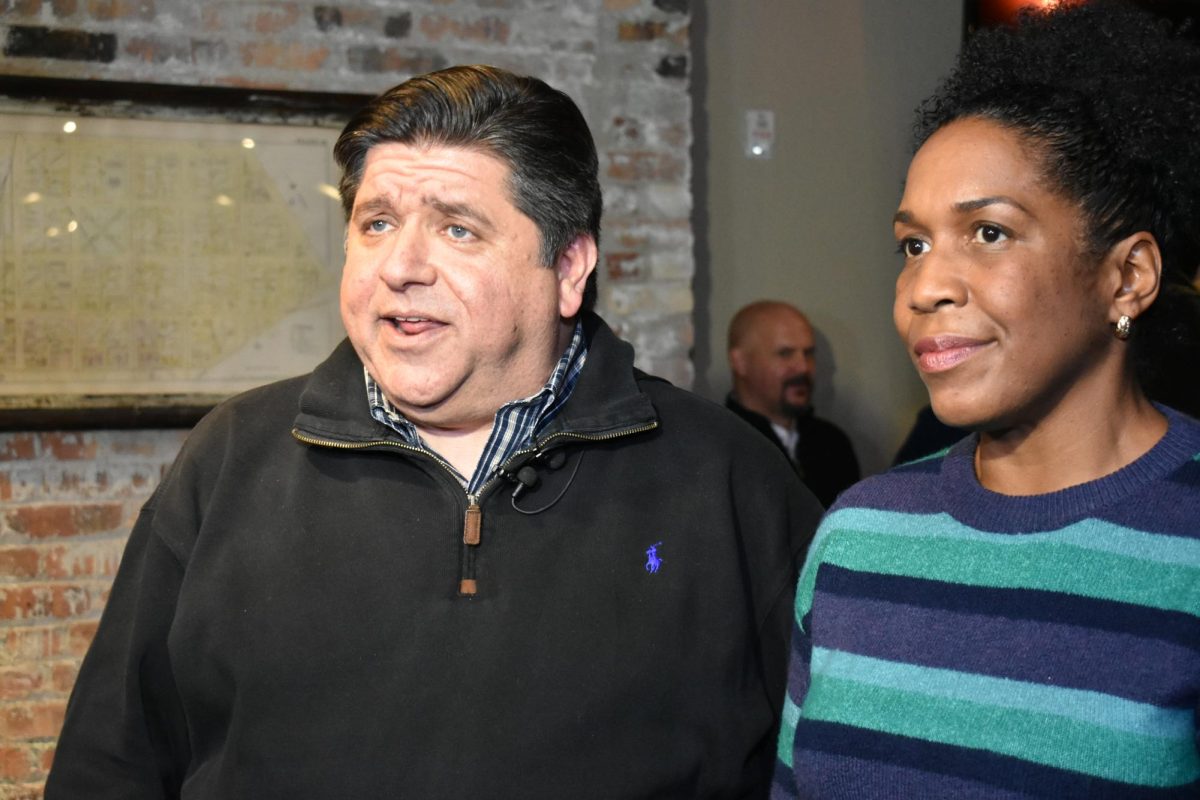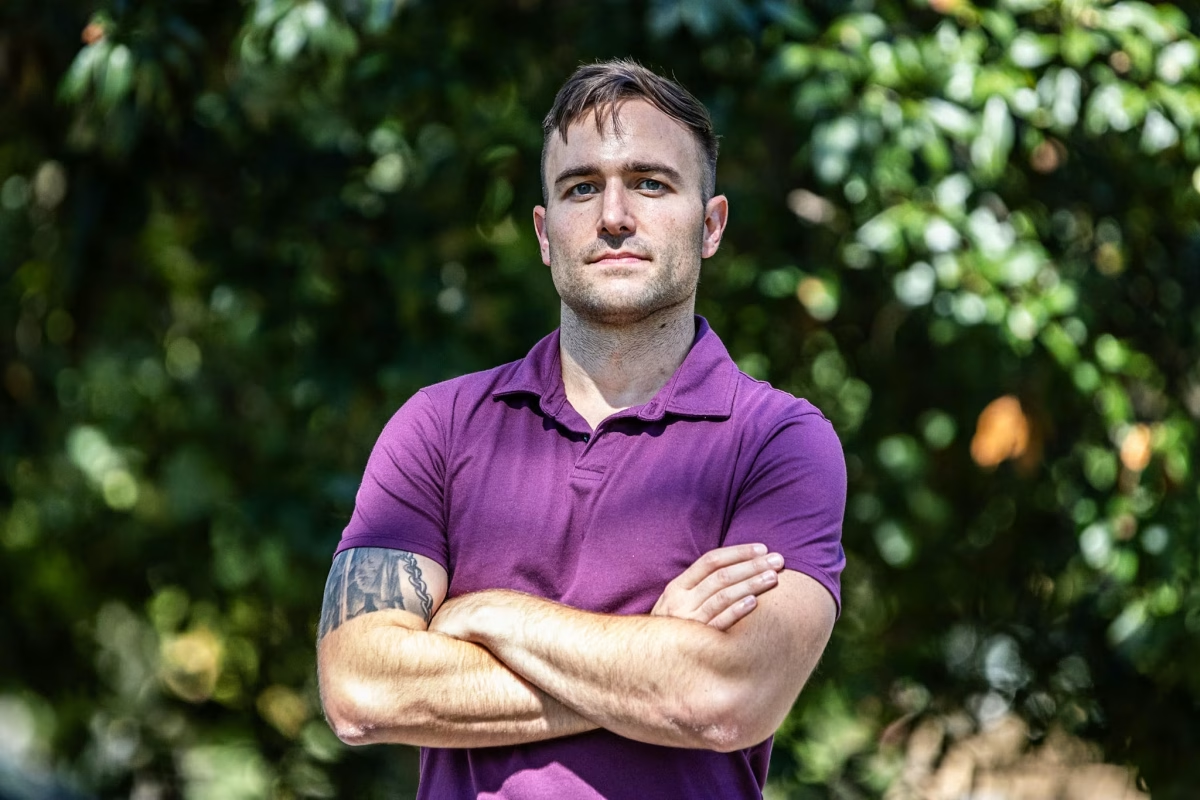
Dylan Blaha, a 13-year U.S. Army veteran and University alum, is making his political debut by running as a Democratic representative for Illinois’ 13th congressional district. Blaha’s campaign focuses on getting “big” and “dark” money out of U.S. politics.
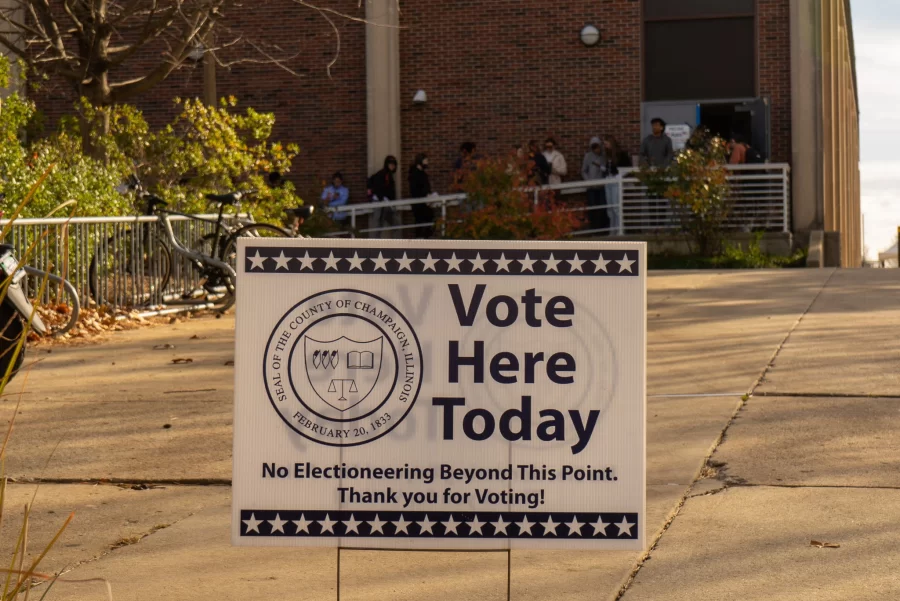
Blaha is competing against incumbent Rep. Nikki Budzinski, D-Ill., in the Democratic primary on March 17. The Democratic primary election determines the Democratic representative for the 13th district in the general election on Nov. 3.
The district contains six counties, encompassing the state’s capital, Springfield, and three public state universities — the University, University of Illinois-Springfield and Southern Illinois University-Edwardsville.
In an interview with The Daily Illini, Blaha provided insights into his life before deciding to run for Congress, his reasons for his policies and stances and why he believes he is the right person to represent Illinois’ 13th Congressional District in the U.S. House of Representatives.
Blaha’s background
Get The Daily Illini in your inbox!
Currently, Blaha is a force health protection officer-in-charge for the Illinois Army National Guard; he described his role as being similar to that of a medical planner. Blaha originally enlisted in the Guard as a combat medic at 19 due to concerns about affording college.
In his 13 years as part of the military, Blaha spent five of them in active duty, being deployed in Wiesbaden, Germany, for three years and to Afghanistan for just under a year. When talking about his experiences as a veteran, Blaha mentioned that he does not inherently agree with the American military on every aspect.
“I always like to say I don’t agree with everything the military has done, and I definitely stand against American military imperialism around the world,” Blaha said.
Blaha graduated from the University with a bachelor’s degree in molecular and cellular biology in 2016 and then a master’s degree in biochemistry in 2023. During his time at the University, Blaha was a part of the Army ROTC and served as an immunology research scientist in the Department of Biochemistry.
Blaha as a candidate
In his campaign, Blaha intentionally highlights that he is a grassroots, non-establishment candidate and emphasizes his refusal to accept donations from political advisory committees, super PACs or any foreign interest groups.
When asked if his time in the military and in academia influenced his policies, Blaha mentioned various beliefs he holds that stem from his experiences. First, Blaha listed three military benefits he receives that he believes “everyone” should be eligible for.
“Everyone should be guaranteed 30 days of paid annual leave … paid parental leave … (and) health care,” Blaha said. “These things are things that everyone should get, and it’s something that many of us in the military do realize.”
Blaha then mentioned how his research experience made him passionate about the importance of investing in education. He said the country needs to ensure that tax dollars and money (some of which he wants divested from the defense budget) are used effectively in a way that helps working people.
Frustrations with Budzinski
Blaha said he previously voted for Budzinski, but his dissatisfaction with the incumbent representative and her votes is what led to his decision to run for her seat.
“I voted for her without really knowing much about her, other than that she was a Democrat,” Blaha said. “And then it wasn’t until the Laken Riley Act that I said, ‘Oh, I need to start looking at her votes,’ because why did she vote for this Republican legislation before Trump got into Congress?”
The Laken Riley Act “mandates the federal detention of illegal immigrants who are accused of theft, burglary, assaulting a law enforcement officer, and any crime that causes death or serious bodily injury.”
Blaha mentioned that when he was going door-to-door promoting his campaign, he encountered many who were frustrated with certain Democrats that he believes share a lot in common with Budzinski.
“I’ve talked to so many people who are frustrated with Donald Trump and everything that he’s doing,” Blaha said. “They’re frustrated with Democrats like (Hakeem) Jeffries and (Chuck) Schumer that don’t fight, but then they don’t know that (Budzinski) is also just like Schumer, just like Jeffries.”
Blaha’s biggest gripe with Budzinski — her campaign finances — aligns with his campaign’s aforementioned focal point of getting dark money out of politics. Blaha said that early on in his campaign, he looked through Budzinski’s open secrets page to find that “she takes money from almost every corporation under the sun.”
“Once you go through the list … Target, Chase Bank, the Walton family who owns Walmart … (and) the housing lobbies, you say, ‘Oh, well, now I understand why she votes the way she does,’” Blaha said.
Money in politics
Blaha asserts that money in politics is a huge issue, saying that too many politicians are loyal to the big donors, lobbyists and super PACs at the expense of the people they serve and represent.
Blaha recognizes that money has, for the most part, always been part of U.S. politics. But Blaha noted where he saw a turning point.
“Since the Citizens United decision of 2010 … it’s gotten so much worse,” Blaha said. “Congressmen and women are supposed to report all their money … and yet they haven’t really enforced those rules on each other.”
The Citizens United ruling struck down restrictions that limited corporate spending that does not go directly to a candidate or party. This led many lower-level courts to no longer impose said restrictions onto groups, like super PACs.
Due to the lack of enforcement, Blaha believes politicians — like Budzinski — become influenced in their legislation. Notably, earlier this year Budzinski also called to overturn the Citizens United ruling.
“Congressmen and women invest in defense contractors, they get campaign funds from defense contractors and both (Republicans and Democrats) vote for war,” Blaha said. “You can’t get anything done when you have both parties taking money from the same people … it’s not okay.”
According to Blaha, the way to address this issue is overturning the Citizens United ruling, publicly funding elections and imposing strict spending limits on campaigns.
IL-13 education, college student voting
Illinois’ 13th congressional district houses three major school districts that have more than the state average of 49.7% low-income students — Urbana School District 116 at 71.7%, Champaign Unit 4 School District at 54.7% and Springfield School District 186 at 64.7%.
When asked what needs to be done to facilitate student success in the context of these numbers, Blaha pointed to an overarching issue.
“I’ve pointed out many times that our poverty rate is at 17%, which is far above the state and national averages,” Blaha said. “So ultimately, I believe in federal investment in our schools, because we need to take away that burden from parents.”
Adding onto that, Blaha believes that his fight in helping working families across the board will also contribute to low-income student success.
As far as post-secondary education, Blaha aspires that someday no one will have to pay for higher education, while conceding that there are more immediate issues that need to be addressed.
“Ultimately, I would like to get to a place where nobody has to pay for higher education … that we end student debt,” Blaha said. “But first, we need to invest in community colleges (and) trade school programs, and make sure that we start investing a lot more in student loan relief programs.”
Blaha emphasized the importance of federal funding, as he noted the need for a degree in the current job market.
“We need to continue to invest in research programs, and we need federal investment in universities, period,” Blaha said. “We need to modernize universities for the times … more federal investment is the answer.”
When asked why college students should vote for him and whether they should legally register to vote in Champaign County in order to vote for him, he noted that students should be inclined to vote in Illinois’ 13th District, as they spend the majority of the year in the district.
Blaha then mentioned his belief that there is an increasing threat of artificial intelligence taking entry-level jobs. Because of that Blaha said that college students should vote for him as he believes he will offer what is best for students in terms of job security.
“I’m fighting for increased federal minimum wage, and just fighting for better jobs in general,” Blaha said. “I’ve talked to so many students who are worried about even getting a job after they graduate, and that’s something I’m going to fight for.”
National issues
Blaha is an advocate for Medicare for All and believes that it is the only way to get out of what he believes to be a “horrible” healthcare system. Blaha believes that, by transitioning to a single-payer system, where everyone has health insurance provided by one health insurance agency like the proposed Medicare for All, Americans will reap the benefits.
“By going to a single payer system, (that) will cut down administrative costs (and) will actually be to hold these pharmaceutical companies accountable for the prices that they charge,” Blaha said. “We’ll actually get to a point where people don’t have to worry about going to the hospital.”
Blaha is also an advocate for universal basic income. This belief stems from Blaha’s concerns with AI and its influence on the job market.
Regarding AI, Blaha seeks to make sure it does more good than harm, which he believes can be achieved through regulation.
“The biggest detriments that we see in artificial intelligence are impacts on our environment, impacts on jobs, impacts on education, especially the education of minors who just aren’t ready to deal with AI,” Blaha said. “I always say that we cannot advance AI at the cost of humanity.”
Lastly, Blaha also sees a need to decrease the U.S. Defense budget by at least $100 billion. Expanding on that thought, Blaha said though it is important to have a strong military, it might be time to scale back.
“We do need to close some of our bases around the world,” Blaha said. “We can’t be team America, world police forever.”
Blaha then mentioned how he strongly opposes the U.S. military’s support of Israel in its war with Palestine, calling it a genocide.
Closing thoughts
The DI asked Blaha to speak on a topic that previously hadn’t been discussed and he believes is relevant to his campaign and who he is as a representative.
“I really want to take the time to stress that we are at a crazy moment in American history where we have seen authoritarianism rise … but we’ve also seen a lot of people come together,” Blaha said. “We need to stress to people that real change is possible.”
Blaha finished his thought with two main notes.
“I’m not a politician,” Blaha said. “But right now, I just want to fight for people, and I want to do the most good that I can, and that means getting to Congress and kicking Donald Trump out of the White House but also fighting back against corporate and billionaire influence in politics.”
As for why people should vote for him, Blaha says he will represent the interests of his constituents.
“I’ll fight for them, regardless of whether they’re a Democrat or Republican or an Independent voter,” Blaha said. “I will fight for them. I’m not in this for me; I’m in this for them.”