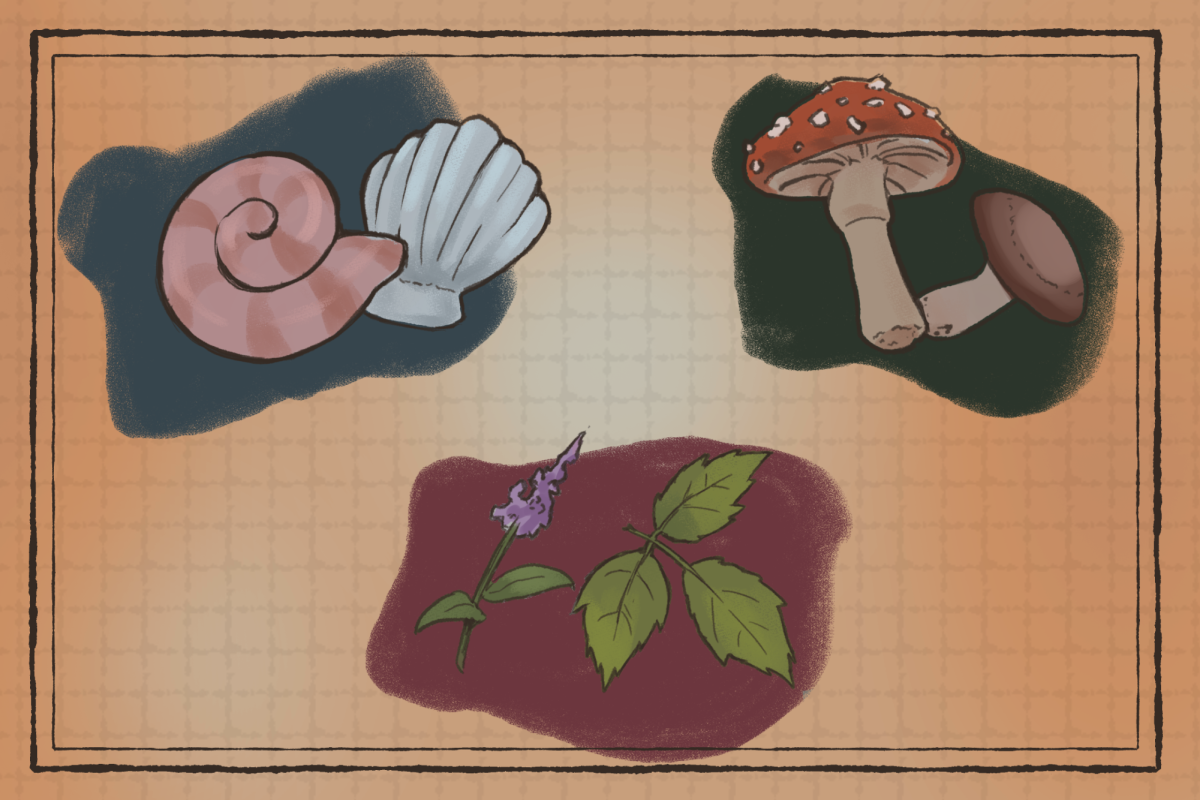
For centuries, the Illinois Natural History Survey has worked to catalog and preserve the organisms that make up Illinois. The INHS maintains its mission to research the history and diversity of plants and animals all over Illinois and also to publish the results to better society’s knowledge and appreciation of Illinois’s legacy.
Mollusk collection
Tucked away in Research Park lies the Illinois Natural History Survey Mollusk Collection. Mollusks are any soft-bodied invertebrates, otherwise known as shellfish. Outfitted with over 555,000 cataloged specimens, Alison Stodola, associate research scientist and acting curator of malacology, says the collection contains more Illinois-collected mollusks than any other collection on Earth.
A large number of the collection’s specimens were gathered during the 1800s by INHS biologists, and the collection is still being actively added to. The Mollusk Collection’s extensive collection allows scientists to observe mollusks before colonization and other geographic events.
“We always describe it as a library of organisms or specimens that scientists or the general public can access for perpetuity,” Stodola said.
Get The Daily Illini in your inbox!
DNA from older specimens has allowed scientists to discover what the environment looked like in years past.
The collection hosts species at risk of extinction, as well as species that are already extinct. Stodola called the specimen collection “invaluable,” and with the creation of new technologies, the possible uses of specimen DNA have grown immensely. In ongoing research, stable isotopes derived from the mollusk’s DNA have been used to tell scientists more about the environment that the mollusk was living in.
Despite the collection’s large number of specimens, the INHS will continue to adopt specimens based on whether they fill a data gap identified in the collection. Data gaps can be identified in different ways, such as by identifying gaps in time, species and location.
Herbarium Collection
The Herbarium Collection is just a short walk over from the Mollusk Collection. Its contents are made up of materials from the Illinois Natural History Survey Herbarium, the University of Illinois Plant Biology Herbarium and the University of Illinois Crop Evolution Laboratory Herbarium.
Containing vascular plants, bryophytes, algae, fungi and lichens, the collection is incredibly diverse. In simpler terms, Jamie Minnaert-Grote, the collection’s manager, describes it as containing anything “planty,” or plant-like. Algae and fungi are examples of specimens in the collection that don’t really classify as plants, but contain similar attributes.
Some of these seemingly out-of-place specimens have unique backstories about how they ended up in the collection; one example is bacteria.
Scientist Thomas Jonathan Burril worked at the University to uncover a mysterious disease that was affecting apple and pear orchards. After studying the affected plants, Burril noticed the consistent presence of a bacterium he called “Micrococcus Amylovorus” (also known as “Erwinia Amylovorus”). From this evidence, Burril identified the first bacterial disease known to affect plants, fire blight.
“That was huge for agriculture,” Minnaert-Grote said. “That was a huge discovery.”
With over 1.2 million specimens, Minnaert-Grote described the collection as being at around 70% capacity. Hosted at the Robert Evers Laboratory, its larger size has allowed it to adopt collections from other universities that can no longer house them. For example, when Southern Illinois University and Eastern Illinois University could no longer keep their collections, they were adopted by the INHS to continue their preservation.
The collection has recently been involved with an art exhibit at the Krannert Art Museum titled “Another Place: Storymaking the Entangled Prairie.” A few specimens were borrowed from the collection to help visually represent the artists’ visions and takes on prairies.
Insect collection
While the Herbarium Collection is very diverse in terms of species, the Insect Collection is diverse by location. The collection holds around 7 million prepared specimens, as well as noninsect arthropods and miscellaneous invertebrates. Located in the Natural Resources Building, it has hosted curators and researchers who have traveled around the world. Many of these scientists studied evolutionary research on insect groups that are present worldwide.
One of its curators and section leaders of systematic entomology, Christopher Dietrich, has participated in research all over the globe. Dietrich focuses on a group known as “leaf hoppers” from the Cicadellidae family, which are known to transmit plant diseases. This topic is essential to the agricultural community, as it provides deeper insight into plant health.
“One of the things we are doing right now is screening the specimens we have for plant pathogens,” Dietrich said. “By doing this, we can track the distribution of not only the insects that spread the disease, but the diseases themselves.”
This collection emphasizes providing researchers with biodiverse insect samples and opportunities for identifying new species.
“Traditionally, these kinds of collections have been used for basic biodiversity research on particular insect groups,” Dietrich said. “The core is documenting biodiversity on Earth.”
While the diversity of the collection is helpful to researchers and is the center of the collection’s mission, it can become hard to maintain, as this field has become increasingly understaffed.
“There’s no end of work to be done here,” Dietrich said. “Part of the problem is that for a lot of these big, diverse groups of insects, there’s a handful of people worldwide that work on them … We do the best we can.”
Herpetology collection
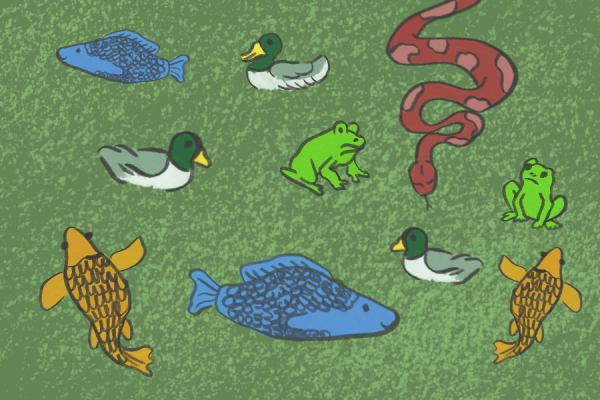
Brimming with amphibians and reptiles, the Illinois Natural History Survey’s herpetology collection feels like a step into “Jurassic Park.” The collection is centered on specimens from Illinois, but also includes specimens from around the globe.
The collection holds many holotypes, an important type of specimen. A holotype is a singular specimen that is representative of the entire species. Researchers can then compare newly found specimens to holotypes, aiding in identification.
“These (holotypes) are really special,” said vertebrate curator and assistant research scientist Arianna Kuhn. “Some places keep them in locked safes, and some people are like, the plan is that if the museum catches on fire — we’re going to take this.”
A large number of specimens are from the University of Illinois Museum of Natural History Amphibian and Reptile Collection. While the INHS has taken over the UIMNH, the collections have not merged.
One important use of the collection is assisting threatened and endangered species. Joseph Cannizzaro, graudate student studying ecology, is currently working with the Eastern Massasauga Rattlesnake. This species of rattlesnake is state and federally endangered in Illinois.
Cannizzaro is using the specimens to track the rattlesnake’s history in Illinois and learn about the cause of the population’s decline.
“(The specimens are) awesome,” Cannizzaro said. “It’s like a biological memory, and it’s so important to see what was once there.”
Fish, Crustaceans collection
With specimens dating back to the 1800s, the fish and crustacean collections — among others — provide a glimpse back into time. From eels to some of the biggest crayfish known to the Midwest, these collections cover a wide variety of organisms.
Stephen Forbes collected some of the earlier specimens. Dusty Swedberg, acting curator of crustaceans, has found a kind of guidance and passion through the specimens.
“Looking at some of the specimens that helped him (Forbes) lay those groundworks is just really exciting for me,” Swedberg said. “To be able to hold those same things that he looked at … If I start there, build my knowledge there, it kind of feels like you are following in similar footsteps, which are pretty good steps to follow, for the most part.”
Recently, specimens were used to determine when the presence of microplastics began to become more common. As society evolves, different uses for the specimens emerge.
“That’s the value of having the physical specimen,” Swedberg said. “We don’t really know what’s going to be important; we have ideas, but we don’t know for certain what’s going to be important … by having this snapshot of that specimen from that place at this moment in time, we can kind of extrapolate, go back in time, and figure out how things work.”
To share information more efficiently, researchers applied the process of CT scanning significant specimens to a grant. This project strives to create accessible and evolutionary research. However, collection manager Enrique Santoyo-Brito shared possible shortcomings.
“What will bring you more information, the specimen or the photo?” Brito said. “Nothing will replace the specimens.”
Brito and Swedberg both affirmed that while technology has evolved to allow the specimens to be seen without physically pulling them out, the specimens themselves continue to be invaluable and irreplaceable.