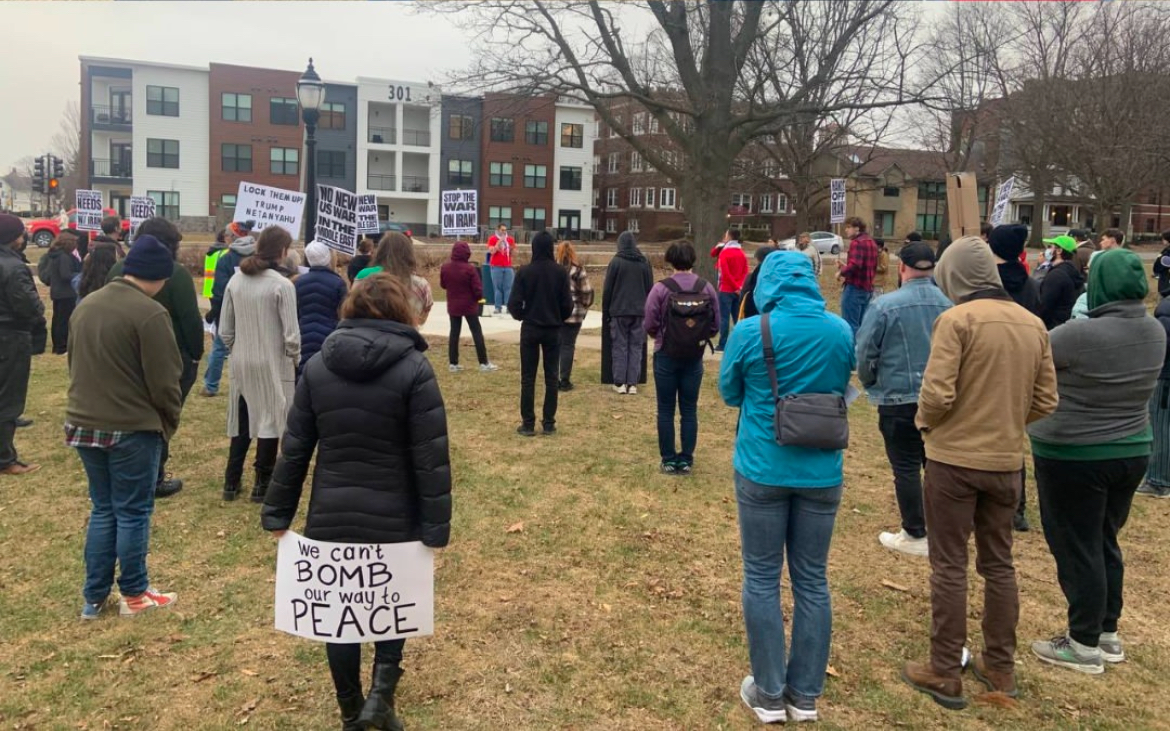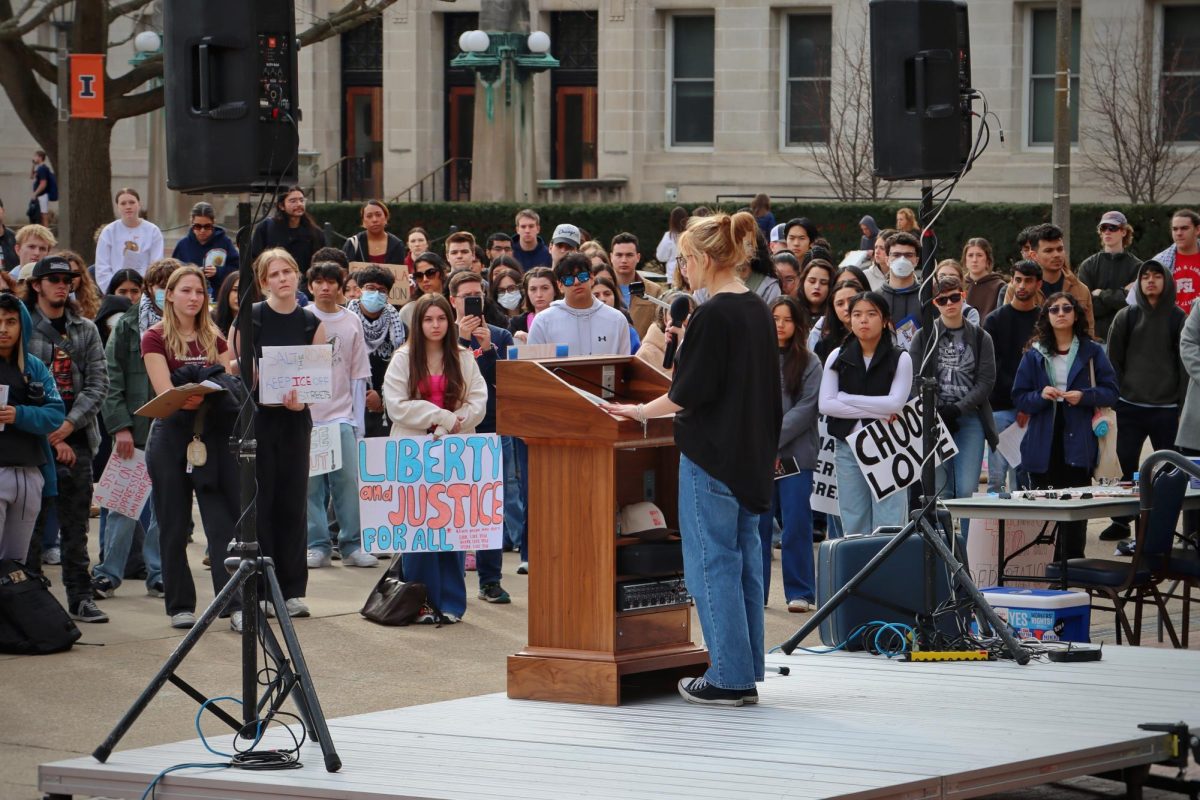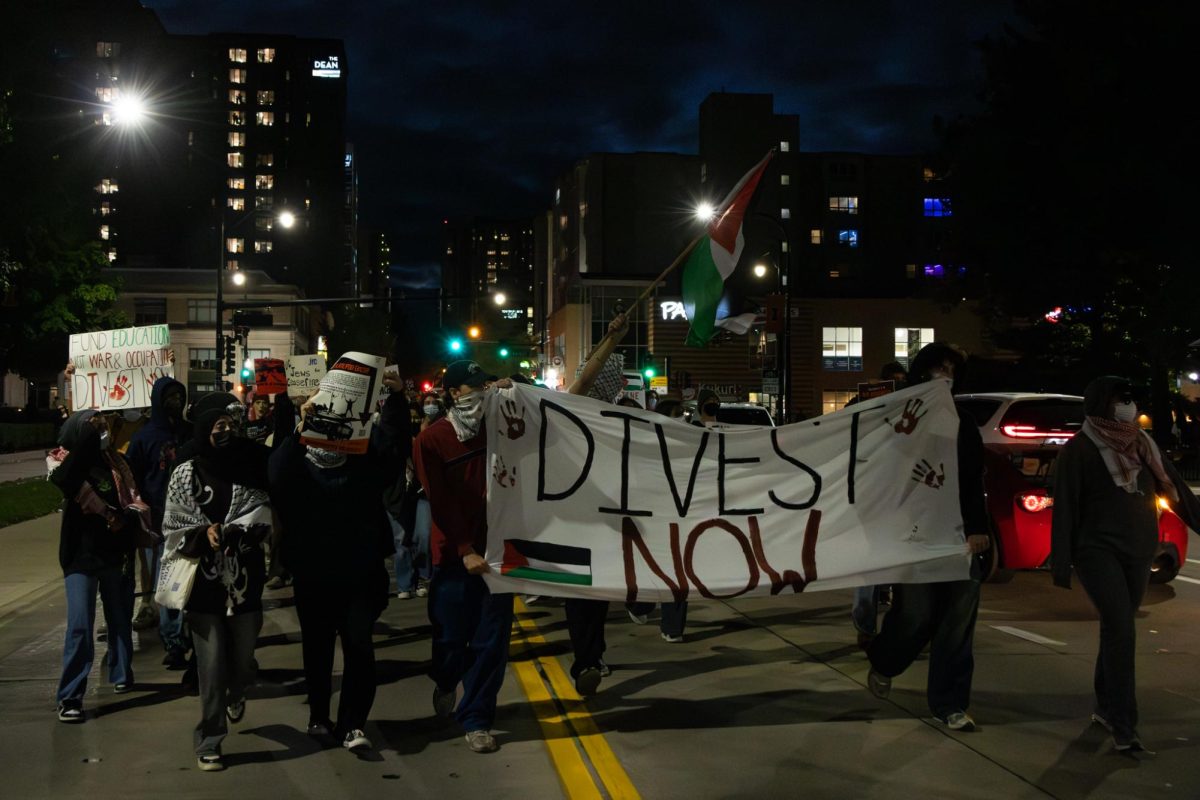
Students for Justice in Palestine UIUC held a rally late Tuesday afternoon at Anniversary Plaza, demanding the University divest from weapons manufacturers SJP alleges are complicit in the killing of Palestinians in Gaza.
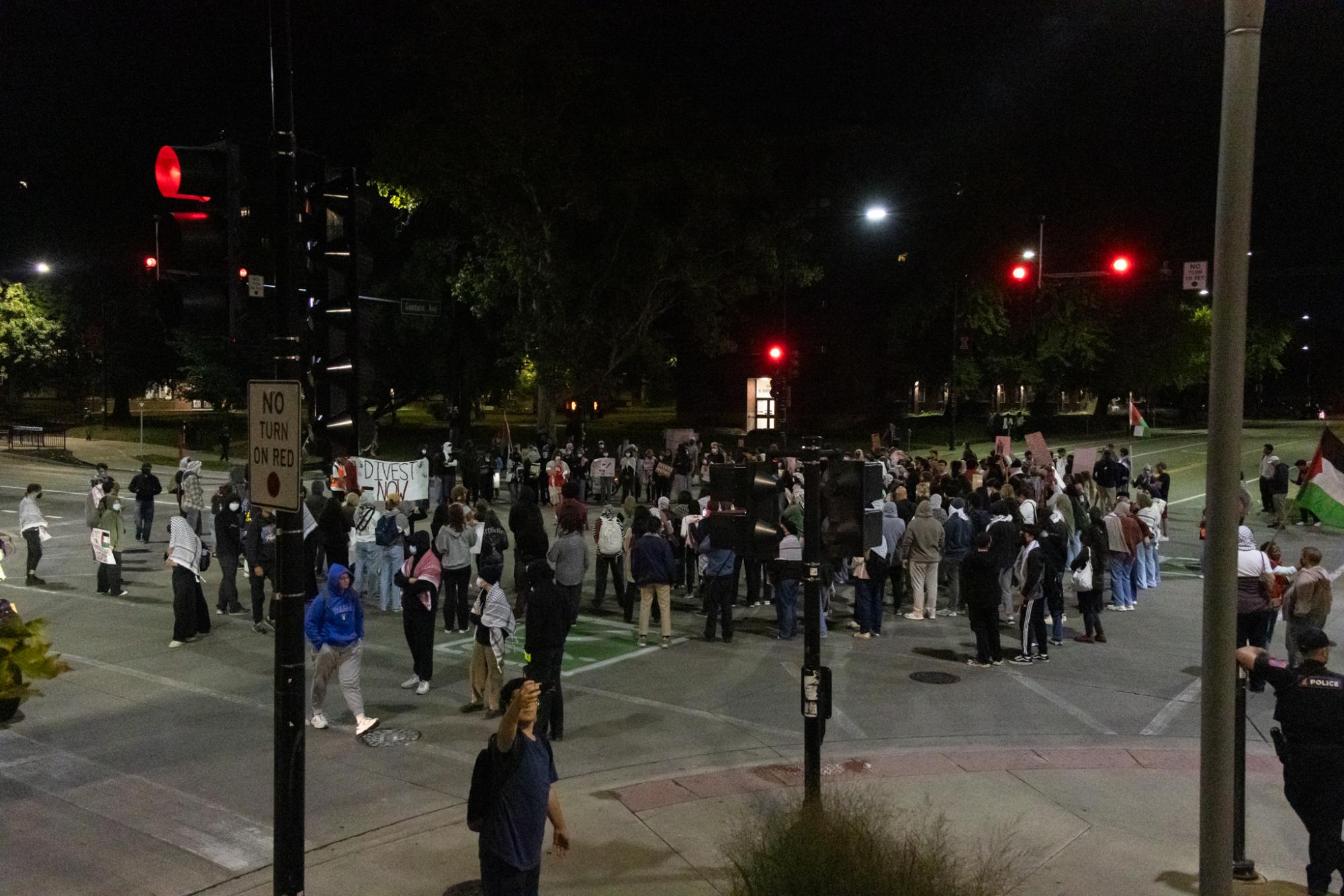
Protesters marched from the Main Quad to the Swanlund Administration Building — where they made speeches criticizing University administration — then made their way east down Green Street, eventually shutting down traffic at the intersection of Green Street and Goodwin Avenue.
The event took place on the second anniversary of Hamas’ surprise invasion of Israel, when Hamas militants killed 1,200 Israelis and took over 250 hostage, an attack which included war crimes, according to a United Nations inquiry. Israel’s subsequent military action in Gaza, which has killed over 67,000 Palestinians and crippled much of Gaza’s infrastructure, has been called genocide by a UN inquiry, the International Association of Genocide Scholars, Doctors Without Borders and two Israeli human rights groups.
The protest was part of SJP’s “Week of Rage,” a string of various events and protests to mark the anniversary. On Monday, SJP posted photos on Instagram of University building signs that had been pasted over with graphics “renaming” various buildings in honor of several civilians killed by Israel’s military action in Gaza. They did not claim responsibility for the graphics.
In a written statement to The Daily Illini, SJP criticized The Grainger College of Engineering for its $9 million partnership with the Department of War. The department contracts companies including several that the United Nations ordered to stop arming Israel in 2024: RTX, Boeing and Lockheed Martin.
Get The Daily Illini in your inbox!
“This semester, rather than acknowledge the overwhelming student and community opposition to university investments in the imperial war machine, UIUC, specifically the Grainger (College) of Engineering, has doubled down,” the statement read.
SJP also wrote in the statement that Grainger “funnels” students into the companies the statement referenced, describing them as “genocidal weapons manufacturers.”
The group, which had its student organization status terminated by the University in 2024, said another part of its goal is to secure a meeting with University administrators to “create a binding plan that restructures UIUC’s investment policy to align with human rights principles.”
At the rally, speakers from various organizations, including Black Students for Revolution, the Party for Socialism and Liberation Central Illinois, Muslim Students Association and CU Muslim Action Committee, delivered speeches and led chants. Some protesters passed out face masks to attendees.
“If there has ever been a time to step up, especially as students, when tuition dollars are going directly to this war machine, this is that moment,” one protester said in a speech.
The crowd sang chants throughout the demonstration, including “UIPD, KKK, IOF, they’re all the same,” “From the river to the sea, Palestine will be free” and “Disclose, divest, we will not stop, we will not rest.”
The University, which invested over $20 million in companies that supply weapons to Israel in 2023, has taken a broadly anti-divestment stance in response to calls for divestment from weapons companies and fossil fuels.
“By divesting, the investor seeking change loses any influence over the company’s direction, making it less likely that behavior will shift as intended,” wrote Patrick Wade, director of executive communications and issues management, in an email to The DI in September.
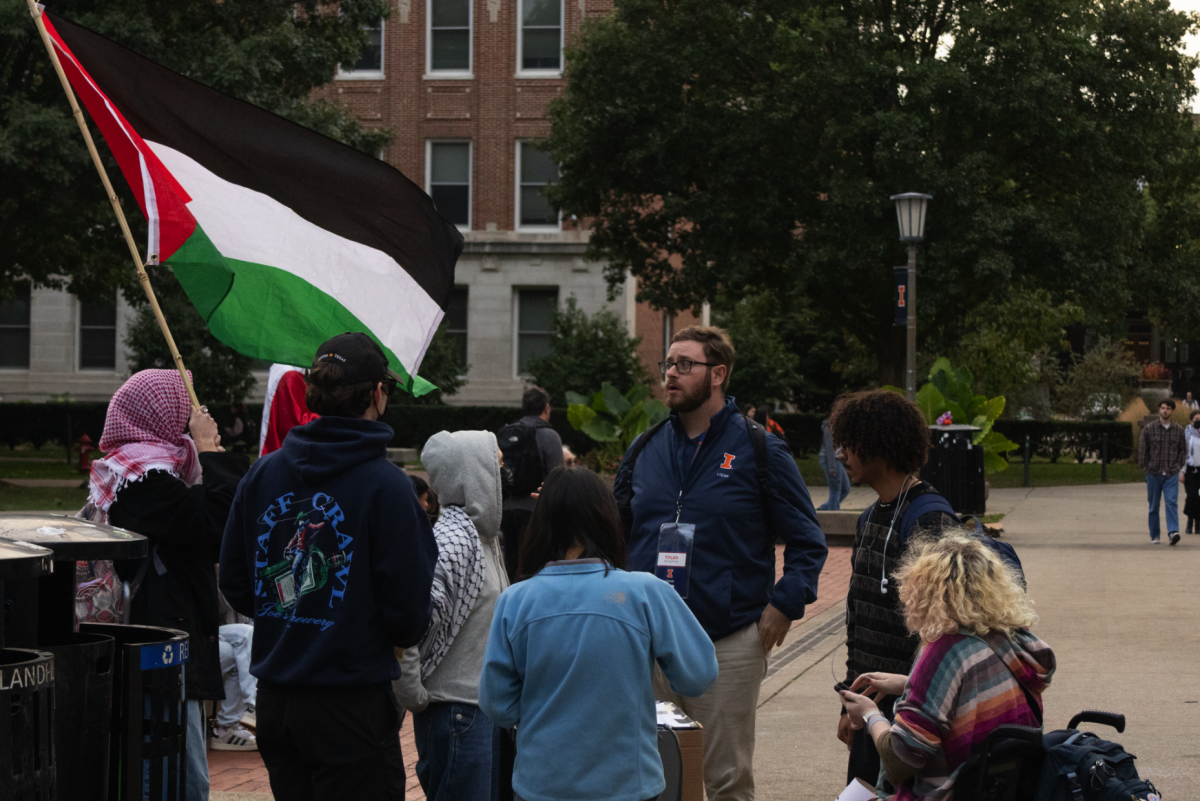
Throughout the duration of the protest, a group of counterprotesters flying Israeli flags and playing Hebrew music from a speaker followed the demonstrators along their route. The group declined to comment at the event.
“Shame to the Zionists that play music when we talk about the genocide and the martyring of the Palestinian people,” one speaker said, referring to the group of counterprotesters.
Several UIPD officers followed the protest route, which stopped traffic along Green Street. Six Champaign-Urbana Mass Transit District buses and several vehicles were forced to come to a halt as the protest paused in the road. Roughly a dozen UIPD officers were present when the march halted.
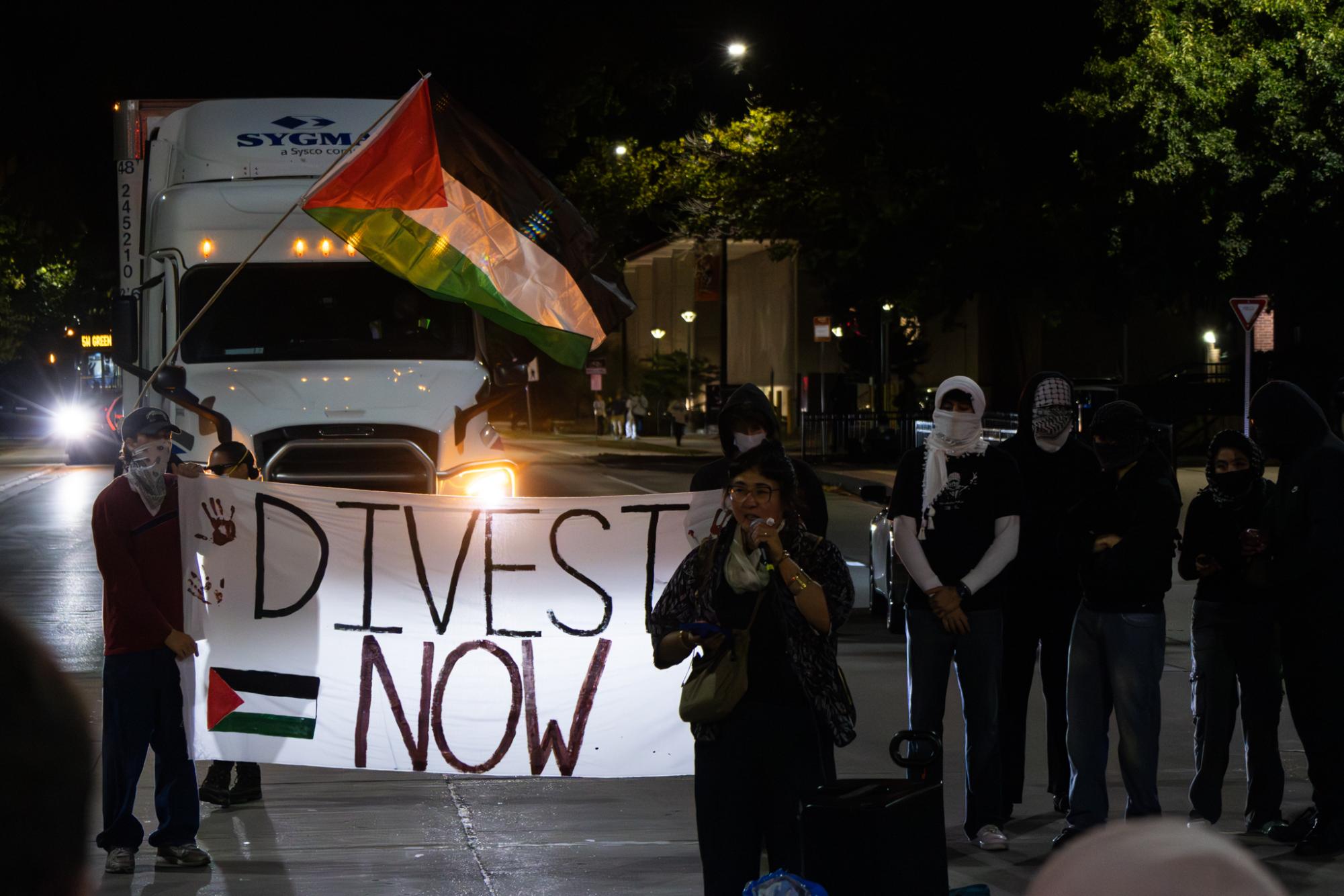
Members of the I-Team, a group that, according to its website, seeks to “help ensure expression of First Amendment rights at events on campus,” were also present. One speaker at the event told protesters not to disclose any information to the I-Team.
Alfred Kagan, professor emeritus in LAS and community member, said “genocide in Gaza” brought him to the protest. He is a co-founder of U-C Jews for Ceasefire and held a sign that read “U.S. bombs are killing Gaza.”
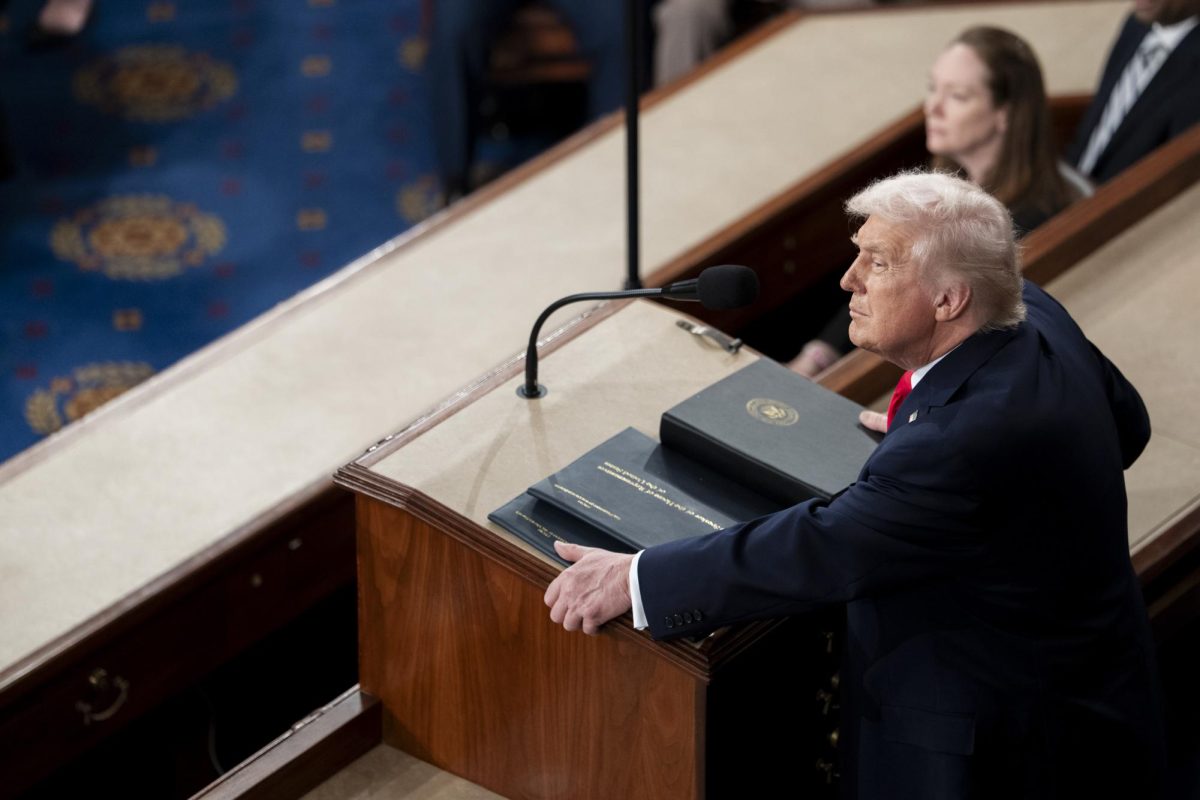
Last week, President Donald Trump proposed a peace plan that he said would end the fighting immediately and ordered Israel to stop bombing Gaza.
“If this LAST CHANCE agreement is not reached, all HELL, like no one has ever seen before, will break out against Hamas,” Trump wrote Friday on social media.
In response, Hamas has agreed to free all remaining hostages and to hand over Gaza’s governance to Palestinian technocrats, but it hasn’t said it would disarm or give up any future political role in Gaza’s leadership, as Israel has demanded.
On Wednesday, Trump said Israel and Hamas agreed to the first phase of his peace plan to pause fighting and release some hostages and prisoners, according to the Associated Press.
Maryam Tariq, senior in ACES, is the president of Project Taqwa at the University, an RSO that provides mental health resources for members of the Muslim community. Tariq’s speech touched on the psychological impact of war and occupation.
Tariq quoted Palestinian psychiatrist Samah Jabr in a speech, saying that there is no “post” in “post-traumatic stress disorder” in the Palestinian experience, but that the trauma is continuous.
“(Trauma) reverberates into every domain of Palestinian life,” Tariq said. “The fragmentation of families across checkpoints, the constriction of human movement imposed by identity papers and the erasure of the Palestinian culture, history and language cannot be measured by a PTSD checklist.”
Sana Saboowala, a University alum and representative of CU Muslim Action Committee, called on protest attendees to boycott companies and corporations named complicit in Israel’s military campaign by the Boycott, Divestment and Sanctions movement.
“Don’t let people tell you it’s not our problem,” Saboowala said. “The fight for a free Palestine is a fight for all of our humanity … Don’t buy Israeli or complicit brands … Don’t eat at places that have franchises that have provided food for (Israel Defense Forces) terrorists.”
Maryam Kashani, professor in LAS, told protesters she was proud of them for their action. Kashani encouraged attendees to challenge their classmates and teachers and demand they connect course subject matter to Palestine.
“There’s a lot of fear among faculty about what we can and cannot say,” Kashani said. “But if you demand that it be talked about, they have to respond to you … We have nothing to lose but our chains.”
Kashani said the struggle is not just for Palestine but also for people detained by U.S. Immigration and Customs Enforcement in Chicago, for people suffering from police brutality and for families struggling financially.
“This is all our fight, and it’s all related,” Kashani said.