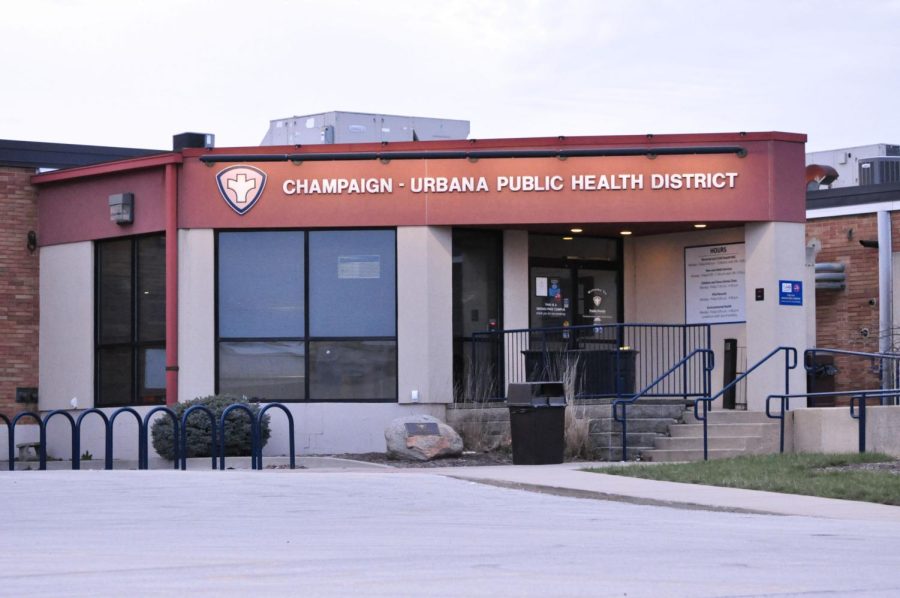
The Champaign-Urbana Public Health District recently announced plans to expand its efforts to prevent overdose deaths. The campaign, announced on Wednesday, coincides with International Opioid Awareness Day, which is on Sunday, and is part of an international campaign to address and spread awareness about the opioid crisis.
In Champaign County, opioid overdose deaths have totaled more than 60 per year since 2018, according to a 2023 report by CU-CitizenAccess. That report cited the increased presence of fentanyl as the culprit for the increase. The Champaign County Coroner at the time, Stephen Thuney, echoed this point in an article by WAND, discussing the office’s annual report.
“Part of that report talks about overdose deaths, and part of the overdose problem obviously is fentanyl, it’s the biggest part of the overdose problem,” Thuney said. “77% of our deaths due to overdose is because of fentanyl.”
To help combat this problem, CUPHD is developing an “Overdose Fatality Review” team composed of “local professionals and substance use experts to focus on reducing overdose deaths.” CUPHD stated that the team will be tasked with confidentially reviewing “local overdose fatalities to identify patterns in the area and create recommendations for systemic changes to help prevent future deaths.”
CUPHD also provided information on naloxone, known by its trade name Narcan, which is a medication used to reverse the effects of an opioid overdose. CUPHD cited their statistics on Narcan distribution, stating they had distributed over 14,000 Narcan kits and are seeking “innovative ways to address the ongoing crisis.”
Get The Daily Illini in your inbox!
Students can acquire Narcan directly from the CUPHD at its Teen & Adult Services Desk or through the McKinley Health Center’s Self-Care Stations. For information on how and when to administer Narcan, consult this guide from the New York State Department of Public Health.
More information about IOAD is available at the campaign’s website. For resources on overdose response, consult the Illinois Department of Public Health or the National Harm Reduction Coalition.


![A single corn (Zea mays) stoma captured at 50x magnification with a two-photon laser scanning confocal microscope while the leaf was manipulated inside a gas exchange system with high light and tightly controlled [CO2] and humidity conditions in the Institute for Genomic Biology Core Facilities in 2025.](https://dailyillini.com/wp-content/uploads/2026/03/TOC-icon.jpg)