Graduate research assistants at the University voted Thursday on whether to unionize under the Graduate Employees’ Organization, following months of organizing and legal groundwork that made them eligible for representation.
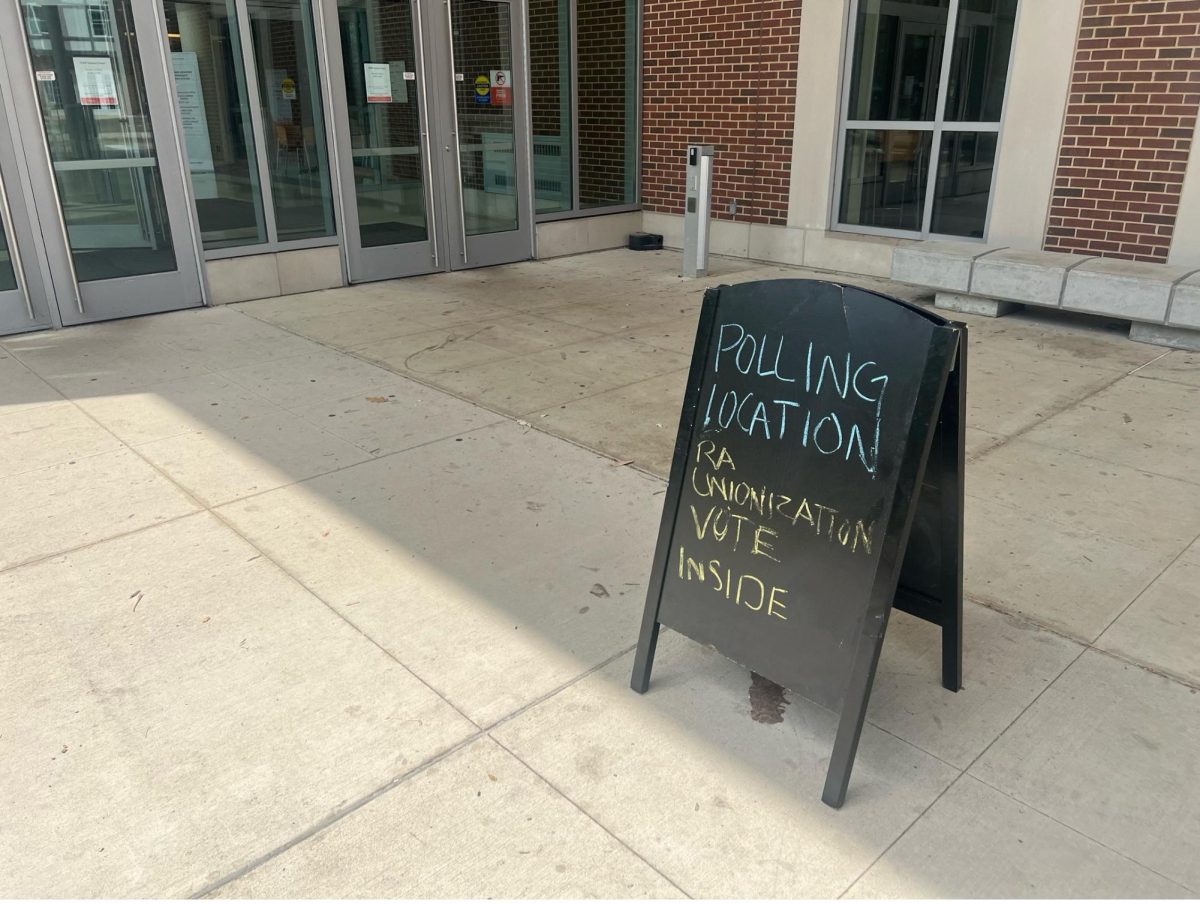
The Illinois Educational Labor Relations Board oversaw the election, which ran from 9:30 a.m. to 4 p.m. Thursday at the Student Dining and Residential Programs Building in the Ikenberry Commons.
If a majority of RAs vote yes, they will be eligible for representation by the same GEO bargaining unit that covers teaching assistants and other graduate employees, granting them contract protections such as appointment deadlines, healthcare benefits and a formal grievance process. Election results will be released after certification by the IELRB on July 18.
“These are protections for TAs, and TAs were allowed to unionize back when GEO formed, but RAs were not,” said Will Wightkin, a graduate student studying molecular and cellular biology and a member of GEO. “There’s been this discrepancy because people in my department flip back between being a TA and an RA and having union protections and not having protections.”
Until 2019, state labor law did not recognize RAs as employees. Augustus Wood, LAS professor in the School of Labor and Employment Relations, who called the vote a “monumental moment,” claimed the distinction was used by universities across the country to avoid paying research assistants a fair wage.
Get The Daily Illini in your inbox!
“Some universities argue today that if you’re doing research, you’re doing it as a student who’s helping contribute to the university’s research power,” Wood said. “It’s not a real reason, but they chose that reason so they wouldn’t have to pay a living wage, and they wouldn’t have to abide by employee rights.”
The classification of graduate RAs changed when the Illinois General Assembly amended the Illinois Educational Labor Relations Act in 2019, officially classifying RAs as employees with collective bargaining rights.
GEO began collecting signatures and initiated a campaign to unionize RAs shortly after the 2019 law passed, but Wightkin told The Daily Illini that GEO paused the effort during the COVID-19 pandemic, resuming in late 2022.
In May, more than 35% of the University’s roughly 3,700 RAs signed union authorization cards — enough to trigger an election under state law.
“The university benefits from and needs the research run by RA labor; we need a union to fight for a living wage, good healthcare and fair working conditions!” said Becca Cohen, a graduate RA studying information science, in a testimonial on GEO’s website.
While hundreds of RAs signed their support for unionization in May, both GEO and Wood highlighted that some, especially international students, may fear punishment for voting in support of a union or joining one. The National Labor Relations Act allows all workers, including non-citizens and those on work visas, to strike or participate in union activities.
“We have to do a better job of putting out information that shows that you are legally protected to unionize,” Wood said. “I think that’s the number one reason why international workers and students are hesitant to unionize.”
Wood said misinformation about union rights may cause international students to fear denaturalization or deportation. When serving as president of GEO, Wood said he faced similar problems regarding participation by international students.
GEO clarified on its website that union membership is not disclosed to supervisors and that votes are completely anonymous.
Wightkin said one major issue for RAs has been appointment timing. While TAs must receive appointment letters at least 30 days before their employment start date, no such rule exists for RAs, according to Wightkin.
“In certain departments, it’s been an issue of RAs not getting the appointment until after they started working, so they weren’t being paid on time,” Wightkin said.
Pat Wade, the University’s director of executive communications and issues management said in an email to The DI that “all newly appointed and re-appointed research assistants are notified in writing of the details of their appointment as soon as practicable, preferably 30 days before the start of their appointment.”
Unionizing would also extend Weingarten Rights to RAs, Wightkin added, allowing them to request a union representative to attend any meetings that may result in disciplinary action. The protection was affirmed by the Supreme Court in 1975.
Another concern for GEO organizers is the risk of federal funding cuts. This is heightened by the Trump Administration proposing significant slashes to funding for the National Institutes of Health and the National Science Foundation. These agencies provide hundreds of millions in research funding — including the cost of employee wages — for the University.
“The University has currently, to my knowledge, voiced no concrete policy of what happens to that person if, in the middle of the semester, the funding is pulled,” Wightkin said.
According to the Office of the Vice Chancellor for Research and Innovation, the University has advised faculty to continue their projects unless they receive a specific stop-work order or funding termination notice from the sponsor. The University has not publicly detailed how employee appointments funded by federal grants would be handled in the event of an abrupt cut.
Wood says unionization is the primary tool employees have to mitigate the negative consequences of federal funding cuts and the gutting of federal agencies.
“The only way to protect research interest at this point, under this current federal administration, is a union contract,” Wood said.
Wood pointed out that unionized federal workers have an additional layer of security compared to those without.
“Having a union gives you a codified law, a legally standing agreement that somebody can’t just get rid of,” Wood said. “That’s why contracts matter, it is a protection device that helps workers against this kind of destruction of federal funding … It’s one of the most important reasons why the research assistants would want to unionize because it will give them even better protection.”
If a majority votes in favor, GEO’s RA Representation Bargaining Team will negotiate with the University’s Labor and Employee Relations Staff to incorporate RAs into the contract, according to GEO’s website and Wade.
“The best people to fight for grad workers are grad workers themselves,” Wightkin said.