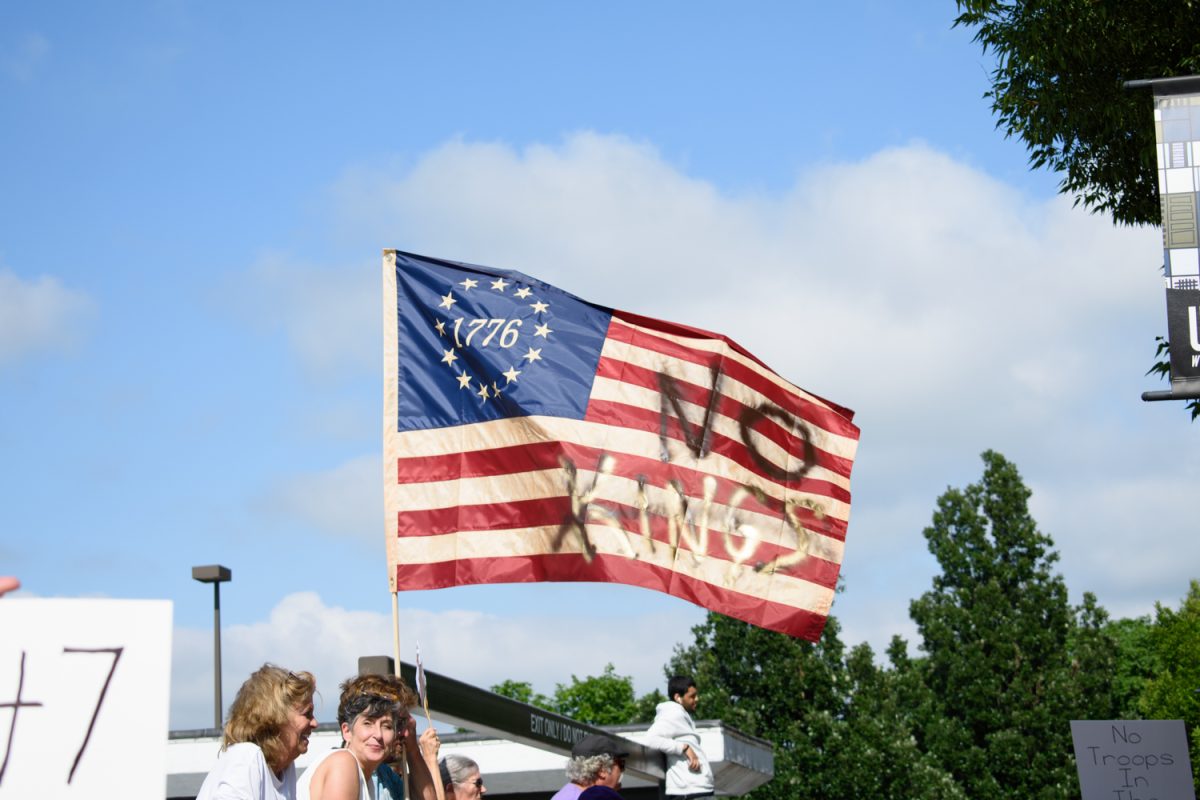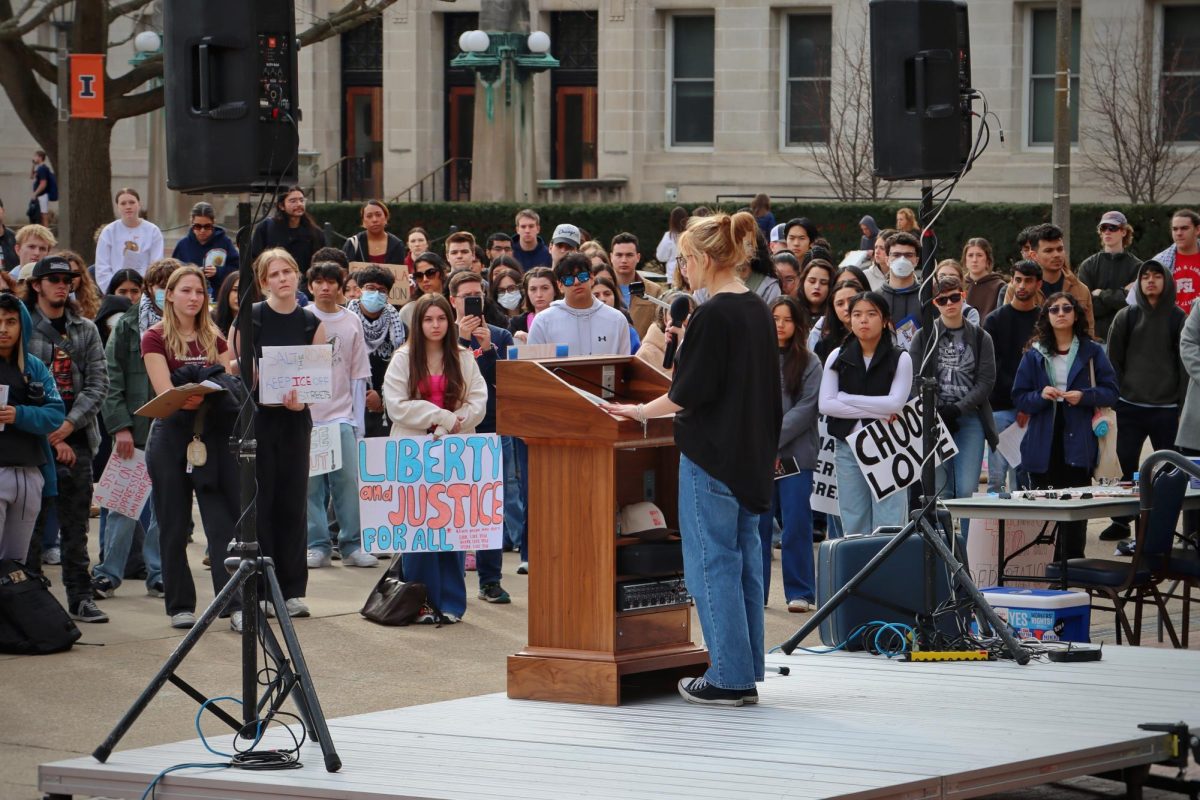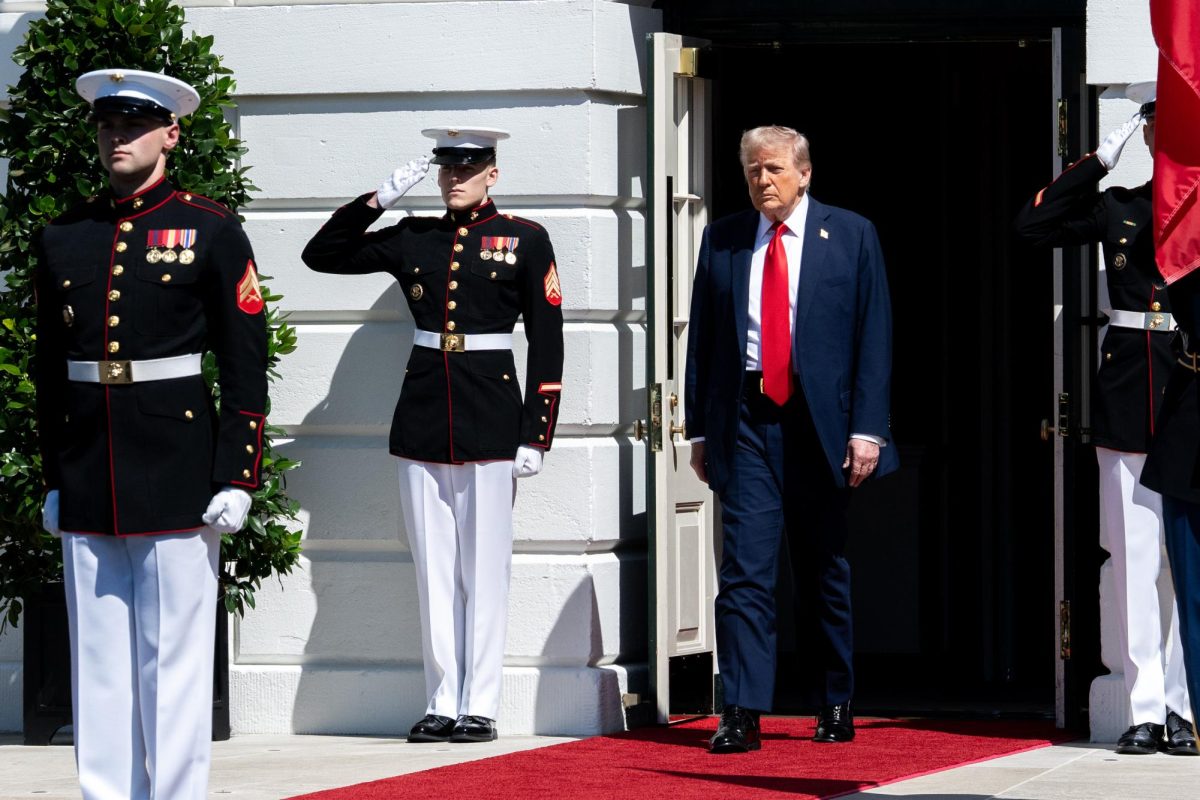
On Sept. 2, President Donald Trump announced his plans at an Oval Office briefing to send National Guard troops to Chicago with the aim of decreasing crime. Gov. JB Pritzker and Chicago Mayor Brandon Johnson have been outspoken about their opposition to this federal intervention.
“He wants me to call him and ask him to call in the National Guard to the city of Chicago,” Pritzker said. “We don’t want it.”
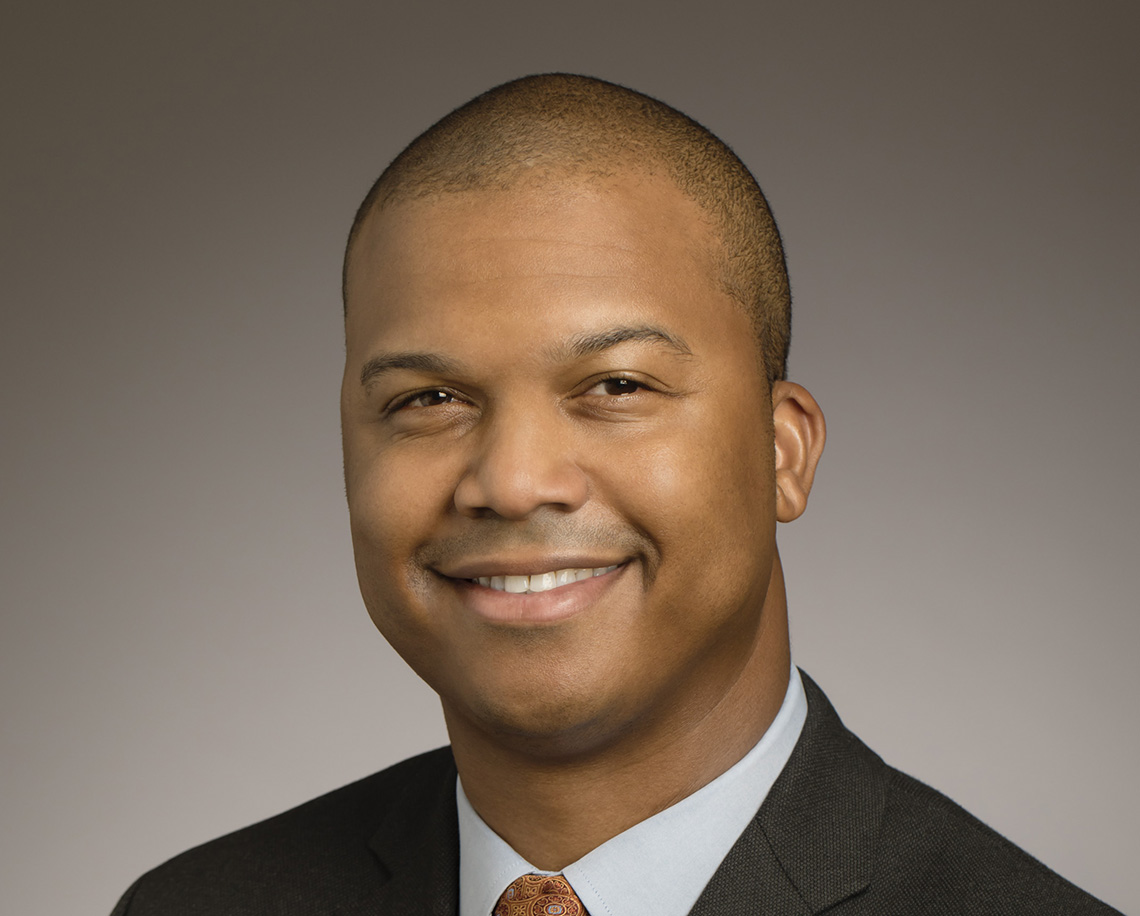
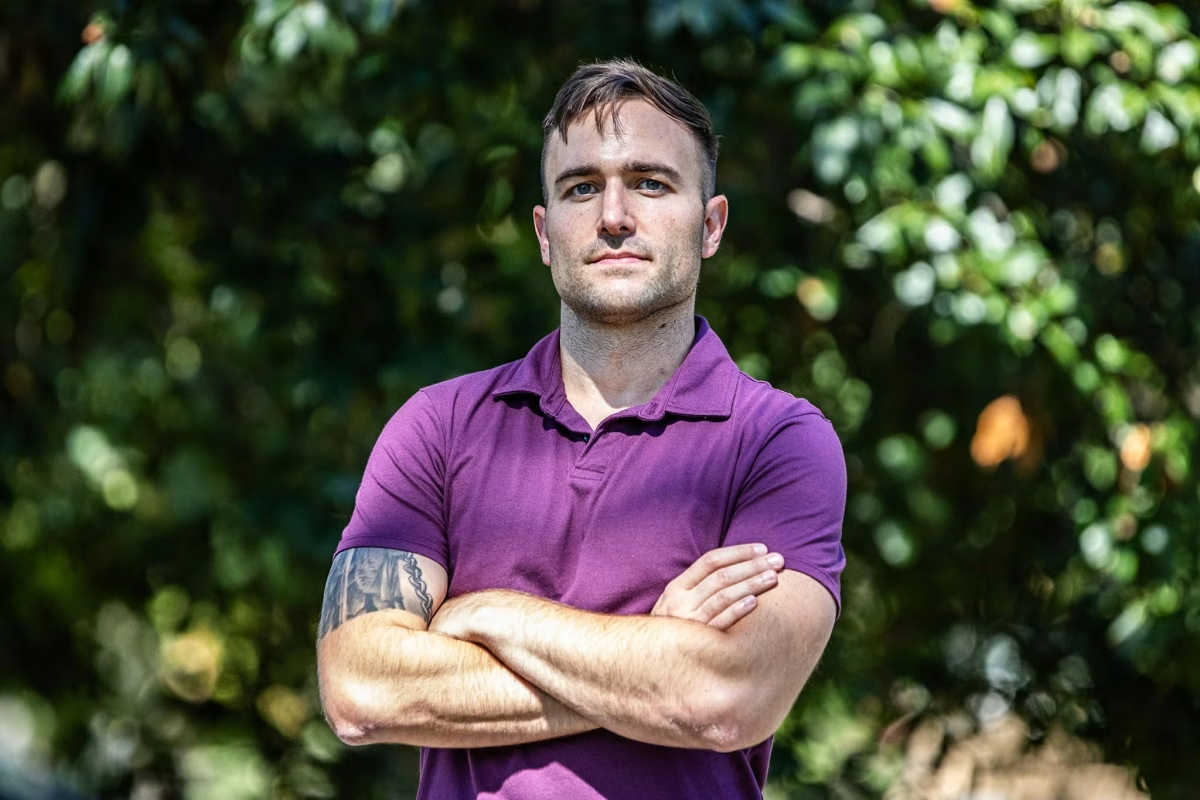
The Daily Illini spoke with professor in Law Anthony Ghiotto about presidential use of the Guard, possible use of Texas troops to achieve Trump’s goals in Chicago and what this could mean looking ahead to the 2028 election.
Before teaching at the University, Ghiotto spent 12 years as an active duty Air Force judge advocate. His work specializes in civilian use of the military and national security matters.
“To start off with, you have to have an understanding of the National Guard,” Ghiotto said. “The National Guard wears three different hats, and then different laws depend on what hat they’re wearing at any given moment.”
Get The Daily Illini in your inbox!
The first is state control, meaning they are under the control of the governor. The second is federal control, or under complete presidential authority.
Under this federal control, Trump sent Guard troops to Los Angeles in June in response to immigration protests. A federal judge ruled this move illegal in September. The ruling referenced the Posse Comitatus Act, which bars federal troops from participating in civilian law enforcement.
The third hat, according to Ghiotto, is complicated.
“The third hat is a little bit more confusing, and that’s called Title 32,” Ghiotto said. “The Guard remains under state control, so they’re still commanded by their governor, but they are performing a federal mission … It’s kind of like a hybrid.”
This hybrid category is relevant in understanding what actions Trump could take in the coming days and weeks regarding Guard deployment in Chicago.
“What the president seems to be doing is saying, ‘I’m not going to federalize the Illinois Guard … I’m going to ask the state Guard of another state to come in and do law enforcement operations in Chicago under Title 32,’” Ghiotto said. “They’re talking about Texas, and then at that point it would be up to the governor of Texas whether he wants to send the Guard into Illinois.”
A spokesman for Texas Gov. Greg Abbott has denied claims of preparing to move Guard troops to Illinois. This came after Pritzker said he had “reason to believe that the Trump administration has already begun staging the Texas National Guard.”
The statute that allows the Guard to be sent across state lines is 32 U.S. Code § 502 Section F(2)(a). This section was passed after Hurricane Katrina to bring in support for the Louisiana Guard, but its full implications have not been clarified by Congress.
“The statute doesn’t say anything about consent,” Ghiotto said. “The big question now that legal experts are having is ‘what if the other governor doesn’t consent?’”
This question is largely unanswered due to the lack of precedent for a situation Ghiotto described as “completely unheard of.”
According to Ghiotto, the advantage for Trump of using this statute, and potentially deploying the Texas Guard to Illinois, is he is no longer bound by the Posse Comitatus Act.
“If Trump asks Texas … and then Texas marches into Illinois, technically speaking, they couldn’t really allege a Posse Comitatus Act violation,” Ghiotto said. “But what I would imagine is that Illinois would immediately sue … the state of Texas and the Trump administration.”
Ghiotto believes Illinois could claim a constitutional issue in this case, as Article IV of the U.S. Constitution guarantees each state protection against invasion. If Illinois were to sue under this provision of the Constitution, the issue could go to the Supreme Court.
“If Texas invades, Illinois would sue, and I think they would seek immediate review by the U.S. Supreme Court,” Ghiotto said. “Then it’s just a matter of whether the U.S. Supreme Court is willing to hear the case and what they decide … That’s the million-dollar question.”
The day after Trump’s original announcement, Urbana Mayor Deshawn Williams addressed local rumors that the Guard could be deployed in Urbana.
“While we do have a National Guard armory here in Urbana, there are no plans for deployment in our city,” Williams wrote on Instagram. “We remain committed to transparency and will continue to keep you informed with updates as soon as they are available.”
When asked about these rumors, Ghiotto thinks, if deployed, the Texas Guard would mainly go to Chicago, and he “wouldn’t anticipate them necessarily coming through Champaign-Urbana.”
However, Ghiotto did elaborate on the possibility of the Illinois Guard defending the state.
“If the Texas Guard comes into the Illinois territory, Governor Pritzker would have a constitutional right to defend the state with the Illinois Guard,” Ghiotto said.
Trump has yet to establish a clear timeline for his plans for Guard deployment in Chicago.
The president wrote in a Truth Social post that “Chicago will be safe again, and soon.” He cited statistics of over 50 people being shot during Labor Day weekend and described Chicago as the “most dangerous city in the World.”
Despite his claims, a CBS News analysis found Chicago ranks 80th in America for violent crime per capita.
Trump also wrote, “I will solve the crime problem fast, just like I did in DC.”
After declaring a crime emergency in Washington on Aug. 11, Trump took over Washington’s police department and activated the Guard. By invoking Section 740 of the Home Rule Act, Trump was given emergency control of the police in the district. This control expires after 30 days — on Wednesday — unless Congress grants further approval.
While Washington functions under a different set of laws, Ghiotto sees Trump’s upcoming decision regarding that limit raising broader questions of a potential “constitutional crisis.”
“I think we’re at the precipice … (with questions of) Texas invading Illinois (and) what happens at the end of the 30 days,” Ghiotto said. “Does he still at least have the image of complying with the statutes, or does he just start ignoring the statutory limitations?”
Ghiotto added he is 50-50 on whether he thinks Trump will cross this line or not.
Looking further into the future, Ghiotto speculated on his fears for how Guard deployments could impact the 2028 election.
“If there’s a one-by-one invasion of blue cities … and all those forces are in place in 2028, can you really be guaranteed a free election at that point?” Ghiotto said. “We’re just going to get used to it, and then come the 2028 election, it’s a Putin-esque election where, yes, you have an election, but it’s not a fair election. That to me is the fear.”