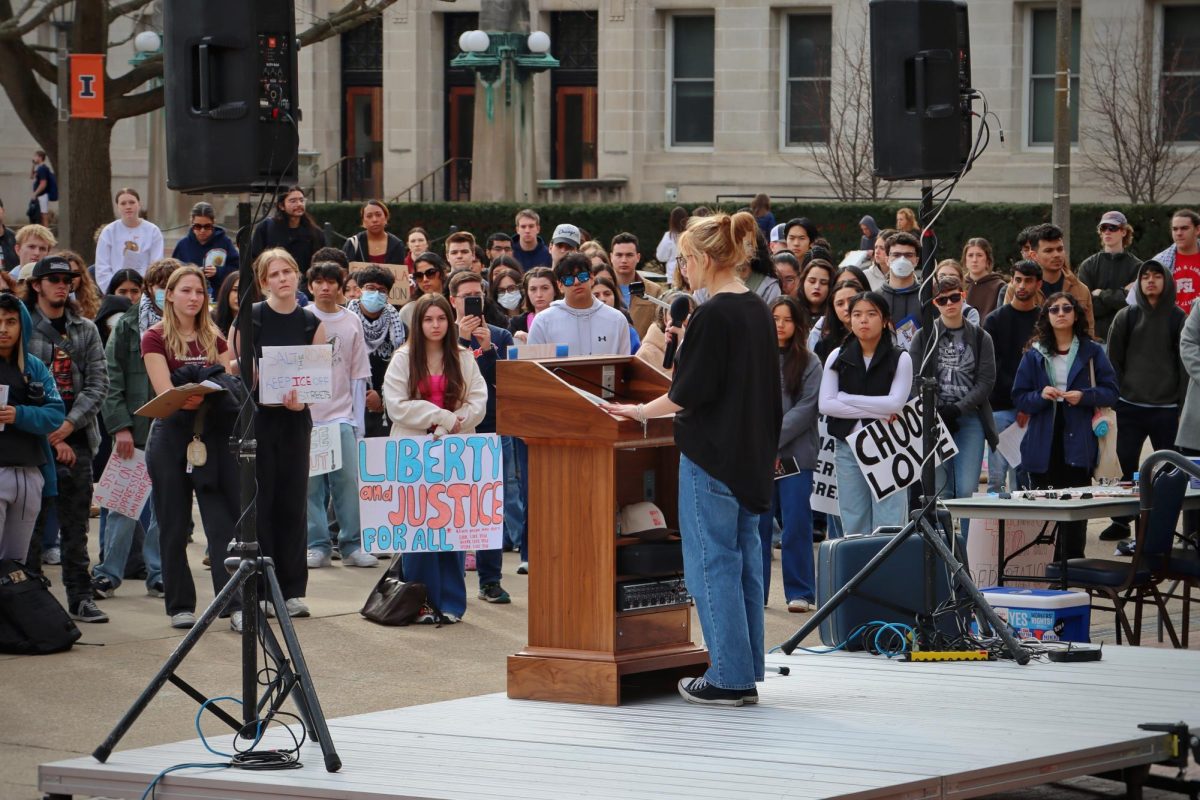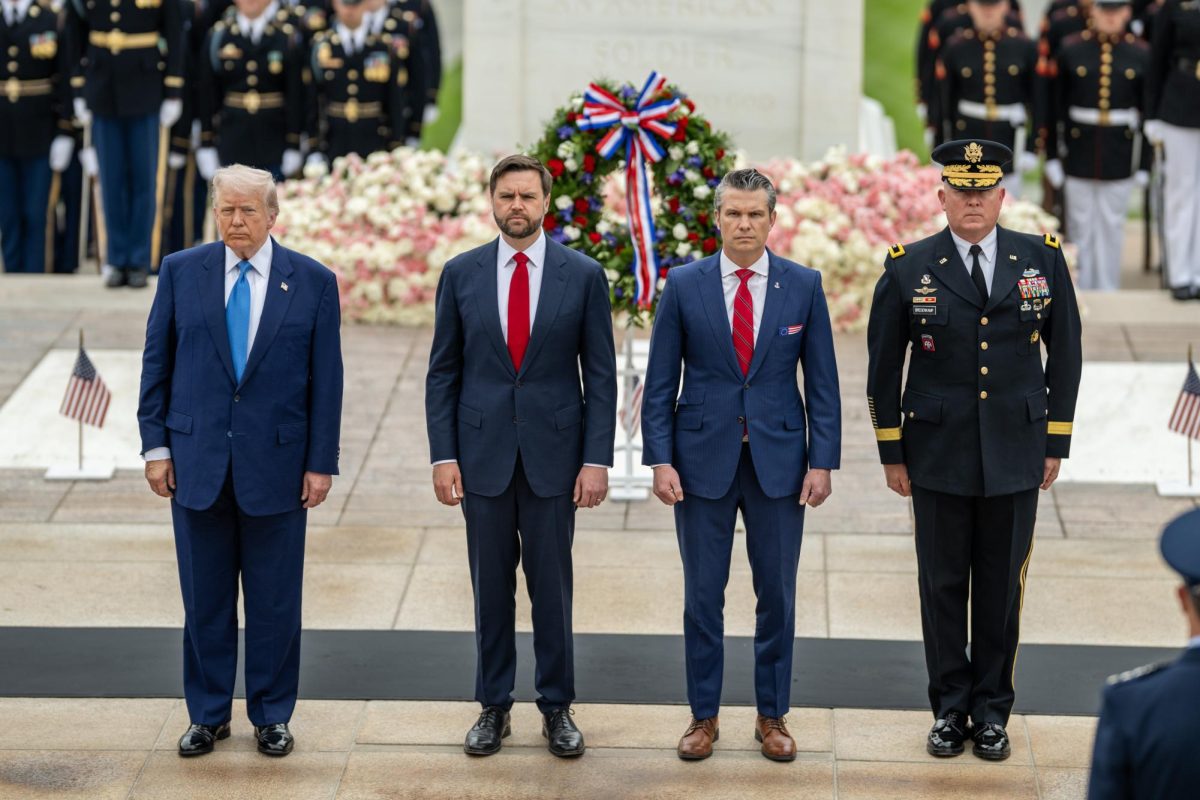
On Monday, Illinois and Chicago sued the Trump administration in an attempt to halt the deployment of National Guard troops to the city. President Donald Trump announced Sunday he would federalize 300 Illinois National Guard members to protect U.S. Immigration and Customs Enforcement officers and other federal personnel in Chicago. Trump also plans to deploy 400 Texas National Guard troops to Illinois.
Since the Trump administration’s immigration crackdown began in Chicago in September, over 1,000 immigrants have been arrested in the area. Last week, ICE agents threw flash-bang grenades and detained children in zip ties during an apartment building raid.
The lawsuit cites “President Trump’s long-declared ‘War’ on Chicago and Illinois” as “unlawful and dangerous,” calling the deployment of guard troops to the city “unconstitutional.”
Trump’s plans are being set in motion a month after his September Oval Office briefing, vowing to send the National Guard to Chicago to combat crime. Gov. JB Pritzker has been outspoken in his opposition to any federal interference in the state.
“This morning, the Trump Administration’s Department of War gave me an ultimatum: call up your troops, or we will,” Pritzker said in a statement on Sunday. “It is absolutely outrageous and un-American to demand a Governor send military troops within our own borders and against our will.”
Get The Daily Illini in your inbox!
Texas Gov. Greg Abbott previously denied allegations of sending Texas National Guard troops to Illinois, a plan which he authorized Monday morning. Trump is also attempting to send National Guard troops from Texas to Portland, Oregon, a move that a federal judge blocked on Monday.
Lawsuit claims Trump, Department of War illegally defies Pritzker
National Guard members serve under three methods of control: state control, federal control under Title 10 and a hybrid status under Title 32, where troops are under state control but performing a federal mission.
According to Illinois’ lawsuit Monday, the National Guard Bureau of the U.S. Department of War sent an email memorandum on Saturday to Commander of the Illinois National Guard, Rodney C. Boyd, with the subject, “Request for Illinois National Guard Federal Protection Mission.”
The memo read that Trump planned to mobilize 300 Illinois National Guard members. It further stated that if this request to mobilize under Title 32 was not accepted within two hours, Secretary of War Pete Hegseth would “direct the mobilization of as many members of the (Illinois National Guard) as he may deem necessary under Title 10.”
Notably, the lawsuit points out that Title 10 requires deployment under this status to be issued through the governor.
Boyd replied that Pritzker would not call on guard troops under Title 32 status, as there is “no public safety need or other emergency requiring the National Guard.”
Saturday evening, Boyd received a reply from Hegseth detailing “the Federalization Order,” stating that the Trump administration was calling 300 Illinois National Guard troops into federal service under Title 10 despite Pritzker’s objection.
In addition to the Federalization Order, Boyd learned Sunday of “the Texas Mobilization Order,” in which 400 Texas National Guard troops would be called upon by Trump under Title 10 for a period of 60 days, subject to extension. Their mission will be “to perform federal protection missions where needed, including in the cities of Chicago and Portland.”
The lawsuit claims Trump’s actions do not fulfill any of the three prerequisites under Title 10 for using the guard for federal purposes: that the U.S. is invaded or in danger of invasion by a foreign power, that there is a rebellion against the U.S. government or that the president cannot execute laws with regular forces.
Under Title 10 federal control, Trump faced legal hurdles after he sent National Guard troops to Los Angeles in June. A federal judge ruled this move illegal in September. The ruling cited the Posse Comitatus Act, which prevents federal troops from participating in civilian law enforcement.
The lawsuit also directly references this violation, claiming the Trump administration’s conduct and “this troop deployment is being made for purposes that are plainly incompatible with the Posse Comitatus Act.”
Looking back on interview with University Law professor
In September, The Daily Illini spoke with Anthony Ghiotto, professor in Law, about Trump’s plans to deploy the guard to Chicago. Ghiotto predicted that Trump would send Texas National Guard troops to Illinois, and the state would sue the administration.
Ghiotto described the situation as “unheard of.” He said that legal experts are questioning what the outcome will be if a governor, in this case, Pritzker, does not consent to guard deployment from another state.
Ghiotto also predicted in September that this issue could go to the Supreme Court.
“If Texas invades, Illinois would sue, and I think they would seek immediate review by the U.S. Supreme Court,” Ghiotto said. “Then it’s just a matter of whether the U.S. Supreme Court is willing to hear the case and what they decide … That’s the million-dollar question.”