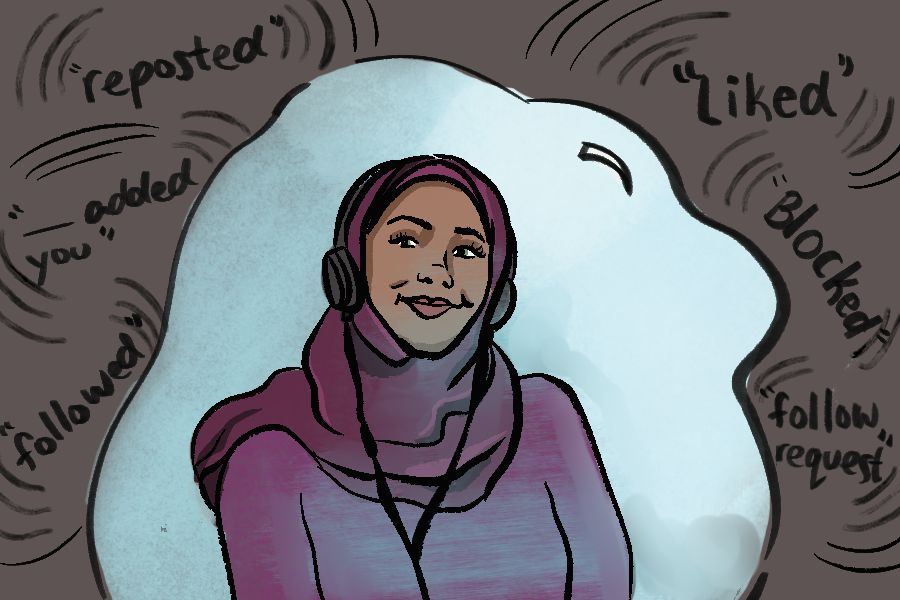
At the risk of making this political — or maybe just hopeful — I’ve been thinking about Zohran Mamdani’s win in the New York City mayoral primary. Not because he’s the face of party culture or anything, but because I’ve been making fun comparisons in my head.
Older millennials came of age, politically and socially, with a sense of collective momentum unfettered by a doomsday clock that is 89 seconds to midnight. They posted Barack Obama’s “HOPE” on MySpace, danced to LCD Soundsystem in somebody’s living room after canvassing and took to Green Street after he won.
Believe you me, I would’ve been a MySpace warrior, and I’d be posting about Obama right after posting about Dr. Dog’s new album, “Fate,” because it was 2008 and I’m annoying.
What tempers my rose-colored nostalgia is this: 15 years from now, there’ll be kids wishing they could’ve been undergrads in 2025. Politically alive, catching sunburns at canvassing tables then texting mutuals about which house show still had room.
They’ll imagine walking home with sore feet and ringing ears, after a night that started with knocking doors and ended in someone’s humid basement — in Bushwick, Berkeley, or Urbana.
Get The Daily Illini in your inbox!
I’ve come to understand that history doesn’t repeat; it rhymes.
On that note, I’d like to bring to the stand the writer and journalist Kitty Ruskin, who wrote a column published in Time titled “Why We Need to Bring Back House Parties.” In it, Ruskin asks questions like: Where are all the parties now? Are they disappearing? Does Gen Z just sit at home?
Ruskin’s writing comes from the perspective of a 30-something-year-old who is genuinely concerned about a fading culture of gathering. It’s a reasonable fear, but I don’t think the generational divide is as stark as it looks. Just like Mamdani and Obama, the forms have changed, but the impulse remains as staid as their rolled-up sleeves.
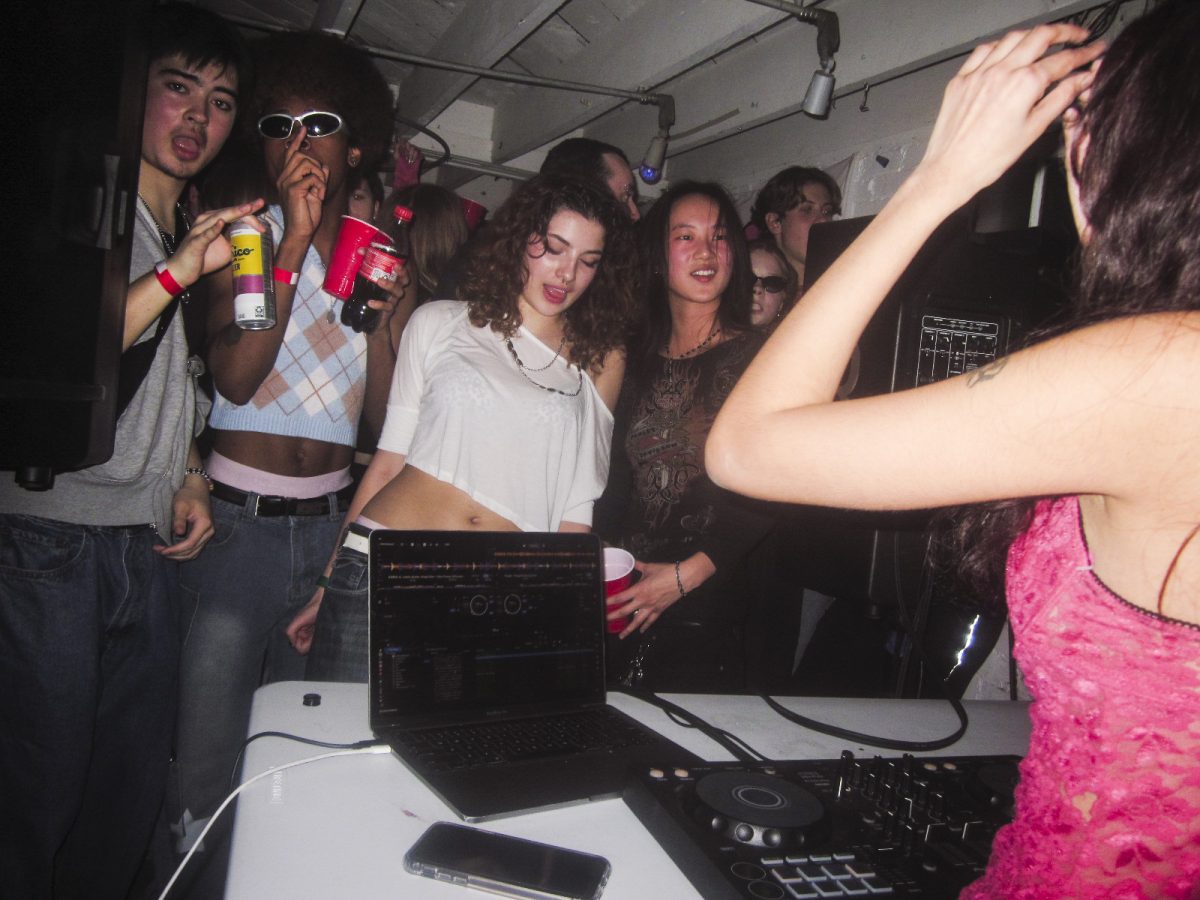
I’ve been to the elusive Gen Z house party in question. As a star witness, I’d like to gently correct Ruskin: they’re still happening.
At the birthplace of American Football — Urbana, Illinois — they’re alive and well, and fall semester can’t come soon enough.
For the sake of this column, I’m using “house party” and “house show” interchangeably. Technically, a house show is a space where local bands perform — usually in a basement or backyard — and the good ones make room for hanging out if you’re not feeling like moshing.
Maybe that’s not quite what Ruskin had in mind. I would guess she was picturing something closer to the “Diary of a Wimpy Kid” party scene or a GoldLink music video. But functionally? They serve the same purpose — as spaces to gather and connect.
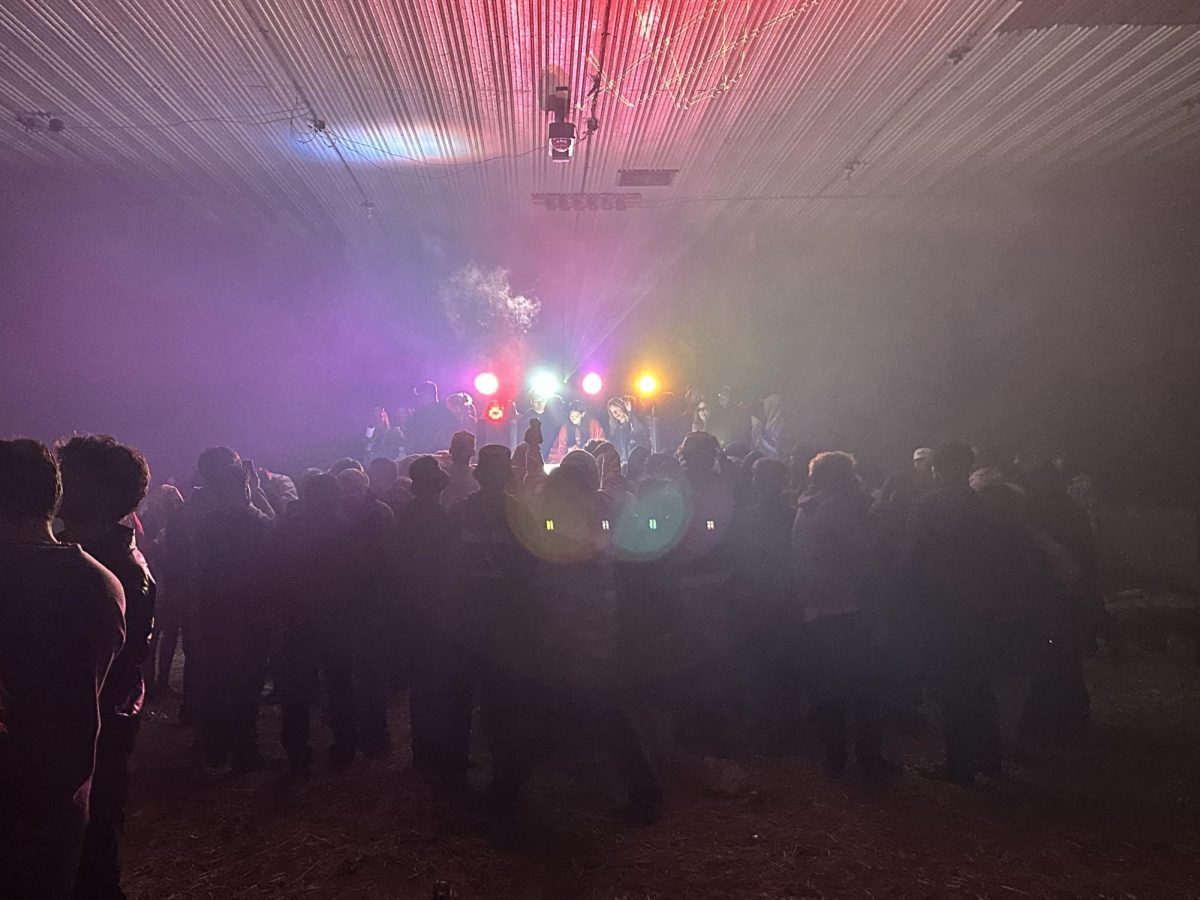
The details Ruskin longs for — stargazing, packed hallways and that moment in the kitchen when someone hands you a warm drink — still exist at the quintessential house show. In both scenarios, the lights are dim, the drywall is sweating and the music is loud.
I’m not always in the pit, but I still pay the entrance fee, because these are the spaces where people actually talk. You find a connection in the bathroom line. You have that long-overdue check-in on the porch. You find where the conversation is, be it out in the backyard or cramped by the fridge, where the show spills over into something human.
This underscores my point. House shows don’t just happen; they take coordination, they require people who have the capacity to build infrastructure. Someone sets up the speakers. Someone else books the bands, makes Instagram graphics, grabs the cups. They keep an eye on the door. They run the show, quietly.
On the other side of the door, the rules are just as clear: Don’t spill, don’t ruin the show for others and know when it’s time to leave.
That quietly enforced coordination is governance, however informal and low-budget it may be. In Urbana, the house show network is a self-sustaining ecosystem.
Nobel-winning political economist Elinor Ostrom wrote about this. She showed that people don’t always need top-down rules or market incentives to share resources — just trust, repetition and a willingness to pitch in. A house show is that theory in action.
By that logic, house shows are kind of an act of public service. They’re informal institutions: Part concert venue, part third place and part local experiment in trust.
They aren’t powered by profit, but rather by commitment. You don’t throw one to make money. I’d wager most of them barely break even. But the people who run them believe the connection is worth the stress and the cleanup.
Maybe the magic of house shows and adjacent spaces isn’t just that they exist. More than that, it’s that they can be recreated anywhere, as long as someone’s willing to try.
That’s the rub — and forgive my repetition here — institutions don’t just spawn into existence. Ostrom’s framework only works if someone goes first.
Maybe it’s easy for me to talk about house shows from my ivory tower in a college town, where there’s cheap rent, free time and a legacy of local indie talent. For 30-somethings with nine-to-fives and busy lives, the bandwidth isn’t always there. I get that. I do.
Yet Ruskin’s column proves people want this. My generation wants this — and is living it, whatever TikTok might suggest.
Grit, resilience and a good time don’t magically vanish when you turn 22 and accept a full-time offer. The scene doesn’t have to find anyone — it can be made from scratch. All it takes is a calendar invite and a cooler. If you’re concerned about the phones, maybe leave a tote bag on the door.
And people would show up. In part because they miss blushing with a cutie on a kitchen counter, like Ruskin delightfully describes, but mostly because these spaces matter. They’re part of the social fabric we’re trying to stitch back together.
House shows, principally, give us that fleeting, vital feeling of collective momentum. The same current that runs through a campaign rally runs through a mosh pit, if you squint hard enough. Both are built on hope and sweat and loud noises and seeing your fellow man while the world crashes and burns around you.
And someday, someone’s going to look back at 2025 with the same kind of longing we reserve for 2008. They’ll feel a pang of envy upon hearing the stories of great bands playing in worn-down Urbana living rooms. They’ll wish they were politically conscious when people were posting reactions to a skinny kid with a funny name. It’s not on MySpace this time, but maybe on X, or whatever they decide to rebrand as.
Because history doesn’t repeat. But nostalgia can make us forget that it rhymes.
Raphael is a senior in ACES and misses his grandma’s house.