Kurt Vonnegut doesn’t really write a war novel in “Slaughterhouse-Five” so much as he writes a novel about war — specifically how war distorts time and the moral trap of trying to make slaughter mean something.
He spends the prologue admitting that he couldn’t write the book for years. The horror of living through Dresden wouldn’t turn into a clean story, and no matter how many pages he wrote, he couldn’t get close — for what it’s worth, my drafting process is the same.
The thing that finally unlocked the book as it exists is an argument with a friend’s wife, Mary O’Hare, who hears him talk about writing a war book and says the only true thing in the room:
“You were just babies then!”
So Vonnegut makes a promise. He won’t write a “sexy” war story you can adapt into a screenplay. He writes pathetic, childlike caricatures. He gives you an offbeat, cosmic comedy of errors. He writes a book that doesn’t quite make sense because war doesn’t make sense — and its alternative title, “The Children’s Crusade,” perfectly encapsulates O’Hare’s accusation.
Get The Daily Illini in your inbox!
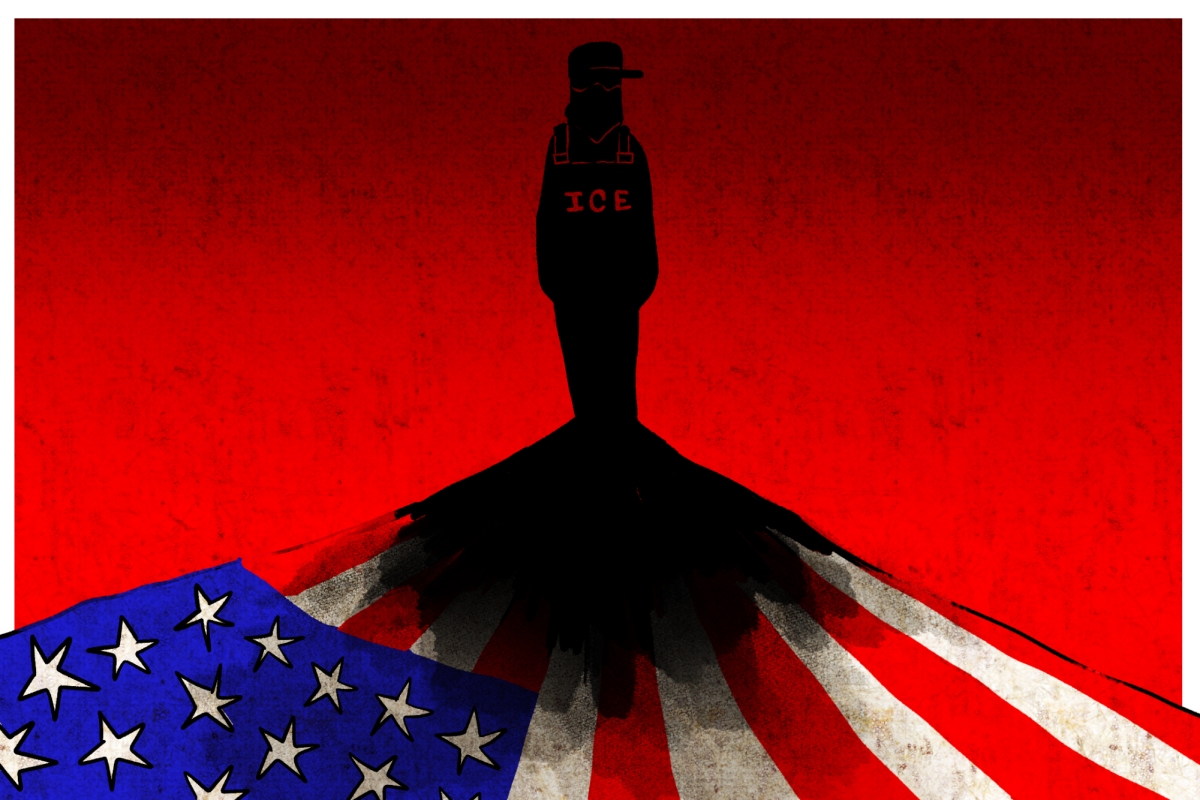
That refusal is what I respect most about him: the insistence that there isn’t a grand moral waiting on the other side of a war. Vonnegut even told his children, flatly, not to take part in massacres — and not to feel “satisfaction or glee” when enemies are massacred. Don’t build massacre machinery, either, he adds, and if someone insists we need that machinery, treat them with contempt.
Vonnegut understood the human condition; we haven’t changed a bit since 1969. We still cheer, turn violence into content and turn war into a prompt for debate.
I reject that: using war as a chance to perform intelligence at a safe distance, to run the cost-benefit analysis of others’ lives.
The opinion section’s temptation
The irony isn’t lost on me: The opinion section practically invites it.
Allow me to demonstrate: Ayatollah Ali Khamenei, Iran’s supreme leader, was killed on Feb. 28 after U.S. and Israeli strikes hit targets in Iran. One of these targets was his compound in Tehran, as reported by Reuters; Iranian state media later confirmed his death.
Reactions have been split — some praising it as overdue justice given the regime’s violent repression of protesters, others rejecting the premise that the United States has the right to carry out extrajudicial force inside a sovereign country, or that intervention reliably improves ordinary life.
This is catnip for the opinion section. The easiest thing in the world would be to write something trite about Iran — to declare, with utter confidence, what the killing of a leader “means.” That’s the economist in me, weighing utils on some scale that I really have no right holding.
But I can’t begin to understand the Iranian people well enough to make their suffering legible in 750 words without it curdling into voyeurism. I don’t trust the version of me that finds a thrill in pretending I can.
Maybe war is inevitable — the Judge in Cormac McCarthy’s “Blood Meridian” certainly thinks so. He talks as though violence were waiting for us, “the ultimate trade awaiting its ultimate practitioner.” If you buy that, then the only sensible response is to become a better spectator — to read more, assess tradeoffs and write sharper takes. My lot as an opinion columnist, I guess.
But the Judge is also a fictional sadist operating in a wasteland where brutality is confused for philosophy. He embodies the outlook I recognize in myself when the economist in me wants to dismiss violence as structural and move on. Inevitability is the most technocratic way to stop caring.
I don’t think the point is to become fluent in inevitability. I don’t have the authority to translate a war I can’t fully see into a neat conclusion — and distance, in war, is a moral liability. It turns other people’s bodies into premises for an argument.
I think I’m closer to Vonnegut’s Billy Pilgrim: young, naïve and mostly just aware of how little I understand — and how eager everyone else is to sound certain.
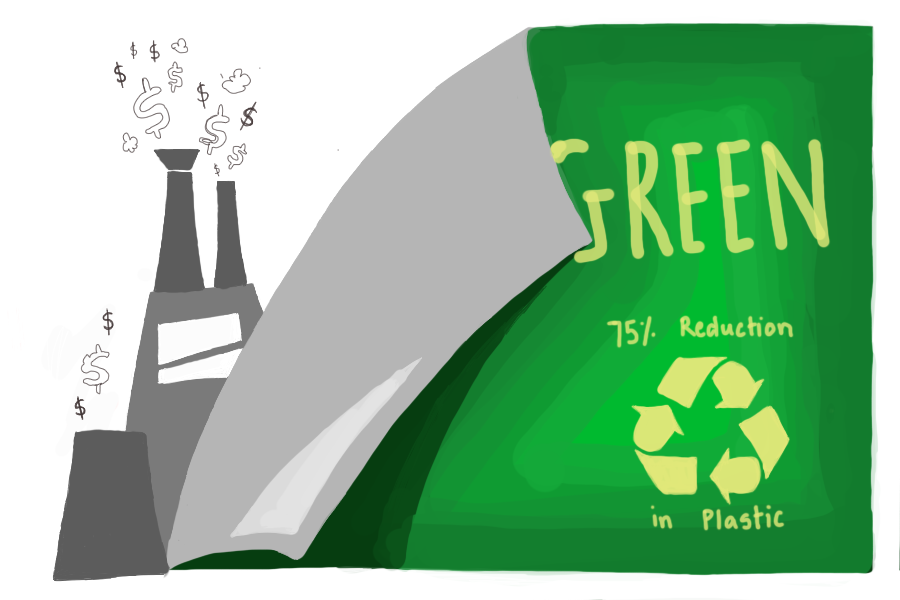
Where war invites argument and utilitarian math, pollution is the opposite problem. The harm is already distant — dispersed across supply chains and decades — almost imperceptible by design, because industrial systems are structured to externalize cost.
The opinion columnist’s instinct — to find the system, distribute the blame and think in aggregates — is useless in front of a war they’re divorced from and exactly right in front of a polluted ocean. Here, the abstraction isn’t a moral evasion, weighing utils. It’s the only honest lens.
I only have the license to write about the violence I’m already inside. Which is why whales keep entering my head as I write this. Or swimming through it, rather.
By the way, where are the whales?
A kindred spirit, McCarthy was also preoccupied with whales. Drafts of his unproduced screenplay, “Whales and Men,” sit in the Cormac McCarthy Papers at Texas State University. In it, he imagined God returning, smiling, asking if we’d figured it out yet — if it had occurred to us to ask the whale (who presumably held the key to understanding the universe). Then, almost casually: “By the way, where are the whales?”
Pollution gets treated like a victimless crime because it rarely arrives with a scene. You can’t see it the way you can see a bombing, with one particular Reuters headline I can hyperlink.
Pollution is creeping: A film of brown haze starts to overtake a city, and one day you realize the air quality is worse than when you moved in a decade ago. Plastic and dead zones begin to build up in places you used to think of as simply “the ocean.” Every so often, an image of the ice caps crosses your feed, and they look sadder than you remember from “National Geographic Kids” — not in an abstract, end-of-the-world way, but in the subtler, humiliating way of realizing your childhood reference point is already obsolete.
But there are victims of this slow violence, of course. Sometimes they’re just far enough away — or alien enough — that we can pretend otherwise.
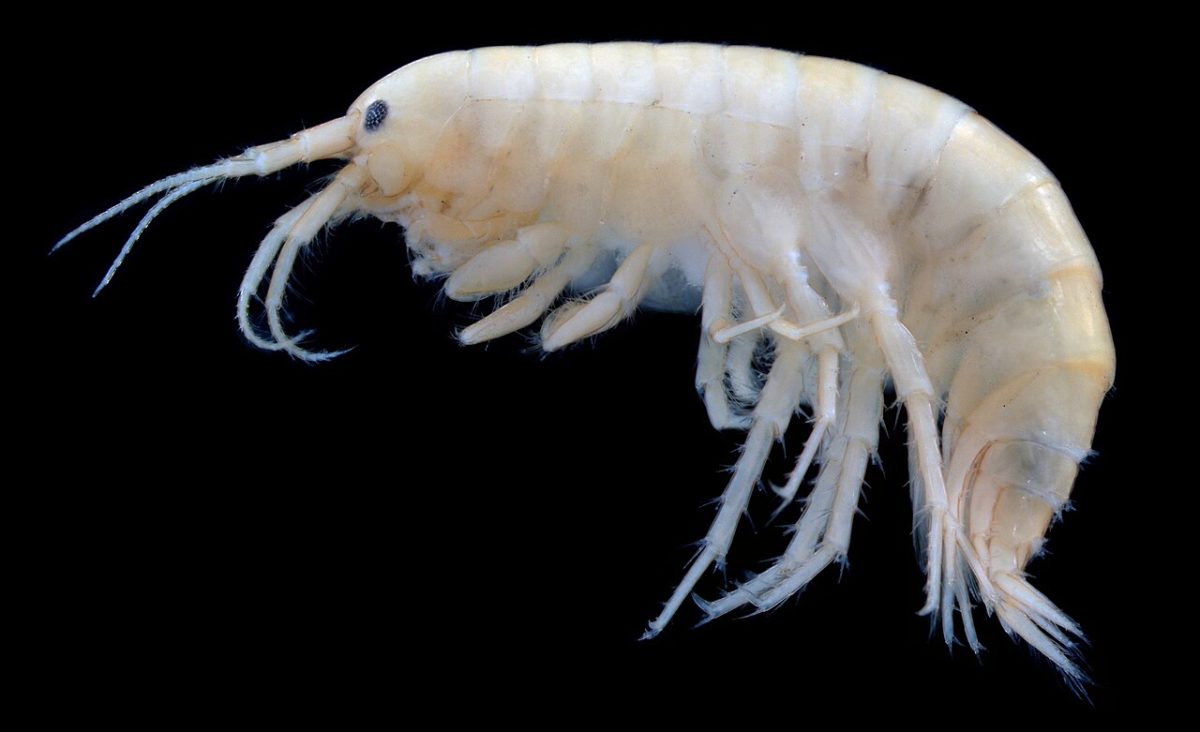
Whales, to me, perfectly embody this. They’re sentient life we can’t fully translate into our narratives — social and intelligent in ways that don’t resemble ours. More importantly, they’re an ambient positive good for the ocean, subtly programming the planet.
They release nutrient-rich waste near the surface, fertilizing phytoplankton that support marine food webs and help sequester carbon. Even in death, they keep working — “whale falls” become deep-sea oases that sustain specialized ecosystems for decades.
But they also live with the accumulation of our byproducts: warming seas that shift prey and migration routes, exposure to microplastics and contaminants and the everyday risks of ship strikes and entanglement.
McCarthy would hate to see how we’ve been treating his Christlike whales. But there’s an irony he would have enjoyed in the bleakest way: While we’ve made the ocean harder to live in, we’re also trying to use Artificial Intelligence to decode whale communication. Projects like Project Cetacean Translation Initiative explicitly aim to “listen” to and translate sperm whale communication with machine learning.
The idea is beautiful, but the timing is grotesque. We’re trying to decode whale communication while filling their world with noise — chronic shipping rumble, and the sharper blasts of sonar and seismic surveys that can disrupt feeding, navigation and social life.
We’re building tools to understand a language while refusing to change the conditions that make that language possible. Even the tools themselves aren’t innocent: AI has real land-and-water footprints, and large data centers can consume enormous amounts of water for cooling.
After all this, even if we could finally “hear” them, ask them like McCarthy wanted us to — what do we say other than sorry?
We’ve already filled their world with noise; the apology would only become emblematic of the cruel, ironic situation we’ve created. You can’t apologize to something you’ve already made unable to hear you.
Vonnegut told his children not to participate in massacres — and not to feel “satisfaction or glee” when enemies are massacred. He didn’t offer a tidy instruction for what comes after, when the killing stops and we’re left with quiet. The human instinct is to turn that quiet into meaning. McCarthy imagined God returning only to find an emptier ocean. A quieter ocean devoid of whalesong.
Maybe McCarthy was right, and the whales have been trying to tell us something we were always too loud to hear. Sentience is a strange thing. Two species broadcasting: theirs into the water, ours, relentlessly, into everything. We built the machines that filled their world with noise, and now we’re building machines to listen.
I once saw a striking video of a saxophonist playing as missiles flared over a city. He wasn’t playing for anyone. He wasn’t playing despite anything. He just played.
I think about that when I think about whales — still singing, still broadcasting into water we’ve made harder to live in. So I’ll keep listening.
Raphael is a senior in ACES; his name is Yon Yonson, he works in Wisconsin, he works in a lumbermill there.