As an environmentalist, I sometimes doomscroll the subreddit r/BuyItForLife, where sustainability diehards and gear pedants swap recommendations for Goodyear-welted boots, cast-iron pans and whatever else falls under the purview of the subreddit’s title.
I’ll admit that the idea of “buy-it-for-life” is a bit of a misnomer — nothing necessarily lasts your whole life as is. But the distinction is that these products are made with repair in mind and constructed with quality materials so that inevitable repairs don’t need to come so quickly.
That ethos fits neatly under the umbrella of the circular economy, which argues that by reducing, repairing and reusing, we can slow the churn of disposable goods and keep materials in circulation longer.
But there’s a catch most sustainability conversations skip over: The repair part of “repair culture” depends on actual humans — cobblers, tailors, leatherworkers, small-appliance techs — and we haven’t done a great job of ensuring those skilled tradesmen exist in numbers that match their demand.
Buy-it-for-life goods function like luxury goods in economics; demand rises with income, so most people wait until they have the disposable cash to justify the purchase. I did the same — once my paychecks stabilized, I finally splurged on a vintage Duluth canvas duffle.
Get The Daily Illini in your inbox!
It was perfect … except for the leather tabs attaching the shoulder strap, which were straining under the weight of my daily haul. No problem, I thought. I’ll bring it to someone who knows how to fix this.
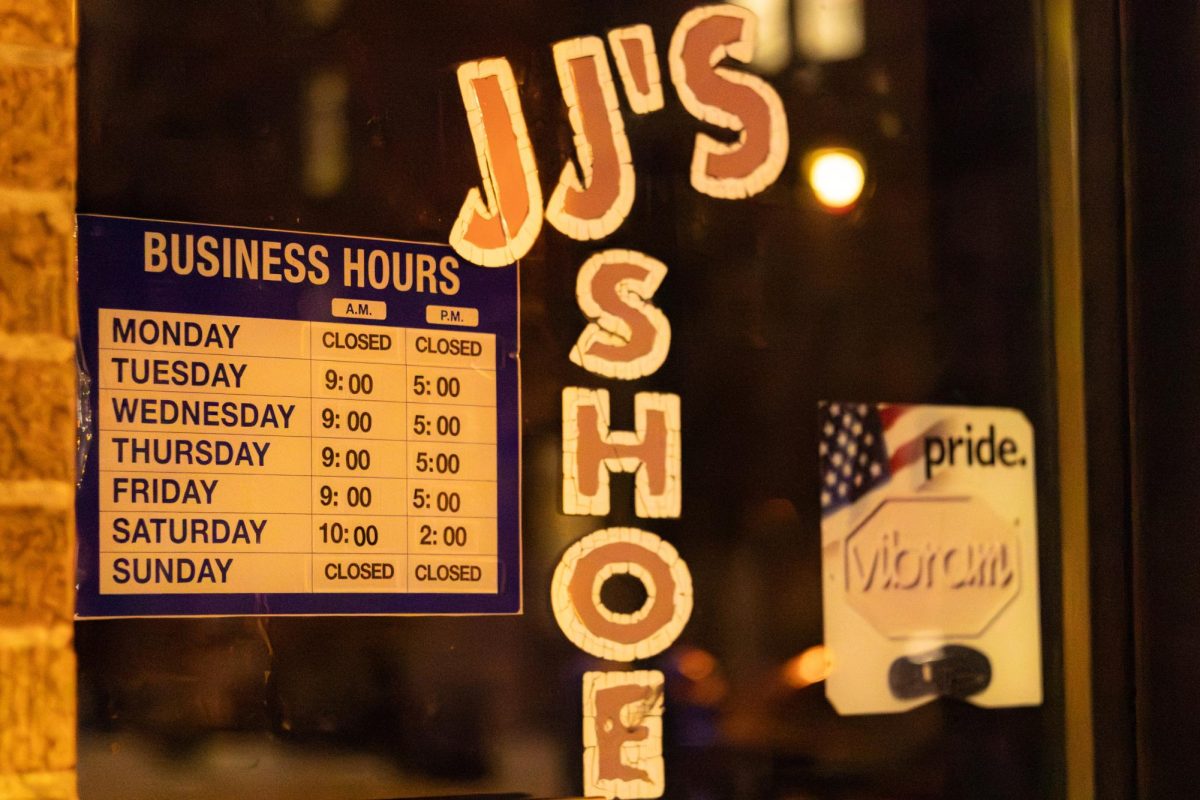
Unbeknownst to me, there was only one shoe-and-luggage repair person in town. When I stopped by on my lunch break, I learned he was soon to be on vacation — and already so backed up with work that he wouldn’t be able to get to new orders until October came. This was in midsummer. I took the bag back home to Des Plaines, Illinois, to have it repaired by a cobbler there, and my parents shipped it down. No big deal.
But that episode made me realize that the trades that make repair culture and a circular economy possible are wildly underrepresented. We’ve built an economy where it’s often cheaper — or at least feels cheaper — to buy a flimsy Amazon replacement for something than to pay a skilled worker to fix a high-quality item. Even when the price gap is small, you still face the one-two punch of cheap goods and fast shipping — a level of convenience that makes the slower, human work of repair hard to choose.
I got lucky. I happened to have a second cobbler somewhere in my universe. If I’d only lived in Urbana — and still didn’t have a car — my only realistic option would’ve been some mail-in repair service, which is a pretty bleak substitute for a functional local economy.
The downstream losses are obvious: The tradesperson loses work they’re trained for and proud of, and the rest of us generate more waste as we consume more than is necessarily needed. Not all folks think this way, but a circular economy can’t function if the popular choice is to toss and replace rather than repair.
It’s a systemic problem. For decades, we steered people away from vocational paths, signaling that repair work was somehow “less than” college, even as our consumer economy became more disposable and more complex. The rise of planned obsolescence only made things worse, flooding the market with products that aren’t made with durability and reparability in mind. In many ways, we don’t own things anymore.
Most of what we buy now is built for short-term use, and repair becomes an edge case rather than the norm. A circular economy assumes a relationship between people and their things — our current economy keeps breaking that bond on purpose.
The results show up in the pipeline. According to the National Center for Education Statistics, programs like culinary arts and healthcare are booming, whereas maintenance and repair have shrunk, falling from more than 70,000 students in 2017 to under 60,000 in 2023. That’s the opposite of what a circular economy needs.
A shrinking labor pool is a two-pronged issue: it’s more inefficient for getting things fixed on time, and it erodes the competitive pressure that keeps prices reasonable and services accessible. Without enough people in the market for service repair, you get accidental monopolies — as is the case with Champaign-Urbana — contributing to potential headaches when you want to get your stuff fixed promptly.
It’s a feedback loop: as we disinvest from durable, repairable goods, we default to buying cheap stuff that can’t be fixed. That choice piles up even more cheap stuff, deepens our dependence on it and erodes the repair trades — a crucial pillar of the circular economy — in the process.
The result is a brittle system: too few skilled workers, too many broken things and a sustainability model that collapses the moment labor markets enter the equation. If we’re serious about circularity, we need to treat these trades as essential infrastructure, not a vestigial origin of how things used to be.
Lastly, in the long run, it’s cheaper. I now have a bag I actually like — sturdy enough to haul all my junk — and I won’t need another satchel for years, maybe ever. In doing so, I supported someone’s livelihood instead of tossing my problem into a landfill. That’s good economics: a mutually beneficial exchange between two humans, value for value. It’s the kind of small interaction that quietly holds together what’s left of our social fabric, and we desperately need more of it.
Raphael is a senior in ACES and spent a lot of time on eBay this summer.