When tasked with serving a population of nearly 60,000 students, the University faces no small feat. Accommodating so many people and creating space, resources and staff to welcome all of them each year is undoubtedly difficult.
One area in which the University rises to the challenge? Its library system.
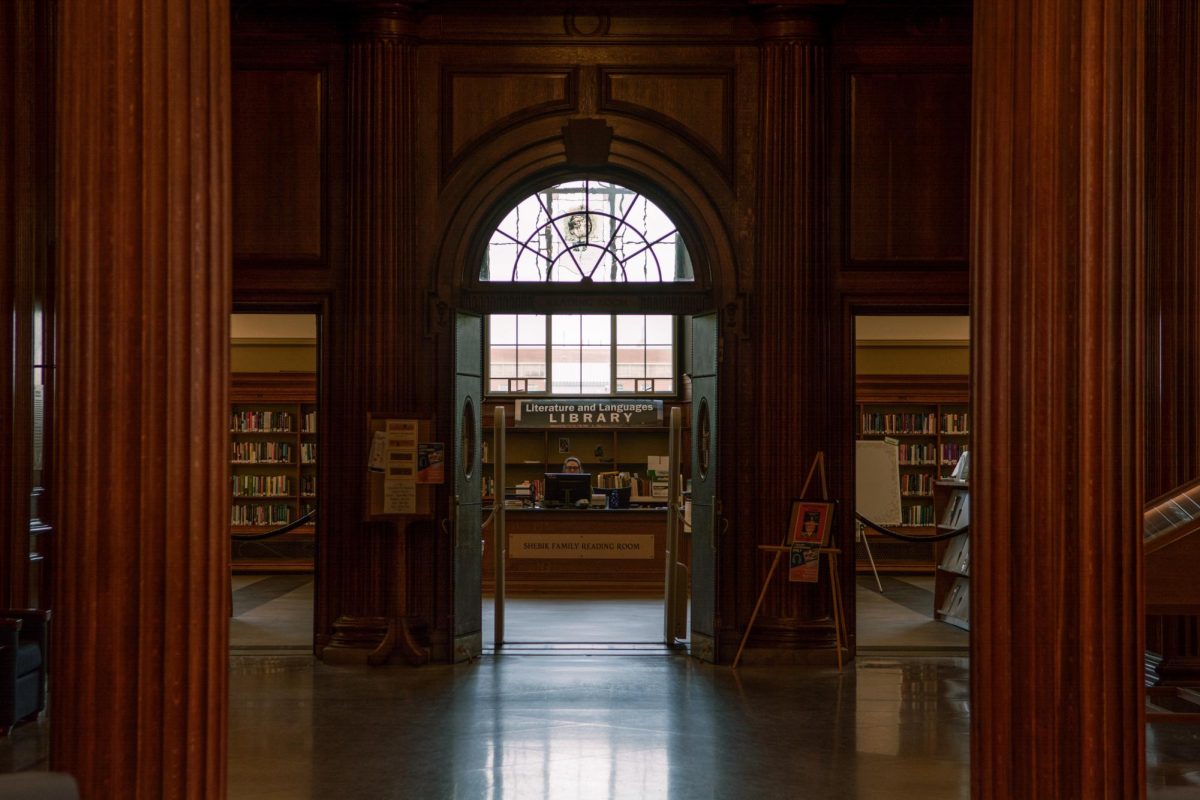
“This is one of the best libraries in the world, pretty much any way you look at it, certainly by size,” said Claire Stewart, Juanita J. and Robert E. Simpson dean of libraries. “And it’s not just the size, it’s some of the very significant strengths we have, particularly in our International and Area Studies Library, our Rare Book and Manuscript Library, but also the people here.”
Illinois is Stewart’s fourth Big Ten library, after having spent multiple years at Northwestern University, the University of Minnesota and the University of Nebraska-Lincoln. She’s worked with impressive libraries before, but at Illinois, she serves the largest public university research library in the country.
So, how does this library system work to serve undergraduate students?
Get The Daily Illini in your inbox!
According to Megan Sapp-Nelson, head of the Grainger Engineering Library Information Center, a valuable resource for students can be the buildings themselves.
“Oftentimes, when people need baseline information to make new knowledge or create new things, they need areas for collaboration,” Sapp-Nelson said. “They need areas for reflection. They need areas for being able to explore their creativity and their curiosity. And that is fundamentally what a library is.”
Grainger Engineering Library, the largest engineering library nationwide, is known for being open 24 hours on weeknights, offering students a reliable place to lock in and focus on their assignments.
“The ability to be able to focus is an increasingly difficult task with how much stimulation there is from the internet, social media, streaming, television,” Sapp-Nelson said. “Having a designated place that cues you that ‘This is a time to focus’ is also really valuable in this society, and libraries provide that.”
Grainger offers a wide variety of resources for students beyond its 1,500 individual study seats — nearly all of which fill during finals season, according to Sapp-Nelson. On its lower level, the building houses the IDEA Lab, which includes a virtual reality and esports suite, a 3D printing studio and even a sewing and embroidery machine.
Emerging technology can also be found at the Main Library in the Media Commons, with items such as high-quality cameras, recording equipment and sound booths for student use. For students who aren’t intent on getting homework done at the library, Espresso Royale resides on the first floor, along with a popular materials collection for students to enjoy more casual reading.
Despite its enormous presence on the north side of campus, Grainger is far from the only library offering unique resources to undergraduate students. Stewart emphasized the need for an all-encompassing library system, not just focusing on one subject like engineering — and also not on any one level of education.
“We have to serve every single discipline, and a whole range of expertises, from undergrads who are taking their first year all the way up to faculty — professors who are the best in their class and your world-renowned researchers,” Stewart said. “They all rely on us, in some way or another, to help with their information.”
Sitting on the opposite side of campus, the Funk ACES Library, headed by Sarah Williams, seeks to bring the University population together with its open, welcoming atmosphere.
“We know that the whole library system is very big and complicated,” Williams said. “We’re open to anyone, and if people have questions about the library, they shouldn’t hesitate to ask.”
Funk hosts the second-longest building hours after Grainger, staying open until 2 a.m. Sunday night through Thursday night. The library’s quiet environment, big windows and well-cushioned chairs make it an ideal spot for cramming for an exam or planning your next big essay.
The library’s big space is populated by a surplus of print journals and resources, but Williams emphasized the equal importance of having digital items available to students. Funk is just one of the University libraries that has been working to expand its digital collection, making previously unattainable items easier to access.
“If people are off doing research elsewhere or there are students who are taking classes remotely, it’s just accessible to people,” Williams said. “Even if somebody needs to access an article from the 1980s, it’s quite possible that we have online access to that as well.”
Stewart echoed that the University’s shared system with other libraries might not be as well known to students, especially incoming undergraduates. The University shares resources with the UI System, the Big Ten and even locations across the globe.
“I think one of the best services that tends to be a little more hidden is our interlibrary loan services,” Stewart said. “Literally, the goal is, if you need something and we don’t have it, but it’s in a library somewhere in the world, we have a service whose sole purpose is to try to get it for you.”
Bringing international services on campus for student use is a specialty of the Communications Library. Tucked away in Gregory Hall, the library that began as the Journalism Library has evolved to encompass multiple disciplines across colleges.
Lisa Romero, communications librarian and librarian for Latina/o studies, described a unique resource found in her library — a collection of international newspapers for students to access.
“We have access to international news from all over the world,” Romero said. “We have news from India, Mexico, Europe, the Middle East. It’s very important to (international students) because they want to have access to a news source that they’re familiar with … Those different news sources give us different perspectives.”
Romero was one of multiple librarians who emphasized the importance of a comfortable, inclusive space. Though different libraries are named for different disciplines, their buildings and resources are available to all, regardless of college or major.
Kate Lambaria, music and performing arts librarian, said that while campus is undoubtedly large, this just means more opportunities for the student body. Any appreciators of music can utilize her library. The Music and Performing Arts Library doesn’t just house classical composers like Beethoven and Bach but works from modern-day pop stars like Taylor Swift and Beyoncé.
“I think people hear ‘Music Performing Arts Library’ and think they have to be a music or dance or theater student to use the space — they don’t,” Lambaria said. “We are open to all students, regardless of major or area of study.”
Any students using the MPAL can utilize the space’s DVD, CD or record players, as well as the two keyboards housed in separate rooms for students to pluck out melodies while studying. Whatever ultimately piques their interest, libraries have so much more than what’s on the surface, Lambaria said.
“There’s also the more well-being type services that we offer, when we try to do de-stress stuff around finals week or the food pantry in the Main Library,” Lambaria said. “If you have this idea of a library being a space where you just go and be quiet, there are books around and that’s it … that’s not really what libraries are.”
Even considering its current size, the University library system is always looking for ways to grow, Stewart emphasized. A large part of this comes from student participation and feedback on the places made entirely for their use.
“The goal is to have a single place that’s entirely focused on student academic success, but it needs to be driven and reshaped over time by the students themselves,” Stewart said. “So tell us what you want. Tell us what’s missing.”
Whether you’re completely new to campus or returning for your final academic year, think about breaking free from your dorm room or apartment and heading over to the nearest library. The librarians assure you, you won’t regret it.
“Sometimes I hear from students, in their senior year, they come to the library and they ask for assistance with research, and so often they tell me, ‘I really wish I would have used the library more when I was a freshman,’” Romero said. “If there’s one thing I can encourage students to do, it’s get acquainted with the library space.”