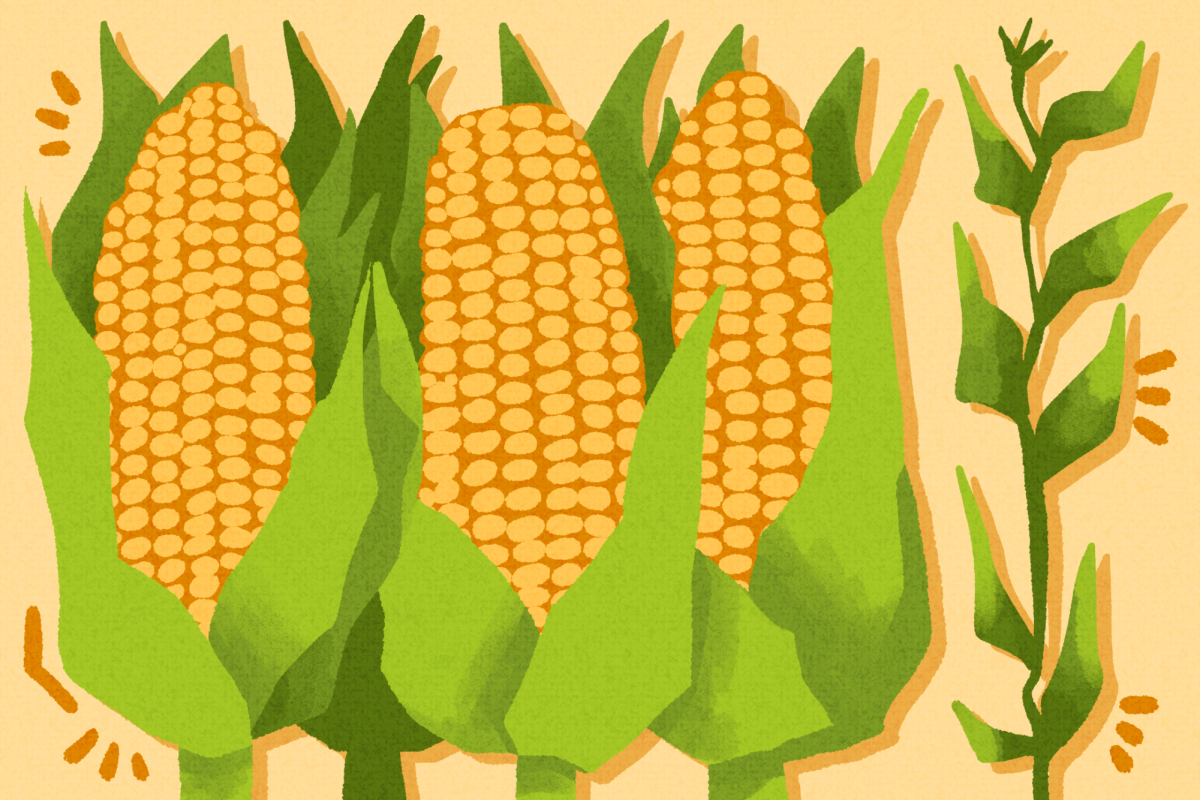
Nestled behind tall yew hedges, the Morrow Plots are hard to miss on campus. The imposing bush and myths of expulsion for trespassers contribute to a sense of mystery surrounding one of campus’s oldest landmarks.
However, a new project aims to make the obscure fields more accessible to students, scientists and visitors alike.
“We’re trying to revitalize how we communicate, how we show literally but also digitally … the really high value to science of the Morrow Plots,” said Andrew Margenot, director of the Morrow Plots and professor in ACES.
The revitalization, partially funded by Bayer’s Crop Science division, is planned for completion by this year’s 150th anniversary celebrations, with renovations taking place over winter and spring.
The Morrow Plots were established in 1876 and were originally meant to observe the effects of crop rotation on yield. Over time, new treatments were added as agricultural research around the world grew, but its main experimental questions have remained the same.
Get The Daily Illini in your inbox!
As Sara Marston, junior in ACES, explained, this kind of research isn’t just interesting — it’s necessary.
“Agronomy is really important because it focuses on food, fuel, fiber and feed for animals, and all of those are literally important to every single one of our lives,” Marston said.
One of the most significant changes to be made is the removal of the hedges encircling the plots. Its purpose is twofold: to make the plots more visible and to remove squirrel habitats that affect the crop yields.
“One of the things that has been a longstanding problem for the Morrow Plots is that tall hedge,” said Adam Davis, head of the Department of Crop Sciences and professor in ACES. “(It) both obscures the plots from passersby but also provides a safe haven for squirrels who’ve been basically obliterating our corn yields.”
In its place, a wrought-iron fence will be installed, creating more visibility for the community while still keeping the plots themselves protected. According to Davis, this was the original focus of the collaboration with Bayer, and the company’s gift will help support this renovation over the next year.
Additionally, live monitors, including sensors and webcams, will be added across the plot to create new data and analysis opportunities.
“You’ll be able to watch the temperature, the moisture of the soils,” Margenot said. “You can do time lapses and look at the different crops growing throughout the years.”
The project isn’t just physical in nature, however. It also involves making the past century and a half’s data accessible to all.
In collaboration with the University Library, Margenot is working to create a compiled database for the Morrow Plots. This includes all past data and research connected to the plots.
The Illinois Digital Environment for Access to Learning and Scholarship website will house the records, which will be open to members of the public for their perusal and use.
“It’s really a trove of old photos, stories about it, data, descriptions of the experiment,” Davis said. “You could learn a ton, as a scholar or a student, just going there.”
Marston also emphasized that anyone can study agriculture regardless of where they live or what experience they have with farming. This sentiment is shared by the team behind the Morrow Plots, who continue to open their research to campus and beyond.
“(We’re) really thinking about it as an opportunity for a living classroom in a way,” Davis said.
The Morrow Plots may seem like a redundancy in a state where approximately 75% of land is used for agriculture, but it’s the long-term impact that makes it a globally important research center.
As Margenot noted, the plots provide plenty to be excited about.
“This is the world’s second-oldest continuous experiment,” Margenot said. “That is a big deal … It is a piece of living history, and we should not take that for granted.”