Even at the college level, athletes are put under great pressure to perform. With the emergence of Name, Image and Likeness deals, student-athletes are treated more and more like professionals, putting greater stress on both their minds and bodies.
Injuries in sports are heard about all the time; athletes are cheered for upon their return, but rarely is focus put on the resilience it takes to come back.
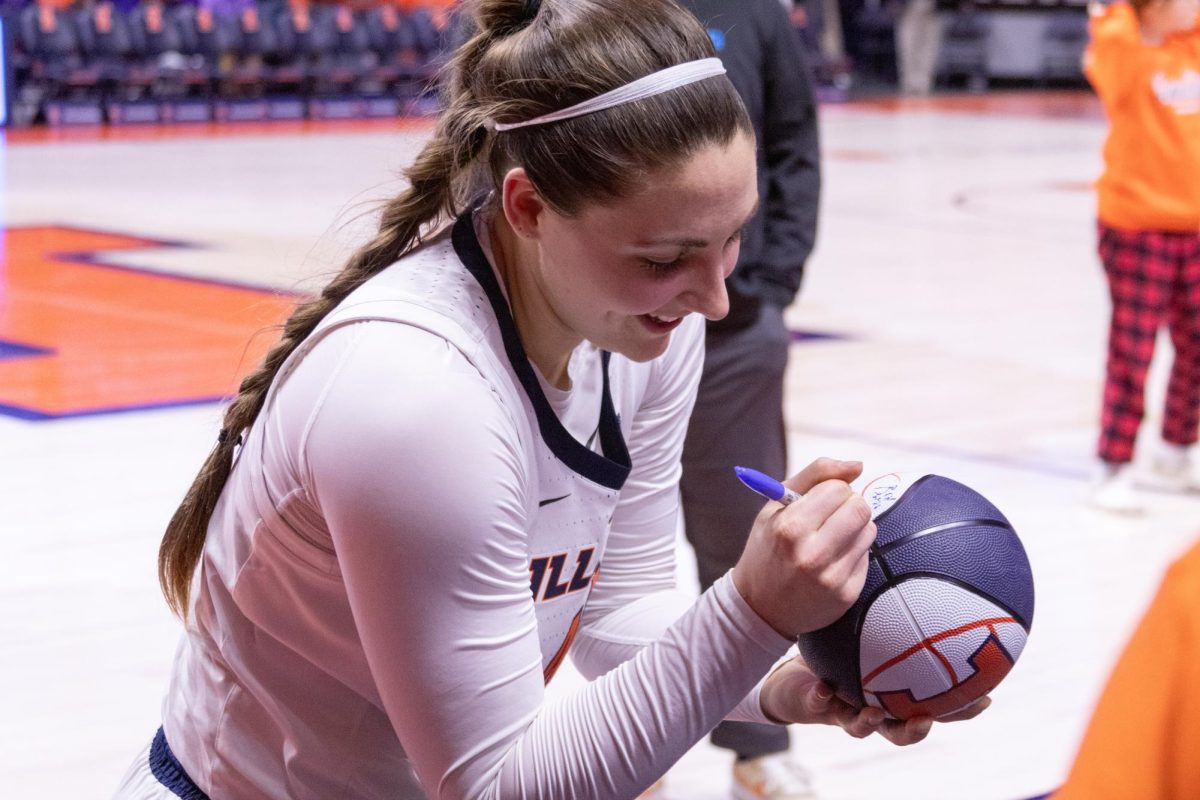
Women’s basketball player Lety Vasconcelos, redshirt sophomore playing center for the Illini, missed her entire sophomore season. She sustained an ACL tear during summer workouts with the team and underwent surgery in October 2024.
Vasconcelos said that her teammates were a major help during her recovery process.
“Throughout the whole process … I never felt alone,” Vasconcelos said. “I never felt like I wasn’t a part of the team.”
Get The Daily Illini in your inbox!
Autumn Taylor, head women’s basketball athletic trainer, said that team support is one of the most crucial aspects of maintaining an injured athlete’s mental health.
Vasconcelos said her teammates’ immediate reactions to her injury were focused on recovery and getting her back to 100%, no matter how long it took.
While injured, Vasconcelos couldn’t participate in practice, but she said her teammates made sure that she was always included in outside activities. Vasconcelos credits little pick-me-ups from her teammates, such as “We really miss playing with you” and “We can’t wait for you to be back,” for feeding her excitement to get back on the court.
Vasconcelos also gave praise to her medical support staff — Maya Solomon, director of basketball operations, Becky Cook, sport psychologist and Taylor — for helping her throughout the recovery process.
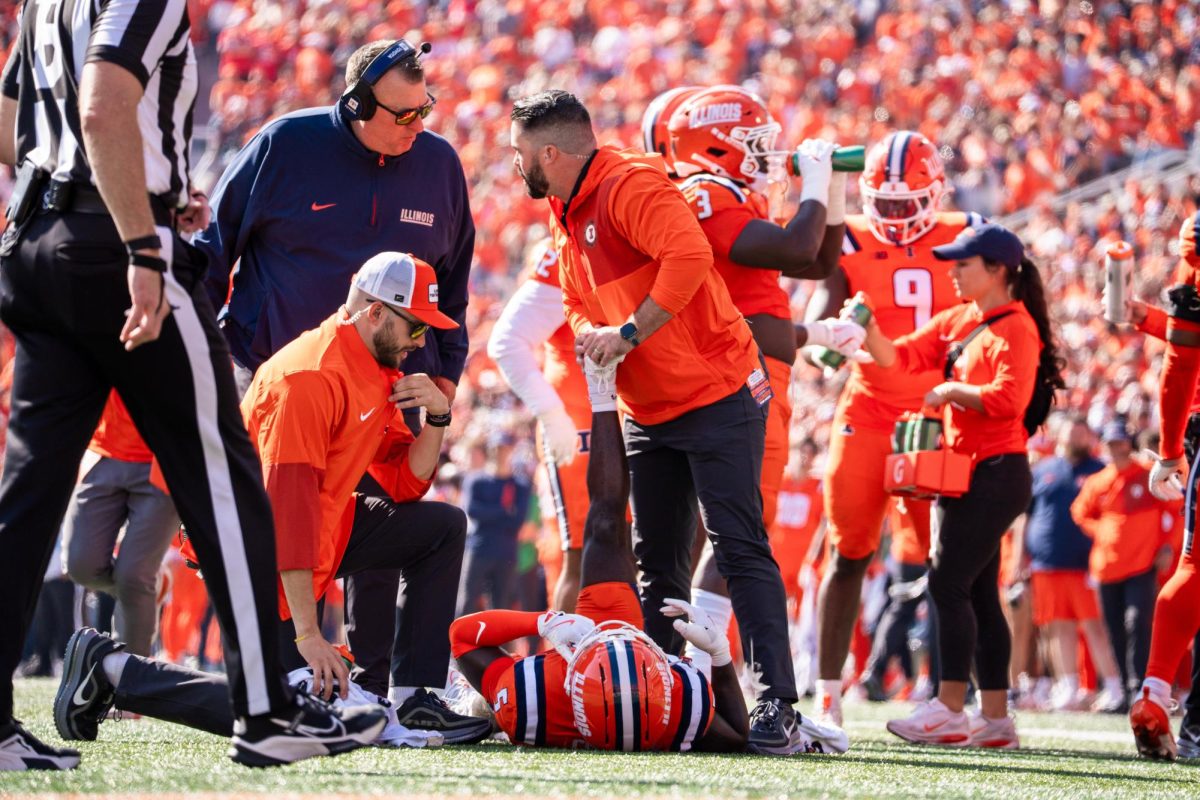
Taylor said that for Illinois athletics, the recovery process is very technical. They look at objective performance data and take a holistic approach to ensure athletes are at their best before returning to the court.
According to Taylor, this performance data is useful in combating negative thoughts, as athletes often fear re-injury or doubt their abilities post-injury. Taylor said when athletes see the real-time data showing their progress, it helps them relax and take the time to heal completely and “put them in the best spot for success.”
During practices, Taylor tries to find ways for injured athletes to participate outside of drills to make sure they still feel like a part of the team and aren’t missing out.
According to Taylor, one of the most important things for a recovering athlete to do is to keep a positive attitude. She said she encourages her players to reframe their negative thinking, often repeating the motto, “What doesn’t kill you makes you stronger.”
“I had a whole year to get better as a player and as a person, too,” Vasconcelos said. “I feel like I just looked at this moment to grow in a lot of areas in my life.”
As the team gets ready for its season debut on Oct. 30, Vasconcelos said she can’t wait to get back on the court. After being out for an entire year, she describes it in one simple word: “Excitement.”