Last updated on Oct. 18, 2025 at 04:48 p.m.
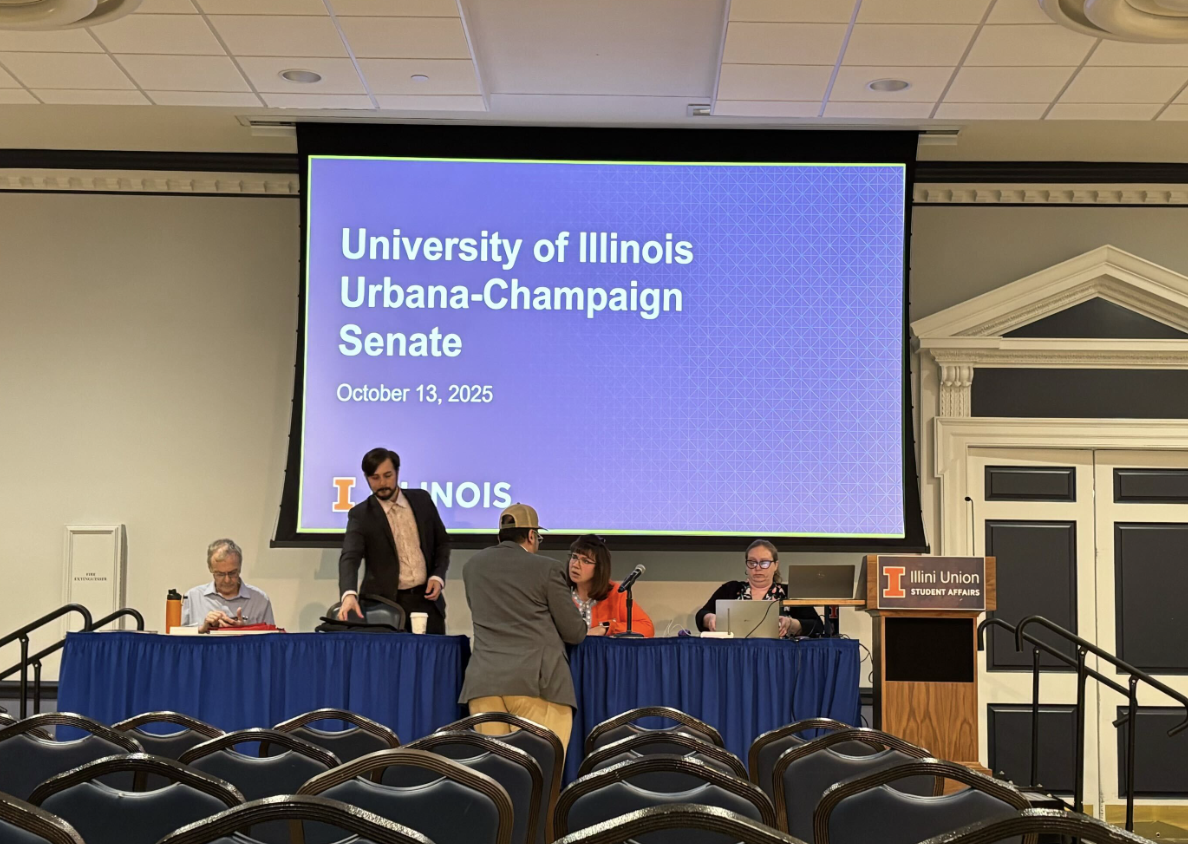
Senators voiced overwhelming disapproval toward recent updates to the honorary degree process at Monday’s University Senate meeting. This comes after the Senate Executive Committee tasked a commission with finding ways to improve the process.
Specifically, the SEC is asking senators to look into better ensuring candidate privacy. Currently, discussions of candidates are required to be public under the Open Meetings Act.
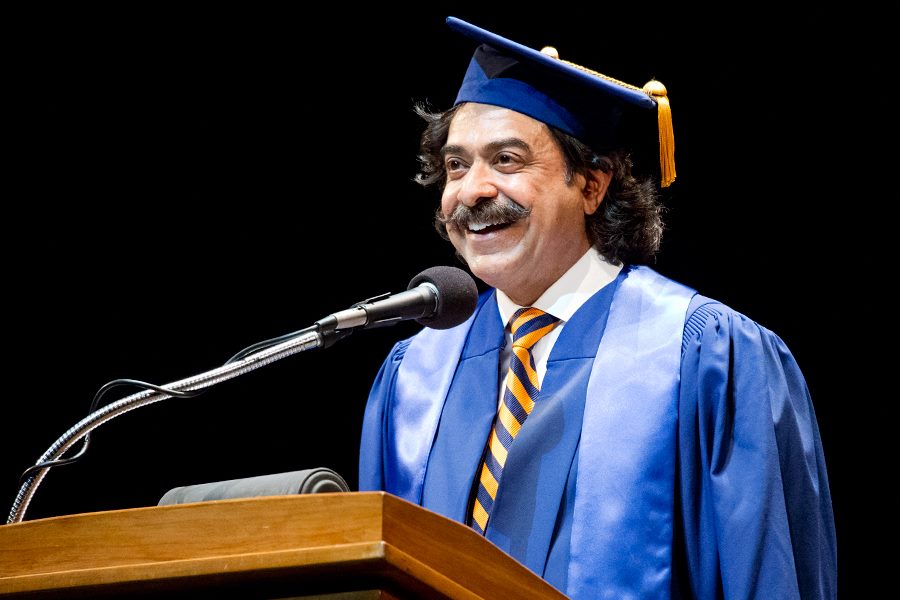
On March 4, 2013, the Senate went into “Executive Session,” a common procedure allowing senators to confidentially deliberate and vote upon nominees. It was at this meeting senators first denied Shahid Khan, University alum and billionaire, an honorary degree.
An ensuing News-Gazette investigation revealed the executive sessions were “likely” in violation of the OMA. As such, the March 2013 meeting is the last time a Senate agenda included an executive session.
Get The Daily Illini in your inbox!
“Discussion of honorary degrees is not listed in the state law as an allowed topic for executive session,” the article reads. “In response to inquiries by The News-Gazette, senate chair Matthew Wheeler said the senate would no longer hold such discussions behind closed doors.”
In December, senators publicly denied Khan an honorary degree for the second time. This sparked a series of initiatives to review the honorary degree process with the goal of improving candidate privacy.
After Khan’s second nomination and rejection last year, former Chancellor Robert Jones asked the Senate’s Honorary Degrees Committee to pause new candidate recommendations until nominees can be discussed privately.
In September, the SEC proposed the establishment of an ad hoc committee for honorary degrees. The Senate rejected the committee’s creation in a vote of 48 in favor and 95 against.
If approved, the committee would have recommended process improvements to the SEC. In its meeting following the committee denial, the SEC tasked the Ninth Senate Review Commission with the review instead — a process that didn’t require Senate approval.
Monday’s Senate meeting began with SEC Chair and professor in ACES Angela Lyons justifying the need for the commission to review honorary degrees.
“I want to briefly remind everyone on the background because I think there may have been a little bit of a misunderstanding at the last meeting,” Lyons said. “It was the reason we were proposing … the ad hoc committee … just so that the commission’s work would not be overshadowed by this one particular issue.”
The Senate Constitution requires the commission to comprehensively review the Senate’s size, organization, structure and operation. However, the commission’s charge letter singles out the honorary degree process review with an earlier deadline than its other charges.
Lyons opened the floor for senator comments. Brendan Harley, research policy committee chair and professor in LAS, spoke first.
“We’re effectively cutting and pasting what the Senate voted down,” Harley said. “I’m trying to understand how that sits in the context of ‘we’ and shared governance and working together, because it seems like something that overrode all that we did here.”
In return, Lyons defended her decision and said she would not change the charge letter. Harley continued, saying he didn’t remember Lyons informing the Senate that voting down the ad hoc committee would mean the commission took the task.
“I find it interesting that we had a specific vote on this, and this one committee is being called out differently in the context of this review,” Harley said.
After more back and forth with senators, Lyons acknowledged her perceived lack of specificity in tasking the commission with the review.
“If I poorly communicated that, my apologies to the Senate,” Lyons said. “But it was what it was.”
Some senators expressed disagreement with the need to change the honorary degree process at all.
“I remain unconvinced that there is a problem with the existing process,” said Kate Clancy, professor in LAS.
George Friedman, Senate parliamentarian and professor emeritus in Engineering, clarified the decision to continue the current honorary degree review.
“Voting down something does not produce (an) affirmative effect,” Friedman said. “We voted down that particular path, but we did not vote down to discuss the procedure for honorary degrees. And that’s precisely what (Lyons) is trying to tell us. It’s now up to the Senate review commission to consider the matter.”
When a senator asked why nominee discussion isn’t currently private, Lyons said the OMA prevents it, but added that the Senate and commission members are “smart” and can find “solutions” to the OMA.
“We cannot go into closed session for this,” Lyons said. “I will tell you that we have tried. There (have) been discussions with (legal) counsel about trying to talk with Springfield about making some changes to that.”
As of now, the Honorary Degrees Committee is free to recommend candidates to the Senate for a vote, but no degrees will be awarded until a way to protect candidate privacy is found.
In response to an email request for comment, Lyons wrote: “It’s my understanding that university administration decided last year not to put forward any more honorary degree nominations until the selection process is changed to protect the privacy of nominees, as these are people who have not requested this honor and likely are not even aware they are being considered for it.”
The next SEC meeting is Oct. 27, and the next Senate meeting is Nov. 10.